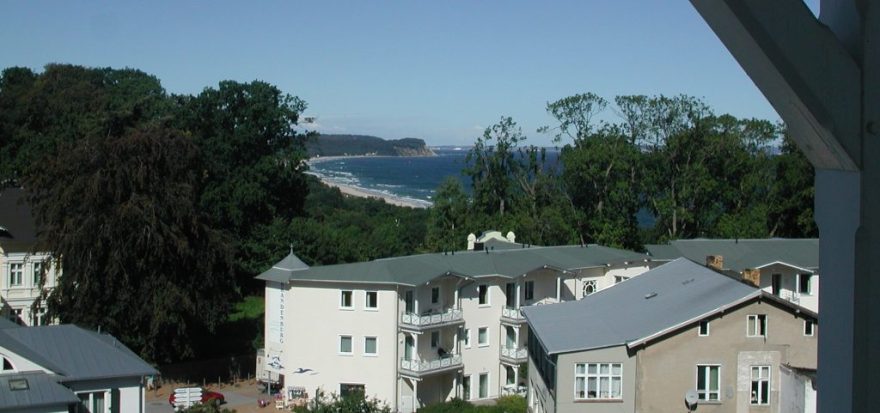
1 May 2005, Seebüll, Nolde-Museum

1.5.2005, Seebüll, Nolde-Museum

https://de.wikipedia.org/wiki/Nolde_Stiftung_Seeb%C3%BCll (Stand: 16.12.2023): … Stiftung Seebüll Ada und Emil Nolde … Träger eines Kunstmuseums in Seebüll … zeigt Werke des deutschen Malers Emil Nolde (1867–1956) … Museum … 1957 … eröffnet … Das Ehepaar Ada und Emil Nolde erwarb 1926 die unbebaute Warft und ließ dort ein Backsteinhaus errichten, das der Bauhausarchitektur nachempfunden war und sich damit bewusst von den umliegenden Friesenhäusern abhob … Der Garten ist ein individuelles Gartenkunstwerk, das Nolde selbst gestaltete … Bauerngarten … … reetgedeckte Gartenhaus …

Stand 2005:

  • Bildersaal mit 33 Gemälden
  • Untergeschoss mit 14 Gemälden (1911/12).

Infoblatt (2005) / Lebensdaten, Auszug:

  • 1867 … im Dorf Nolde nahe Tondern geboren … seit 1902 nennt er sich nach seinem Heimatdorf …
  • 1884-1891 Ausbildung als Schnitzer und Zeichner … Wanderjahre …
  • 1892-1897 Lehrer für farbiges und ornamentales Zeichnen in St. Gallen …
  • 1898-1900 München: Malschule Friedrich Fehr …
  • 1901-1905 Kopenhagen. 1902 Heirat mit Ada Vilstrup …
  • 1906-1912 … Mitglied der Künstlergruppe „Brücke“ (bis 1907) …
  • 1913-1914 … Südsee-Reise als Mitglied der „Deutsch-Neuguinea-Expedition“ …
  • 1915-1925 Umzug … an die Nordseeküste …
  • 1926-1932 … Bau des Hauses Seebüll … Ehrendoktor der Universität Kiel …
  • 1933-1945 Angriffe der Nationalsozialisten … „Entartete Kunst“, 1052 Werke von Nolde werden beschlagnahmt …
  • 1946-1955 … Ernennung zum Professor …
  • 1956 Nolde stirbt … in Seebüll …

26 Apr 2005, Köln, Wallraf-Richartz-Museum, incl. Claude-Gemälde

26.4.2005, Köln, Wallraf-Richartz-Museum, incl. Claude-Gemälde

Wallraf-Richartz-Museum – Fondation Corboud, Martinstraße 39, 50667 Köln. Flyer: „Mittelalter – Barock – 19. Jahrhundert – Graphische Sammlung“.

https://de.wikipedia.org/wiki/Wallraf-Richartz-Museum_%26_Fondation_Corboud (Stand 12.12.2023): … eine der großen klassischen Gemäldegalerien Deutschlands … weltweit umfangreichste Sammlung mittelalterlicher Malerei, insbesondere der „Kölner Malerschule“ … Mit den Werken der Fondation Corboud verfügt das Museum über die umfangreichste Sammlung impressionistischer und neoimpressionistischer Kunst in Deutschland …

Claude (Lorrain): Landschaft mit Errettung der Psyche

  • Röthlisberger M (1975/1986): Tout l’oeuver peint de Claude Lorrain. Flammarion, Paris. – S.119, No. 238: Paysage avec Psché sauvée du suicide. …Le sujet est emprunté à Apulée (Métamorphoses, V); LV (Liber Veritatis) 167
  • https://www.bildindex.de/document/obj22000433?part=2 (Stand 12.12.2023): Datierung 1666 … Themen: … 25I9 * Landschaft mit Ruinen; 48C145 * Architekturdarstellungen in Gemälden, Skulpturen, etc.; … 25H172 * locus amoenus: idyllischer Ort mit Bäumen (Geschmack), Wiesen (Gesicht), Quelle oder Bach (Gefühl), singenden Vögeln (Gehör) und Blumen (Geruch); Bildorganisation: Mehrschichtenraum; Bildorganisation: Fernsicht; Bildorganisation: tiefer Horizont …

Claude (Lorrain): Marine avec les Héliades – Gemälde war zum Zeitpunkt des Besuches ausgeliehen.

26 Feb 2005, HH, Sammlung Falckenberg, Klaus Staeck: Nichts ist erledigt. Retrospektive

26.2.2005, HH, Sammlung Falckenberg, Klaus Staeck: Nichts ist erledigt. Retrospektive

Sammlung Falckenberg, Phoenix-Fabrikhallen, Wilstorfer Str. 71, Tor 2, 21073 Hamburg-Harburg. . – https://www.deichtorhallen.de/sammlung-falckenberg. Klaus Staeck, https://klaus-staeck.de/.

Ausstellung, 5.11.2004-30.4.2005, Klaus Staeck: Nichts ist erledigt. Retrospektive

Damals auf „http://www.klaus-staeck.de“: „… die frühen Holzschnitte und Siebdrucke, die Objekte und Environments, noch nicht gezeigte Collagen und Fotos aus den letzten dreißig Jahren und natürlich die Plakate, Postkarten und Buchumschläge zu sehen …“


Michael Naumann (DIE ZEIT Nr.6, 3.2.2005): Tatorte ohne Täter. Klaus Staeck als Melancholiker in Hamburg. „… Der polemische Staeck-Schwung der sechziger und siebziger Jahre ist weg. Nicht Staeck, sondern sein altes Publikum hat es sich bequem gemacht … Überraschung der Retrospektive: Staeck als Fotograf … Das stärkste Stilmittel des Polemikers ist das Zitat … Seine besten Aufnahmen sind menschenleer, als hätte er Tatorte fotografiert, deren Täter sich davongemacht haben …“

8 Nov 2003, Hamburg, Tag der Kunstmeile

8.11.2003, Hamburg, Tag der Kunstmeile

Siebter „Tag der Kunstmeile“ (Km/h = Kunstmeilehamburg), inkl.:

  • Deichtorhallen Hamburg; Km/h-Infobroschüre: „Die südliche Deichtorhalle wird … 2004 zu einem internationalen ‚Haus der Photographie‘ umgewandelt“; Ausstellung „A Clear Vision – Photographien aus der Sammlung F. C. Gundlach“
  • Museum für Kunst und Gewerbe Hamburg; Km/h-Infobroschüre: „1877 eröffnet …Baustelle Museum lautet das Motto für diesen Tag … – Betreten erbeten! … Traumkapseln … Begehbare Objekte von Peter F. Piening ….
  • Hamburger Kunsthalle; mit Ausstellung „Lyonel Feininger. Menschenbilder. Eine unbekannte Welt”.

5 Jul 2003, Φ Birmingham & Oxford

1.-5.7.03 Birmingham & Oxford

2.7.03 Birmingham: Barber Institute (CL)

2.-3.7.03 Birmingham: Workshop “HIA evaluation”

3.-4.7.03 Oxford, incl

  • Ashmolean (CL: drawings, paintings)
  • Radcliffe Square
  • Carfax Tower
  • Christ Church College (Meadow building; Cloister; Dining Hall; Cathedral (incl. Shrine of St. Frideswide; Becket window); statue of Mercury; Library; Peckwater Quad; Picture Gallery. – Alice’s; Ruskin; Verfilmung der Geschichte vom kleinen Zauberlehrling
  • Covered Market

5.7.03 Birmingham Museum & Art Gallery


Excerpt from:

John Dougill (2002): Oxford. A literary guide. Oxface Publications, Oxford [erworben 4.7.2003]

pp.1-2 ‘That sweet city with her dreaming spires’ [History]:

  • Beginnings: By the early eleventh century, Oxford had become the biggest city outside London… The Prologue of Chaucer’s Canterbury Tales (c. 1387) includes a Clerke of Oxenforde …
  • The English Athens: The medieval university was religious in essence … With the Elizabethan renaissance, writers celebrated the well-being of the country in expansive terms… Dan Rogers declared that, ‘lf God Himself on earth abode would make / He Oxford, sure, would for his dwelling take’ …
  • Reason to reform: From the late seventeenth to the mid-nineteenth century, the English Athens’ sat back on its laurels. The university became insular, elitist … it was only with the reforms of the 1850s and 1870s, forced on the university by parliament, that Oxford emerged from the Middle Ages.
  • The Oxford Novel and the Oxford Myth: Since 1823, over 550 novels have been set or partly set in Oxford … Most are by former students, idealising their student days. Pre-reform Oxford … there had developed a cult Oxford, which championed the city as a citadel of truth and beauty… 1865 … Oxford’s annus mirabilis … Lewis Carroll wrote of a ‘dream-child’ in the transmogrified Oxford of Alice’s Adventures in Wonderland. Oxford became a golden city of the imagination …
  • Modern Oxford: … the city has continued to attract writers, and the fictional worlds of academic figures such as J.R.R. Tolkien, C.S.Lewis … captivated the wider world…

pp.3 ff Colleges etc.

  • All Souls College (1438): T.E. Lawrence (1888-1933), Lawrence of Arabia
  • Balliol College (1263): Aldous Huxley (1894-1963) … Graham Greene (1904-91)
  • Broad Street: The Oxford Martyrs
  • Christ Church (1546): Charles Dodgson (“Lewis Carroll”) (1832-98), Christ Church mathematician(Alice: Alice Liddell); John Ruskin (1819-1900), influential art critic
  • Exeter College (1314): William Morris (1834-96)
  • Holywell Cemetery, Graves: Kenneth Grahame (1859-1932) (Wind in the willows); Theophilius carter, the original “Mad Hatter”
  • Magdalen College (1458): Oscar Wilde (1854-1900); C.S.Lewis (1898-1963), convert, “Christian apologist”, 1950: “The lion, the witch, and the wardrobe”; The Inklings … From 1931 a group of writers met Thursday evenings in Lewis’ rooms … It was here that Tolkien first read out The Hobbit (1937) … They shared a love of walks, word games and riddles. … Out of their Beowulf and Beer evenings emerged Middle Earth and Narnia…
  • Merton (1264): J.R.R. Tolkien (1892-1973) … a world expert on Beowulf. … Tolkien: “I am a hobbit in all but size. I like gardens, trees and unmechanized farmlands. I smoke a pipe and like good plain food (unrefrigerated), but detest French cooking. I like, and even dare to wear in these dull days, ornamental waistcoats. I am fond of mushrooms (out of a field); have a very simple sense of humour… I go to bed late and get up late (when possible). I do not travel much.” – “Hobbits are an unobtrusive but very ancient people, more numerous formerly than they are today; for they love peace and quiet and good tilled earth: a well-ordered and well-farmed countryside was their favourite haunt…” (Lord of the Rings preface).
  • Tolkien trail: 5 houses, 3 colleges, inkling meetings, grave
  • Pembroke College (1624): Samuel Johnson (1709-84)
  • Radcliffe Square / Bodleian Library (1602)
  • Somerville College (1879): (Mrs. Thatcher; Indira Ghandi) Iris Murdoch (1919-1999), novelist
  • University College (1249): P.B.Shelley (1792-1822)
  • Worcester College (1714): Thomas de Quincey (1785-1859)