Sep – Oct 2009, incl. “Stromableser” etc. (Φ)

Sep – Oct 2009

5 Sep 2009, Wilhelmsburg, Ausstellung im ehemaligen Kubi-Cente, am Vehringhof: “Zeichen von Respekt“

8 Sep 2009, LIGA Bielefeld: „Gesundheit im Setting Stadtquartier“, Veranstaltung als WHO Collaborating Center

12 Sep 2009, Claudes „Liber veritatis“ erhalten

23-26 Sep 2009, Hamburg: DGSMP [09-6, 09-10, 09-26,]

2 Oct 2009, „Stromableser – Literarische Bootsfahrt Elbe und Bille: Abend mit Goldrand”:

  • Edgar Maass: Das große Feuer
  • Moses Mendelsohn: Selbstzeugnisse
  • Heinrich Heine: Aus den Lebenserinnerungen des Herrn v. Schnabbelewopski
  • Wolfgang Borchert: Der Stiftzahn oder Waum mein Vetter keine Rahmbonbon mehr isst
  • Wiili Bredel: Unter Türmen und Masten
  • Galinski & R. Schmidt (Hg.): Die Kriegsjahre in Deutschland
  • Arno Schmidt: Porträt einer Klasse
  • Jonas L. v. Hess: Hamburg topografisch
  • Barthold H. Brockes: Irdisches Vergnügen in Gott
  • Kurt Tucholski: Das Ideal
  • Hans J. Massaquoi: Neger, Neger, Schornsteinfeger

10 Oct 2009, Bramsche-Kalkriese: Varus-Schlacht

25 Oct 2009, HafenCity

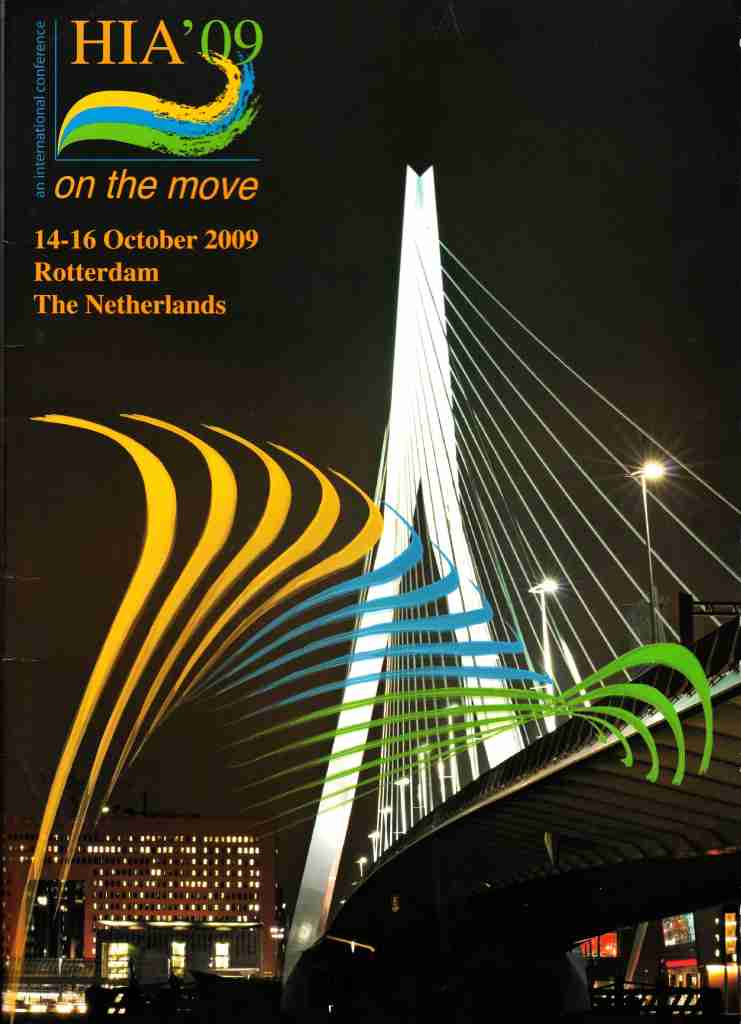
13-17 Oct 2009, Φ ♣ Rotterdam, HIA ’09 – An International Conference: On the move

13.-16.10.2009, Φ ♣ Rotterdam, HIA ’09 – An International Conference: On the move

Organized by HIA ’09 Steering Group incl. Lea den Broeder (chair), RIVM; plus Windesheim U Applied Sciences; NL Ministry of Health, Welfare and Sport; NL Association of Municipal Helth Services; Vrije Universiteit Amsterdam; NL Institute of Health Promotion (NIGZ); Rotterdam Municipal Health Service. – Venue: Preconference workshops: Public Health Service Rotterdam-Rijnmond; and field trips. Main conference: Regardz Weena Point Rotterdam Meeting Center [08-72]

Eigene Beiträge:

  • Fehr, C. Böhme, J. Hilbert, H. Schreiber, C. Weth: Health-related ”Integrated programs” – their views on impact assessment, other policy tools, and inter-sectoral cooperation (Poster presentation) [09-45]. For abstract, poster and handout reverse page: see below
  • Fehr (LIGA.NRW), J.M. den Broeder (RIVM, Bilthoven, NL), M.R. Partidário (Technical U Lisbon, Lisboa, PT), B. Cave (Ben Cave Assoc., Leeds, UK), B.A.M. Staatsen (RIVM, Bilthoven, NL), O.C.L. Mekel (LIGA.NRW, Bielefeld, DE): Workshop W8 „Family of health-related impact assessments – securing equity in situations of change and crisis?“ Format: World Cafe [09-46]. For abstract and outline: see below
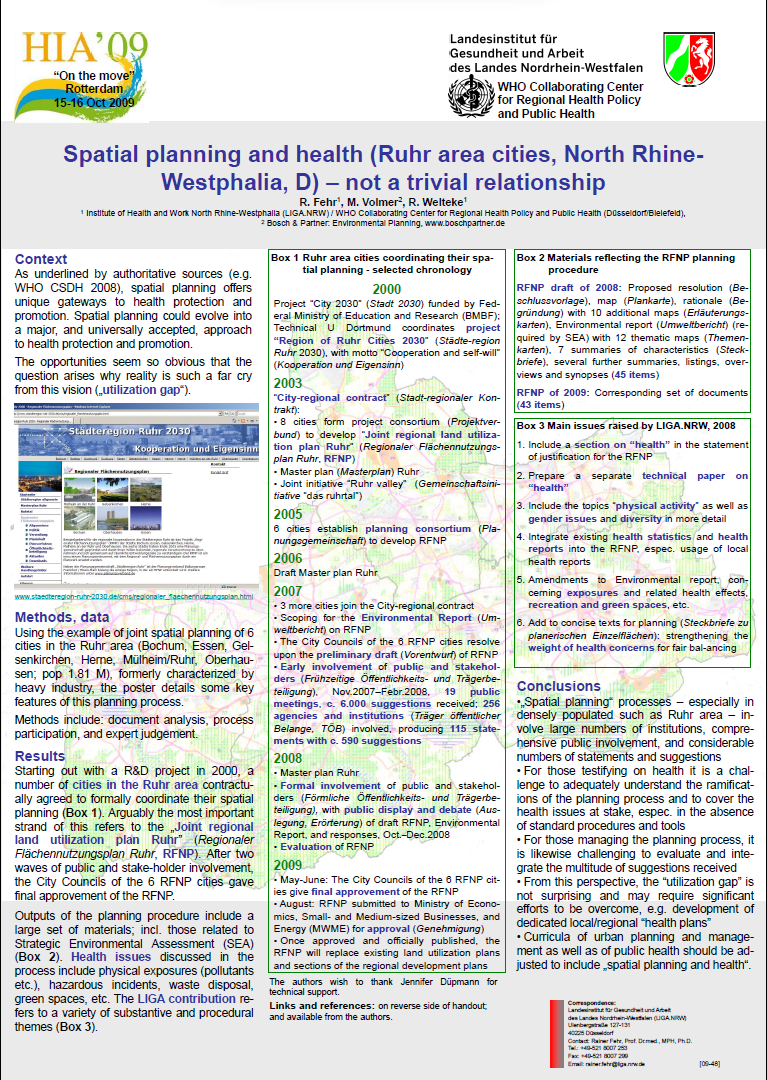
  • Fehr, M. Volmer (Bosch & Partner: Environmental planning, http://www.boschpartner.de), R. Welteke (WHO CC Regional Health Policy / LIGA.NRW): Spatial planning and health (Ruhr area cities, North Rhine-Westphalia, D) – not a trivial relationship (Poster presentation) [09-48]. For abstract, poster and handout reverse page: see below
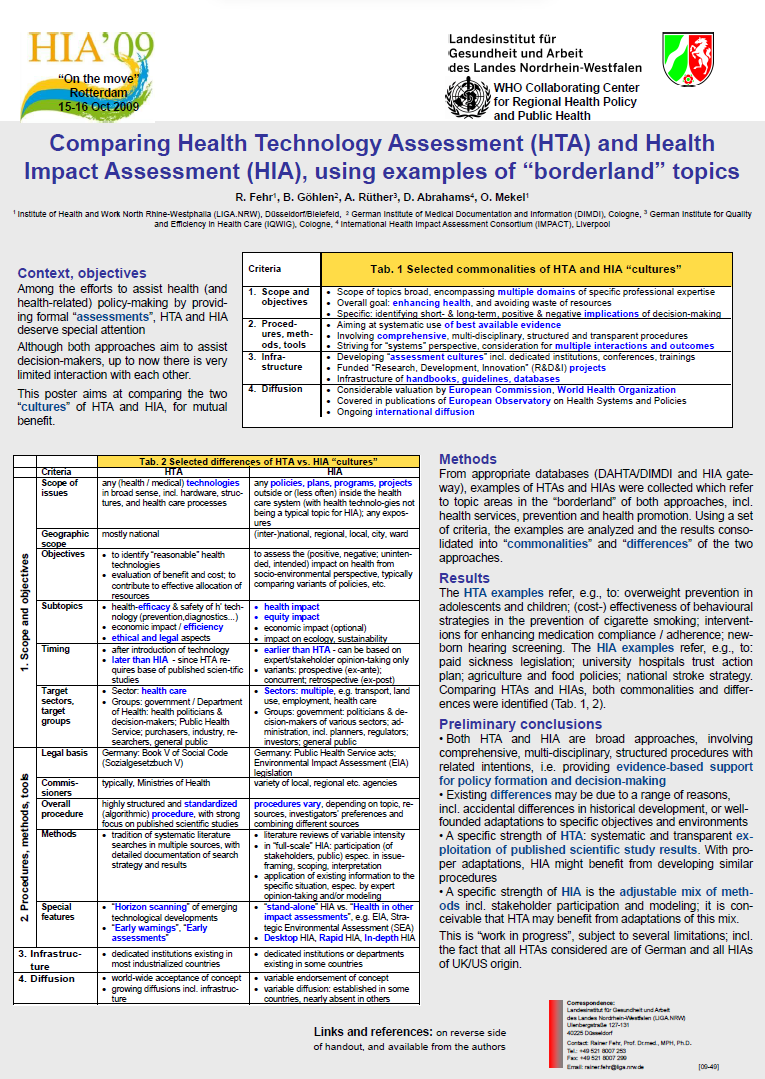
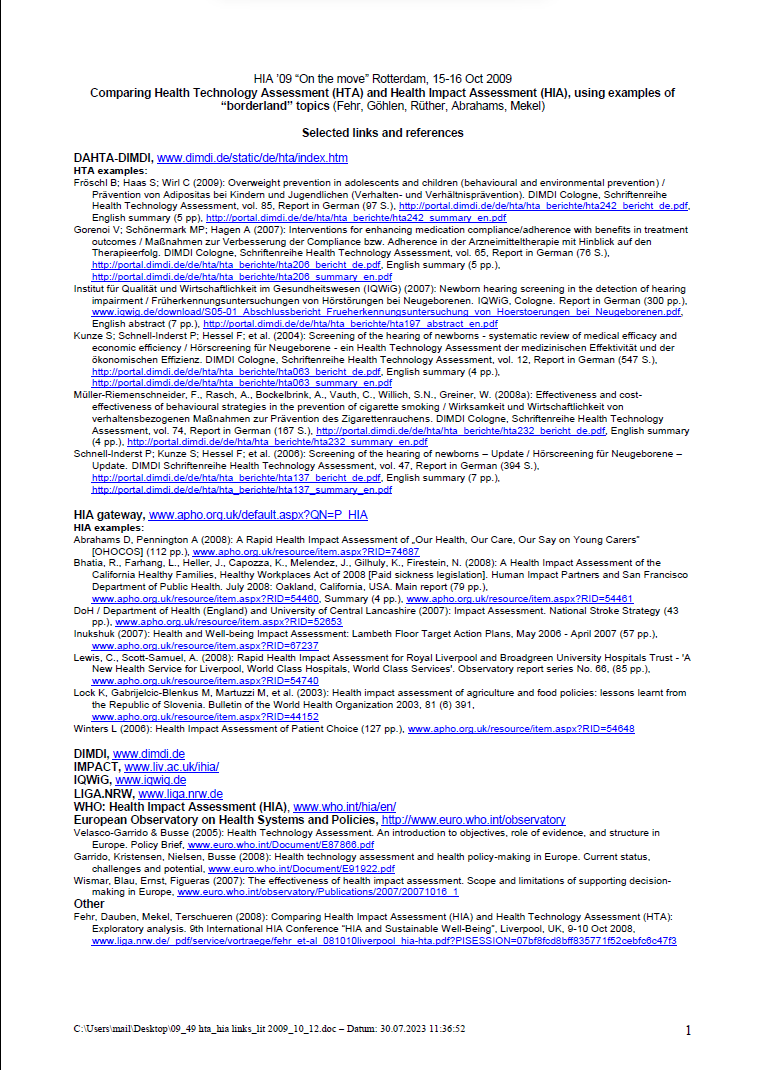
  • Fehr, B. Göhlen, A. Rüther, D. Abrahams, O. Mekel: Comparing Health Technology Assessment (HTA) and Health Impact Assessment (HIA), using examples of “borderland” topics [09-49]. For poster and handout reverse page: see below
  • OCL Mekel, C Terschüren, R. Fehr: Modelling the burdenof disease in aging populaitons‘ crucial input for HIAs [09-50]

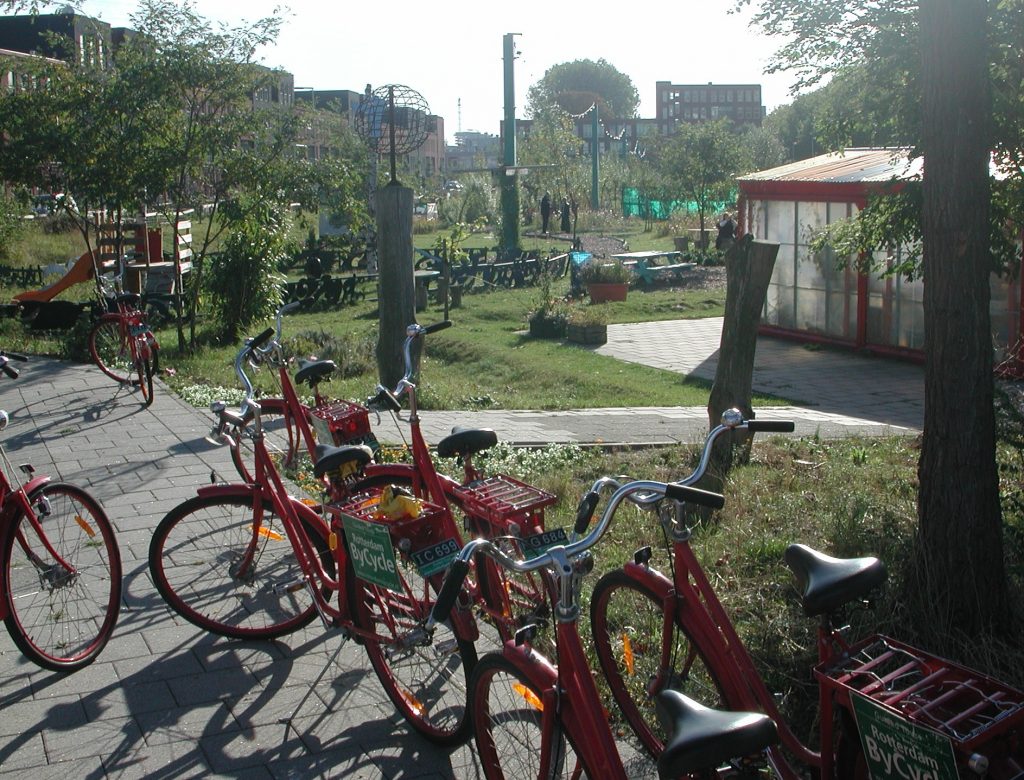
2009_10_14 DSCN7226a Rotterdam cycl tour
2009 Rotterdam Cycling tour / Photography excursion
  • 14 Oct 2009, Pre-conference photography excursion [09-99]
  • 16 Oct 2009, DYNAMO workshop [09-69]

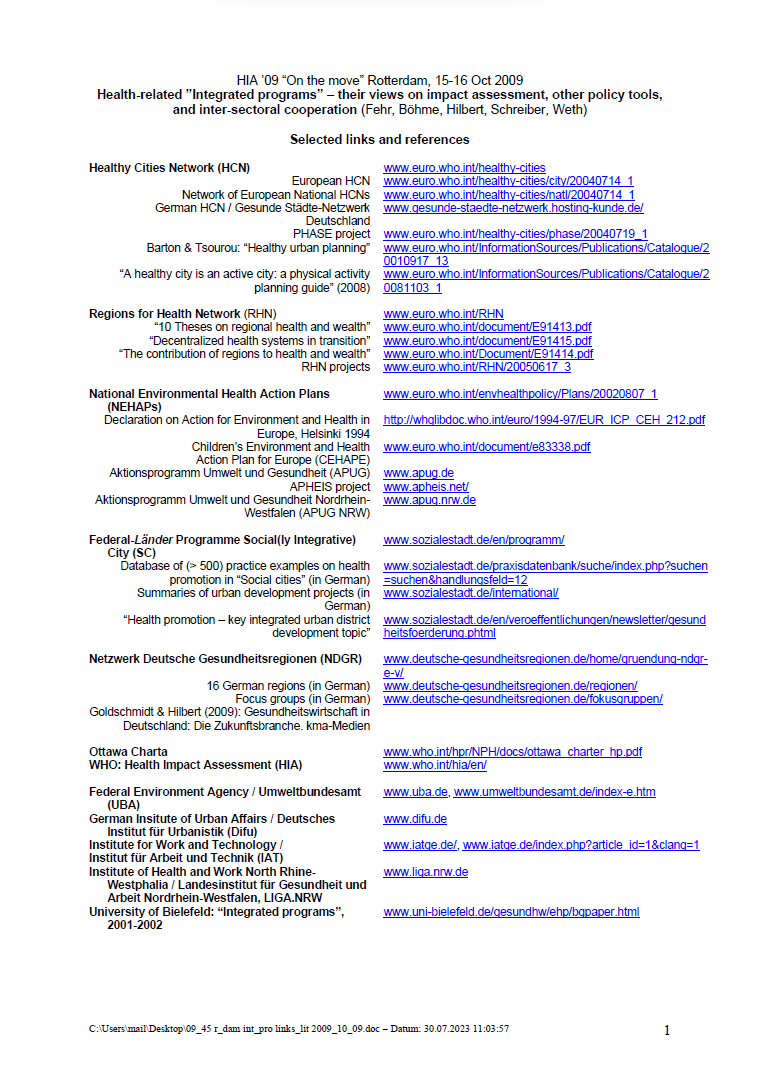
Fehr, C. Böhme, J. Hilbert, H. Schreiber, C. Weth: Health-related ”Integrated programs” – their views on impact assessment, other policy tools, and inter-sectoral cooperation (Poster presentation) [09-45]

Abstract: In addition to traditional health policy approaches there are “integrated programs”, working across multiple topics. We investigate how such programs establish intersectoral connections, and what policy tools and procedures are being deployed. Methods: Starting from an existing synopsis (2005), five programs were selected: Healthy Cities network (HCN, since 1989), Regions for Health Network (RHN, 1992), Environmental Health Action Plans (EHAPs, 1994), Social City program (SC, 1999), and Network of German Health Regions (NDGR, 2008). Using published information sources and the authors’ expert knowledge, qualitative and quantitative criteria were applied to characterize the programs and their key approaches. Results: HCN (c. 2000 European cities), RHN (29 European regions), and EHAPs (c. 40 countries of WHO’s European Region) are primarily based on “Health in all Policies” thinking. The SC program (c. 500 urban areas in D) aims at improving the local living conditions in disadvantaged urban areas, with health promotion as one of the different action fields. NDGR (15 regions in D, with c. 1,000 health-related enterprises) focuses on innovations for health care, health technology, prevention and health promotion. Recent workprograms of the (advanced) European HCN include Health Impact Assessment (HIA); the EC-funded PHASE project was closely linked to HCN. The 16th annual RHN conference covered HIA. At WHO’s EHAP website, a link points to HIA; the German EHAP website mentions the EC-funded APHEIS project, and the North Rhine-Westphalian EHAP features a project on HIA-related planning instruments. Other (cross-sectoral) tools deployed by the programs include indicator development, monitoring and surveillance, focus groups (e.g. on new professions), centers of competence (e.g. on urban planning), competitions and prizes, manifestos, and joint project participation. Conclusions: The comparative analysis suggests that the potential to transfer policy tools, e.g. impact assessments, among integrated programs is underutilized. – Future analyses could include EC-based generic regional programs.

Poster, and handout reverse page:


Fehr R (LIGA.NRW), J.M. den Broeder (RIVM, Bilthoven, NL), M.R. Partidário (Technical U Lisbon, Lisboa, PT), B. Cave (Ben Cave Assoc., Leeds, UK), B.A.M. Staatsen (RIVM, Bilthoven, NL), O.C.L. Mekel (LIGA.NRW, Bielefeld, DE): Workshop W8 „Family of health-related impact assessments – securing equity in situations of change and crisis?“ Format: World Cafe [09-46].

Abstract: Background: Impact assessment (IA) has developed to cover many aspects of policies, plans, programs and projects. In some regions of the world some forms of IA have a strong standing and a comprehensive infrastructure. This justifies the diagnosis of different IA “cultures” and a “family” of IAs. Beyond Health Impact Assessment (HIA), at least the following other IAs consider human health to some degree: Environmental Impact Assessment (EIA) and Strategic Environmental Assessment (SEA), Sustainability Assessment (SA), Health Technology Assessment (HTA), Social Impact Assessment (SIA), and Integrated IAs. An initiative was started to systematically study and foster the co-evolution of IAs from a Public Health perspective. Specific concerns relate to the fate of “health” issues in situations of strain. Approach: For this workshop our starting point will be a SWOT analysis of different IA family members. We will explore where commonalities and differences lie; what Public Health can learn from different IA types, their methods, approaches and ways of institutionalisation; where integration is possible and where this is not so easy. Special attention is given to the applicability of IAs to situations of change (e.g. climate) and crisis (e.g. economic), including the analysis of differential impacts on population subgroups. – To enable all participants to contribute we do this in a “world cafe” setting. Our hypothesis is that both within and outside the health (care) system, there are far-reaching changes (e.g., demographic / technological / environmental & climate) which, together with symptoms of economic crisis, have an inequitable effect. We explore the potential value and the limitations of IA approaches in tackling real-world changes of high complexity, giving special attention to strategic options available to decision-makers. Perspectives: The results will be used in an ongoing process. The end point is scheduled as a presentation at HIA 2010 of the final results.

Outline: Café table 1: Health Impact Assessment (HIA); Café table 2: Environmental Impact Assessment (EIA); Café table 3: Strategic Environmental Assessment (SEA); Café table 4: Health Technology Assessment (HTA) and other impact assessments. For Table 1-4: (i) Existing culture of this assessment type, (ii) Internal “Strengths” and external “Opportunities” of this assessment type, (iii) Internal “Weaknesses” of, and external “Threats” to this assessment type. Café table 5: Interrelationships and co-evolution of the Impact Assessments: (i) Situations where more than one single health-related IA is being conducted for a given policy, project or other innovation – How to deal with them? (ii) Pro’s and Con’s of merging different IAs into unified, integrated assessments (cf. EC model) (iii) Suggestions for the work of the “Family of IAs” initiative?


Fehr, M. Volmer (Bosch & Partner: Environmental planning, http://www.boschpartner.de), R. Welteke (WHO CC Regional Health Policy / LIGA.NRW): Spatial planning and health (Ruhr area cities, North Rhine-Westphalia, D) – not a trivial relationship (Poster presentation) [09-48]

Abstract: As pointed out by authoritative sources recently (e.g. WHO CSDH, 2008), spatial planning offers unique gateways to health protection and promotion. In a way, the opportunities seem so obvious that the question comes up why spatial planning, up to now, has not evolved to be a major, and universally accepted, approach to health protection and promotion („utilization gap“). Methods: Using the example of joint spatial planning of six cities (pop 1.8 M) in the Ruhr area, formerly characterized by heavy industry, the poster aims to detail some key features of this planning process, in particular the handling of health issues. Methods include document analysis, process participation, and expert judgement. Results: Spatial planning as examined here involves a complex process with a large number of institutions involved, many of them with competing interests. Outputs of the standard planning procedure include a variety of texts as well as maps. The procedure is subject to a Strategic Environmental Impact Assessment, adding another tier of texts and maps. Health issues discussed include physical exposures (air pollutants and other chemicals, noise, vibration, EMF), hazardous incidents, waste disposal, green spaces, etc. Out of 129 areas investigated, 69 areas had been identified as posing major threats to human health. Other topics such as injury risk, psycho-social impacts, mobility promotion, access to health care system, differential impacts on groups, e.g. handicapped and chronically ill persons were found absent in this planning process. Conclusions: Where complex planning procedures meet with the complexity of (physical, social) health determinants, and resources are limited, it proves difficult to adequately cover the whole range of conceivable health-related issues, espec. in the absence of standard procedures and tools. From this perspective, the “utilization gap” is not surprising and may require significant efforts to be overcome, e.g. development of dedicated “health plans”.

Poster and handout reverse page:


Fehr, B. Göhlen, A. Rüther, D. Abrahams, O. Mekel: Comparing Health Technology Assessment (HTA) and Health Impact Assessment (HIA), using examples of “borderland” topics [09-49].

Poster and handout reverse page:


OCL Mekel, C Terschüren, R. Fehr: Modelling the burden of disease in aging populations‘ crucial input for HIAs [09-50]


17 Oct 2009, incl. Museum Boijmans-van Beuningen (Claude painting)

1-2 Oct 2009, Bad Kissingen, 9. UVP-Kongress: Umweltprüfung runderneuert – Fortschritte oder Rückschritte durch das Umweltgesetzbuch und andere Neuerungen?

1.-2.10.2009, Bad Kissingen, 9. UVP-Kongress: Umweltprüfung runderneuert – Fortschritte oder Rückschritte durch das Umweltgesetzbuch und andere Neuerungen?

Eigene Beiträge:

  • R. Welteke, K. Bierod, D. Weber, R. Fehr: Gesundheitsbelange in Regionalen Flächennutzungs-plänen:  Ffm / Rhein-Main & Städteregion Ruhr [08-15]
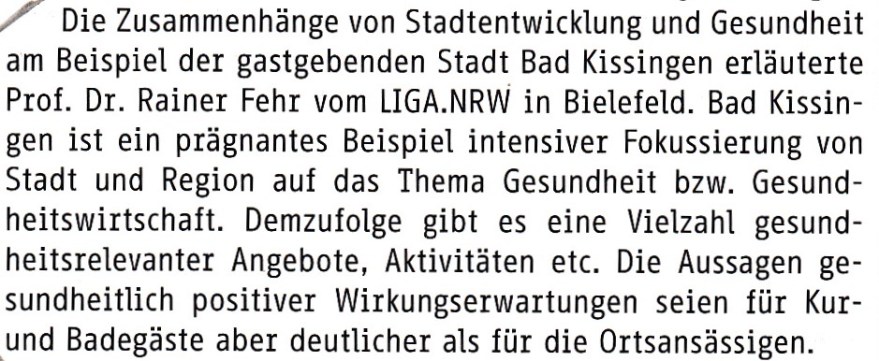
  • R. Fehr, R. Welteke, O. Mekel: Stadtentwicklung und Gesundheit am Beispiel von Bad Kissingen [08-29]

R. Fehr, R. Welteke, O. Mekel: Stadtentwicklung und Gesundheit am Beispiel von Bad Kissingen [08-29]

Erwähnung im Tagungsbericht (F. Scholles et al, UVP-report 1+2 2009, S.2-8):

Abstract:

  • Hintergrund: Gesundheit ist ein Gut, welches außer im Gesundheitssektor auch in anderen Sektoren “produziert” – und ggf. auch “beschädigt” – wird. Entsprechend hat die Weltgesundheitsorganisation einen strategischen Ansatz “Health in all policies” entwickelt, der auch die Unterstützung der Europäischen Kommission findet; die Planung und Entwicklungsförderung städtischer und ländlicher Räume bietet ein Spektrum gesundheitsschützender, präventiver und gesundheitsförderlicher Handlungsoptionen. In der Vergangenheit stand die Vermeidung gesundheitsriskanter Expositionen (gegenüber Schadstoffen, Lärm etc.) im Vordergrund, also umwelthygienische Problemfelder. Die Orientierung auf Gesundheitsgefahren und -risiken allein wird inzwischen häufig als einseitig “pathogenetisch” kritisiert; die Ergänzung im Sinne “salutogenetischer” Aspekte wie Bewegungsförderung, Erholung und Sozialkontakt erscheint sinnvoll und notwendig. Vor dem Hintergrund immer deutlicher werdender Zusammenhänge von wirtschaftlicher Lage (Armut, Wohlstand) und Gesundheit rücken zunehmend auch ökonomische Faktoren ins Blickfeld, darunter auch die spezifischen Chancen gesundheitswirtschaftlicher Unternehmungen.
  • Material und Methoden: Am Beispiel des diesjährigen UVPG-Tagungsortes Bad Kissingen untersucht dieser Beitrag folgende Fragen: Welche Verbindungen zwischen Stadtentwicklung und Gesundheit sind für diese Stadt erkennbar? Welche einschlägigen Dokumente, Themen und Akteure lassen sich identifizieren? Wie sind etwaige (Kooperations-)Prozesse nach Art und Ausmaß zu beschreiben? Hierbei interessiert auch, ob und auf welche Weise der Gesundheitssektor an Planungsverfahren und Stadtentwicklung beteiligt ist und welche Rolle sogenannte “Integrierte Programme” für die Verbindung von Stadtentwicklung und Gesundheit spielen. – Der Beitrag gehört zu einer Serie ähnlicher lokaler bzw. regionaler Studien über aktuelle Veranstaltungsorte in Deutschland. Er ist im Ausgangspunkt auf frei zugängliches (Internet-) Material gestützt, welches einer qualitativen Inhaltsanalyse unterzogen wurde. Dabei wurden u.a. folgende Quellenbereiche im Internet herangezogen: allgemeine Mitteilungen der lokalen Politik und Verwaltung; Mitteilungen des lokalen Gesundheitssektors einschließlich des lokalen Gesundheitsamtes; und Mitteilungen anderer Sektoren.
  • Ergebnisse: Die Stadt Bad Kissingen als Mittelzentrum liegt im Tal der Fränkischen Saale, umgeben von Rhön-Hügeln vulkanischen Ursprungs. Ihre Selbstdarstellung im Internet dreht sich zentral um ihre Rolle als Kur- und Badeort („bekanntester Kurort Deutschlands“ – „gesundes Klima“). Das Klima wird geschildert als sommerkühles, reizarmes und sauerstoffreiches Wald- und Hügelklima, wesentlich durch die geschützte Lage im Windschatten der Rhön gekennzeichnet. Seit 1972 ist die Stadt Bad Kissingen mit acht weiteren Ortschaften zur „Großen Kreisstadt“ als neuer Typ kommunaler Gebietskörperschaft zusammengefügt, mit insgesamt ca. 24.000 Einwohnern, darunter 28% im Alter von 65 Jahren und älter. Seit 1998 finden jährlich Gesundheitstage statt als „Leistungsschau des medizinischen Gewerbes“, mit Gesundheitsmesse in „Europas größter Brunnen- und Wandelhalle“. Wie es heißt, bietet Bad Kissingen „beste Lebensqualität. Nicht nur für Gäste der Stadt“; Bad Kissingen vereine die Vorzüge städtischer Infrastruktur mit den Annehmlichkeiten ländlicher und naturnaher Umgebung. Wohl mit Blick sowohl auf Einwohner wie auch Kurgäste gibt es Bestrebungen, die Stadt barrierefrei zu gestalten; ein städtischer Behindertenbeauftragter ist eingesetzt. Ein Förderverein Gesundheitszentrum Bad Kissingen hat das Ziel, einen Beitrag zur Förderung der öffentlichen Gesundheitspflege in Stadt und Landkreis zu leisten; es bestehen Kursangebote und – als Initiative des Fördervereins – die Hygiene-Akademie Bad Kissingen. Seit September 2007 wird im ehemaligen Schlachthof der Stadt eine (Dauer-) Ausstellung „Echte Körper – Von den Toten lernen“ gezeigt, welche Einblicke in die menschliche Anatomie vermitteln soll. Mit der Ausstellung verbunden ist eine Aktion zur Werbung für Organspenden. – Der Landkreis bezeichnet sich als Bäderlandkreis und Gesundheitsregion; im Landkreisprofil werden die Themen Wellness und Gesundheit an erster Stelle genannt. Zum Landratsamt gehört das Staatliche Gesundheitsamt, welches ein Beratungs- und Hilfsangebot auch im Bereich Gesundheitsförderung und Prävention (u.a. Suchprävention) anbietet. Untersuchungsergebnisse zur Qualität von Badegewässern zeigt eine interaktive Karte. Auch in den Informationen zum Umweltschutz finden sich Gesundheitsbezüge, insbesondere unter der Überschrift Immissionsschutz (Lärm, Außenluft). Hervorzuheben ist eine relativ ausführliche Darstellung zur Agenda 21 (und anderen Dokumenten der Rio-Konferenz von 1992), mit Verbindung zur Energie-Agentur Bayerische Rhön.
  • Diskussion: Die ausgewerteten Darstellungen lassen an dem hohen Stellenwert von “Gesundheit” für Bewohner und Wirtschaft von Stadt Bad Kissingen keinen Zweifel; das Thema Gesundheitswirtschaft steht im Marketing ganz im Vordergrund. Die Aussagen gesundheitlich positiver Wirkungserwartungen beziehen sich ganz wesentlich auf die Zielgruppe der Kur- und Badegäste, wobei Quellenverweise nicht zu finden – aber in dieser Art von Darstellung auch eher selten zu erwarten – sind. Gesundheitsbezogene Aussagen für die ortsansässige Bevölkerung sind schwerer zu erkennen. Wie effektiv die Verbindung von Stadtentwicklung und Gesundheit für Gäste wie auch für ortsansässige Bevölkerung ist, lassen diese explorativen Auswertungen noch nicht erkennen. – Aktuell wird versucht, diese externe Auswertung orientierenden Charakters im Dialog mit relevanten lokalen Akteuren zu vertiefen.

 

23-25 Sep 2009, Φ Hamburg, 45. Jahrestagung der DGSMP und 23. Jahrestagung der DGMS: Solidaritäten im Wandel

23.-25.9.2009, Hamburg, 45. Jahrestagung der Deutschen Gesellschaft für Sozialmedizin und Prävention (DGSMP) und 23. Jahrestagung der Deutschen Gesellschaft für Soziologie (DGMS): Solidaritäten im Wandel [09-06]

Eigene Beiträge:

  • Terschüren C, Mekel O, Dahlbeck E, Hilbert J, Kersting V, Strohmeier KP, Fehr R: Health Needs Assessment (HNA) – eine Methode für kommunale Mitgestaltung von Versorgung?Im Workshop „ÖGD – Themen des öffentlichen Gesundheitsdienstes“.Programmheft, p.41 [09-34]
  • Heuermann MW, Fehr R: Surveillancesystem zur Vermeidung oder Früherkennung von Kindesvernachlässigungen anhand von (Nicht-)Beteiligung an U-Untersuchungen. Poster in „Praxis-Poster II – ÖGD“. Programmheft, p. 65 [09-26]

Workshop: Aspekte der Chancengleichheit in der Leistungsmessung von Gesundheitssystemen. LIGA.NRW/WHO Collaborating Center. Moderation: R.Fehr, E.Nolte, M.Wismar [09-06]

Inhalt: Die Europäische WHO-Ministerkonferenz 2008 „Gesundheitssysteme, Gesundheit und Wohlstand“ beschloss die Charta von Tallinn, worin sich die Mitgliedstaaten u.a. auf Solidarität, Chancengleichheit und Teilhabe verpflichten. Ein weiterer Konferenzschwerpunkt lag auf der Leistungsmessung von Gesundheitssystemen. Offenkundig könnten die beiden Themen “Leistungsmessung” und “Chancengleichheit“ enger verwoben werden; hierzu will dieser vom WHO Collaborating Center for Regional Health Policy initiierte Workshop beitragen.

Workshopprogramm:

  • M. Wismar: Gesundheitsziele in Zeiten von Dezentralisierung und Deregulierung: Raum für Aspekte der Chancengleichheit?
  • E. Nolte, M. McKee: Caring for people with chronic conditions – a health systems perspective
  • R. Fehr, R. Annuß: “Gaps of trends and trends of gaps”: Zur Übertragung des Werkzeugs “Urbane gesundheitliche Chancengleichheit – Urban HEART” des WHO-Zentrums Kobe (Japan) nach Deutschland [09-10]

24-28 Aug 2009, Φ Dublin, 21st ISEE conference: Environment, Food and Global Health

2009_08_27 (034a) Dublin
2009 Dublin

24-28 Aug 2009, Dublin: 21st International Society of Environmental Epidemiology (ISEE) conference: Environment, Food and Global Health

Hosted by School of Public Health and Population Sciences, University College Dublin, in association with School of Nursing, Dublin City University; London School of Hygiene and Tropical Medicine. Conference Co-Chairs: Anthony Staines (DCU), Tony Fletcher (LSHTM). ISEE President: Tony McMichael.

Venue: University College Dublin. 25 Aug 2009: Welcome reception, Dublin Castle. 28 Aug 2009: Conference dinner, Guiness Storehouse.

OS6.5 – Symposium 40 – Epidemiology informs policy-making – in what direction are current projects and processes leading us? 27 Aug 2009, 16:00 – 17:30 Theatre C006, Chair: Rainer Fehr and Marco Martuzzi [09-09]

  • OS6.5.1 Recent developments in the science-policy interface in environment and health in Europe. Marco Martuzzi
  • OS6.5.2 The contribution of large European research consortia. Fintan Hurley, David Briggs, George Morris
  • OS6.5.3 Linking Policy to Environmental Health Assessment. Eva Kunseler, Leendert van Bree, Anne Knol
  • OS6.5.4 Evidence for the assessment of long-term environment & health policies. Paul Wilkinson
  • OS6.5.5 On science-policy interface – Results from synthetic analysis of five EC-funded projects, part I: “Assessment” issues. Rainer Fehr, Helmut Brand [09-22]
  • OS6.5.6 On science-policy interface – Results from synthetic analysis of five EC-funded projects, part II: “Policy development”. and “assurance” issues. Rainer Fehr, Helmut Brand [09-23]

Symposium exposé: Epidemiologists aim, among other things,  to inform policy-making. This pursuit is often successful. Many epidemiological research results have informed policy-making, and continue to do so. Prominent examples of successful uptake of epidemiological research refer to a variety of environmental health topics, including environmental tobacco smoke, outdoor and indoor air pollution, radon exposure, ambient noise protection, occupational hazards, etc.

On the other hand, many epidemiologists also encounter situations where it turns out quite difficult to elicit positive responses in the policy arena. As a prominent example, we might look at the evidence concerning the role of physical exercise (and a lifestyle oriented towards personal physical mobility at large) for the promotion of health and well-being and the prevention of a whole range of diseases, including cardio-vascular conditions but also a variety of malignancies.

For successful interaction of epidemiological science and policy, clearly no “standard model” exists as yet. Over the years, the mechanics, pitfalls and success factors of such interactions were dealt with in numerous ISEE sessions. ISEE also featured a “policy and planning” working group specifically devoted to these issues.

A number of current projects look at the science-policy interaction. One traditional approach relies on providing better access for policy-makers to adequately prepared information on health and health determinants. Departing from such model, the concurrent or prospective assessment of policy impacts on human health (Health Impact Assessment, HIA),  is based on both modeling and comprehensive participation.

Traditionally, a “cascade” of models was linked together along the causal chain to try and predict policy impacts. Recent trends seem to indicate a tendency to apply more comprehensive approaches, which eventually may span the “full chain” from policy-making to (monetary) implications in an integrated fashion.

An emerging issue is the transferability of solutions shown to work properly in one particular context, be it country, region or locality. Policy-related public health networks and programs including “Healthy cities”, “Regions for health”, “Local Agenda 21” and “Environmental health action plans” often establish collections of examples of “good” or even “best” practice.

Attempts to transfer the solutions described in these repositories, however, do not always succeed. They sometimes fail, possibly after having consumed a lot of resources and enthusiasm. Since working with “Good practice examples” has evolved to be one of the leading paradigms for promoting innovative public health policy approaches, it would be highly desirable to provide reliable advice to policy-makers considering the transfer of innovations from one place to the other.

The Symposium’s objectives are to:

  • Present some recent reflections and insights in the current interface between environmental health science and policy
  • Describe the policy context at European level, including the preparatory work leading to the 5th Ministerial Conference on Environment and Health of 2010
  • Address the critical gaps and needs for a more direct and effective translation of research findings into health-friendly policy
  • Stimulate the debate within ISEE, and explore whether and how the Society can strengthen its stand in the science-policy domain

The speakers will present experiences and insights relating to the science-policy interface, and will speculate on what future scenarios or developments one might expect in this field. Presentations will be kept short (<15 mins) to allow some time for discussion.

Symposium structure (prelim state):

  • Marco Martuzzi, WHO (confirmed): Recent developments in the science-policy interface in environment and health in Europe. The reflection on alternative models for the interface between science and policy is very rich and illuminating. With the crisis of the  “modern” model of mutual legitimation of science and political power, and the ensuing erosion of their authority,  other models have been proposed, described and applied in different contexts. This reflection seems to be somewhat disconnected from the reality of policy making in Europe and beyond. An effort is underway, on the part of WHO and other agencies, to address and close such gap.
  • Fintan Hurley et al.: The contribution of large European research consortia. The progress and the insights made in projects such as HEIMTSA, INTARESE, NoMiracle, etc, will be presented.
  • Eva Kunseler, Netherlands Environmental Assessment Agency (PBL) (Confirmed): Integrated environmental health assessments from science-policy perspective. This presentation highlights the linkages between the assessment process and the management sphere for policy-driven integrated environmental health assessments. The suitability of a scientific assessment as supportive input to policy action is determined by processes both within the scientific community and at the interface with policy makers, stakeholders and civil society. Our focus is on the latter. We distinguish four layers of analysis to obtain incremental insight into the linkages between the assessment process and the management sphere: Analysis of the policy context, recognizing the prevailing management principles,to better understand the policy question for scientific inquiry; Analysis of the assessment approach and indicator function in relation to the preferred policy evaluation criterion such as effectiveness, performance or efficiency; Analysis of the appraisal approach to capture the integrative whole of societal, economic and physical dimensions affected by policy action, and analysis of the appropriate approach to policy-relevant interpretation of the assessment outcome with presentation and reporting devices.
  • Paul Wilkinson, LSHTM (confirmed):
  • Rainer Fehr, Landesinstitut für Gesundheit und Arbeit NRW (confirmed): Perspectives of WHO Collaborating Center on “Regional Health Policy and Public Health” on science-policy interface. The Institute of Health and Work North Rhine-Westphalia (LIGA.NRW) was recently appointed WHO Collaborating Center (CC) on “Regional Health Policy and Public Health”. The CC’s mission includes efforts to contribute to the exchange of concepts, data, and profesional expertise to improve regional (and local) health policy throughout the policy cycle. The CC works close with the WHO Regions for Health (RHN) policy network which comprises some 30 regions from (the larger) Europe. CC currently refines its conceptual framework to underpin its mission. For this purpose, CC focusses on the following items to synoptically analyze and where possible integrate: (i) actors/institutions, (ii) activities/programs/projects, (iii) publications/other literature, (iv) resulting knowledge and experience. This paper focusses on a synoptic analysis of a range of EC-funded projects concerning the science-policy interface, incl. EUREGIO (Evaluation of cross-border activities), ENHIS (European Environment and Health Information), EPHIA (European Policy Health Impact Assessment), PIA PHR (Policy Impact Assessment of Public Health Reporting), and various indicator projects.

Rainer Fehr, Helmut Brand: On science-policy interface – Results from synthetic analysis of five EC-funded projects, part I: “Assessment” issues [09-22]

  • 1. Background and Objective. The WHO Collaborating Center (CC) on “Regional Health Policy and Public Health” at LIGA.NRW is committed to assist in all phases of the public health policy cycle. One of CC’s approaches refers to integrating experiences and recommendations across existing projects on evidence-based policy-making. This poster focusses on “assessment”.
  • 2. Methods. A set of five related, EC-funded projects concerning the science-policy interface was chosen: Benchmarking Regional Health Management II (BEN II, 2004-2007), European Environment and Health Information (ENHIS II, 2005-2007), European Policy Health Impact Assessment (EPHIA, 2002-2004), Evaluation of cross-border activities (EUREGIO, 2004-2007), and Policy Impact Assessment of Public Health Reporting (PIA PHR, 2005-2008). This set includes both “general” public health and environment-focussed projects. – The projects underwent synoptic, largely qualitative analysis.
  • 3. Results. s for “analysis”, this set of projects covers a range of specific approaches which can be broadly classified into (i) status quo analysis of health and health determinants incl. health systems, and (ii) prospective, concurrent, or retrospective impact analysis, highlighting the change in burden of disease resulting from policies or other arrangements. Key concepts for both arenas, as gathered from the projects, include (indicator-based) comparative analysis; establishing, piloting, and evaluating generic methodologies; and “good practice” approaches. Specific concepts include “organigraphs” for charting how organisations work; dedicated policy-supporting information and analysis systems; “reference frameworks” to judge what interventions and policies contribute to good practice; step-wise procedure models, e.g. on health impact assessment; and cluster analysis of regions. The combined results of the projects are referenced and mapped out for easier access.
  • 4. Conclusion.
  • Taken together, the five EC-funded health policy projects offer a basis for improved “analysis” activities in the policy cycle. After this “proof of concept”, the approach should be field-tested.

Rainer Fehr, Helmut Brand: On science-policy interface – Results from synthetic analysis of five EC-funded projects, part II: “Policy development” and “assurance” issues [09-23]

  • 1. Background and Objective. The WHO Collaborating Center (CC) on “Regional Health Policy and Public Health” at LIGA.NRW is committed to assist in all phases of the public health policy cycle. One of CC’s approaches refers to integrating experiences and recommendations across existing projects on evidence-based policy-making. This poster focusses on “Policy development” and “assurance”.
  • 2. Methods. A set of five related, EC-funded projects concerning the science-policy interface was chosen: Benchmarking Regional Health Management II (BEN II, 2004-2007), European Environment and Health Information (ENHIS II, 2005-2007), European Policy Health Impact Assessment (EPHIA, 2002-2004), Evaluation of cross-border activities (EUREGIO, 2004-2007), and Policy Impact Assessment of Public Health Reporting (PIA PHR, 2005-2008). – The projects underwent synoptic, largely qualitative analysis.
  • 3. Results. Similar to “assessment”, this set of projects covers a range of specific approaches to “policy development”. They refer to both the actors involved and the activities undertaken. In policy-making, different actors, e.g. decision-makers, citizens, and professionals, need to be accommodated. Overviews of existing policies, e.g. inventory of national policies on selected issues in 18 European countries as produced by one project, may provide examples which can be adapted to specific new situations. Taken together, the projects reflect policy-making at European, national, and regional (subnational) levels, including priority-setting as well as other methodological and organizational aspects. Promoting and hindering factors for cooperation with diverse sectors and actors, as identified, e.g., in analysing cross-border projects, can be of general interest. Just as for the “analysis” poster, the combined results of the 5 projects are referenced together and mapped out for easier access.
  • 4. Conclusion. The five EC-funded health policy projects also offer a basis for improved “policy development” activities in the policy cycle. After this “proof of concept”, the approach should be field-tested.

26 Aug 2009, National Gallery (2 paintings by Claude) and Dublin Writers Museum, 18 Parnell Square, https://en.wikipedia.org/wiki/Dublin_Writers_Museum: “… occupies an original 18th-century house … was established to promote interest, through its collection, displays and activities, in Irish literature as a whole and in the lives and works of individual Irish writers …”

Selection of Irish writers: George Bernard Shaw (1856-1950), Oscar Wilde (1854-1900), James Joyce (1882-1941), Samuel Beckett (1906-1989), William Butler Yeats (1865-1939).