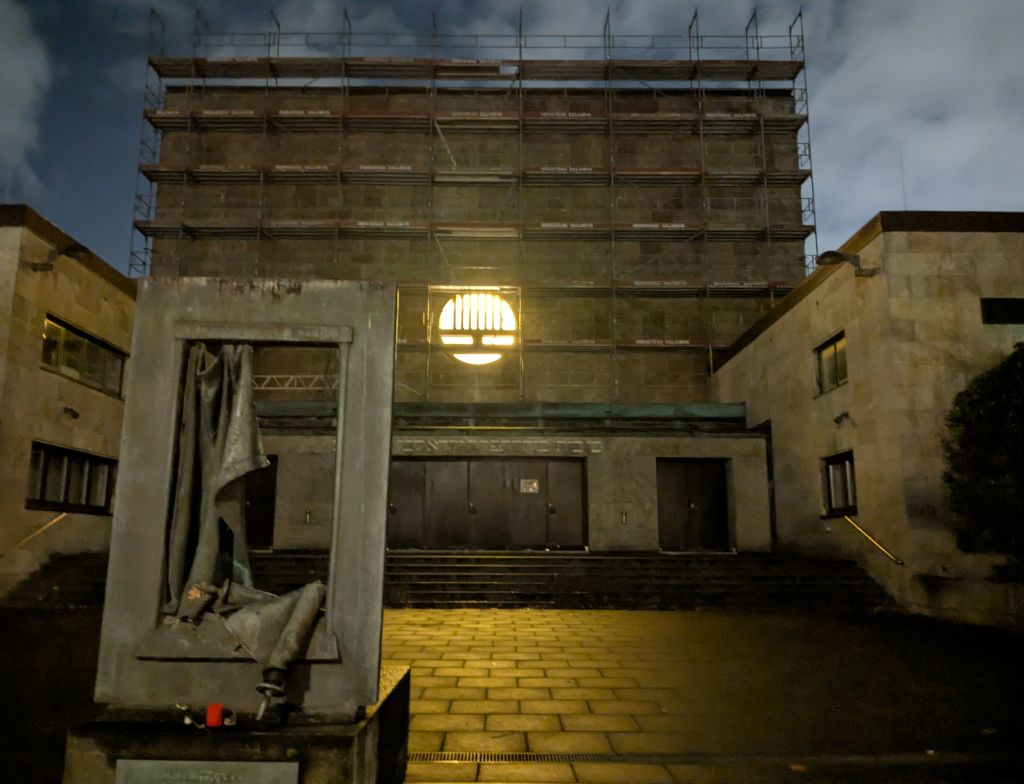
16 Oct 2025, Bochum Unterführung “Woher? – Wohin?“ / Bochum underpass: “Where from? Where to?”

16.10.2025, Bochum Unterführung “Woher ? – Wohin?“ / Bochum underpass: “Where from? Where to?”


Uepo.de Übersetzerportal, 24.1.2025, Richard Schneider, https://uepo.de/2025/01/24/woher-wohin-bochumer-unterfuehrung-stellt-wesentliche-fragen-des-seins-in-24-sprachen/: Woher? Wohin? Bochumer Unterführung stellt wesentliche Fragen des Seins in 24 Sprachen / [Transl.] Where from? Where to? Bochum underpass poses fundamental questions of existence in 24 languages

Dortige Bildunterschrift: Wohin? Diese Frage wird den stadtauswärts fahrenden Bürgern in Bochum in 24 Sprachen gestellt. In der Gegenrichtung lautet die Frage: Woher? / [Transl.] Caption there: Where to? This question is asked in 24 languages to citizens leaving Bochum. In the opposite direction, the question is: Where from?

Text: … Will der Künstler … wesentliche Fragen des Seins aufwerfen? Woher kommen wir als Menschheit? Wohin gehen wir? … Das Projekt soll vor allem verdeutlichen, dass die Bochumer Dutzende von Muttersprachen sprechen. Bei der Einweihung der Woher-wohin-Installation … erklärte der in Essen ansässige Künstler: Einerseits ist das der Bezug zum Bahnhof, zum An- und Abreisen, andererseits hat es eine philosophische und religiöse Variante. Es verweist aber auch auf Migranten und erfüllt damit die politische Dimension. Christoph Hildebrand hatte sich von der Stadtverwaltung eine Statistik mit den 30 häufigsten Herkunftssprachen der Bochumer Wohnbevölkerung geben lassen. Dann ließ er sich die beiden Wörter wohin und woher in diese Sprachen übersetzen … von in der Stadt arbeitenden Muttersprachlern. Bei der Umsetzung der … auf Zetteln erhaltenen Übersetzungen übernahm der Künstler sogar die Handschrift der jeweiligen Muttersprachler … / [Transl.] Text: … Does the artist want to raise fundamental questions about existence? Where do we come from as humanity? Where are we going? … Above all, the project aims to highlight the fact that the people of Bochum speak dozens of different native languages. At the inauguration of the Woher-wohin installation, the Essen-based artist explained: On the one hand, there is the reference to the train station, to arrivals and departures, and on the other hand, there is a philosophical and religious aspect. But it also refers to migrants and thus fulfills a political dimension. Christoph Hildebrand asked the city administration for statistics on the 30 most common languages spoken by Bochum’s resident population. He then had the two words “wohin” (where to) and “woher” (where from) translated into these languages … by native speakers working in the city. When transcribing the translations he received on slips of paper, the artist even copied the handwriting of the respective native speakers ... [Translations by DeepL]

12 Oct 2025, Bamberg; E.T.A. Hoffmann-Haus aktuell geschlossen

12.10.2025, Bamberg; E.T.A. Hoffmann-Haus aktuell geschlossen

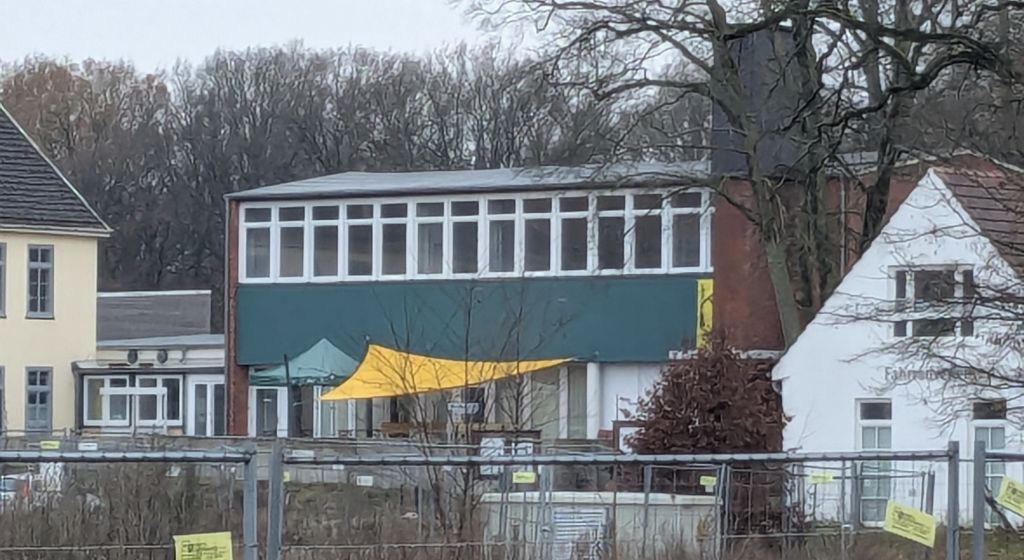
E.T.A. Hoffmann-Haus, https://museum.bamberg.de/eta-hoffmann-haus/: Derzeit wird das E.T.A. Hoffmann-Haus saniert … Wiedereröffnung … nach 2026 … E.T.A. Hoffmann (1776–1822) war Schriftsteller, Komponist, Zeichner, Karikaturist und ausgebildeter Jurist … der wohl bekannteste Erzähler der deutschen Romantik … gab der Kunst des Erzählens eine neue Wendung. Seine Literatur, die Reales und Fantastisches zusammenführt …, ist zugleich Verzauberung und Entzauberung der Welt. Indem Hoffmann märchenhafte Elemente mit scharfen Diagnosen seiner Gegenwart verband, traf er … den Nerv seiner Zeit. Sein Blick auf Kunst, Natur und Technik, seine Schilderung der Schrecken und Verheißungen der Zivilisation, hat uns auch heute noch viel zu sagen. Das Bamberger Haus am heutigen Schillerplatz 26, in dem Hoffmann von 1809 bis 1813 lebte, … als einzige Wohnstätte des an vielen Orten tätigen Künstlers erhalten. … Aktuell wird das … Wohnhaus saniert. Nach der Wiedereröffnung wird das Museum eine neue Dauerausstellung sowie Wechselausstellungen zu E.T.A. Hoffmanns Werk und zur Welt der Romantik bieten.


Cf.:

12 Oct 2025, ♣ München: Blutenburg

12.10.2025, München: Blutenburg


https://de.wikipedia.org/wiki/Schloss_Blutenburg: … ehemalige Jagdschloss Blutenburg … im Westen Münchens, im Stadtteil Obermenzing … Das spätgotische Bauwerk und die … Schlosskapelle werden von der Würm umflossen. Heute ist im Schloss u. a. die … Internationale Jugendbibliothek untergebracht. Hier hat auch die Erich-Kästner-Gesellschaft ihren Sitz … Schloss Blutenburg war durch eine Sichtachse … mit dem östlich gelegenen Schloss Nymphenburg verbunden … soll … mittelfristig wiederhergestellt werden.  … Das Schloss geht auf eine Wasserburg des 13. Jahrhunderts zurück … … In der Nähe des Schlosses … ein Mahnmal des Bildhauers Hubertus von Pilgrim für die Opfer des Todesmarsches aus dem Konzentrationslager Dachau. Dieses Mahnmal gehört zu einer Reihe von 22 gleichen Mahnmalen, die seit 1989 aufgestellt wurden …


https://de.wikipedia.org/wiki/Agnes_Bernauer: Agnes Bernauer (* um 1410 wohl in Augsburg; † 12. Oktober 1435 bei Straubing) war die Geliebte und vielleicht auch erste Ehefrau Albrechts, des Thronfolgers und späteren Herzogs von Bayern. Durch diese nicht standesgemäße Verbindung geriet er in Konflikt mit seinem Vater Herzog Ernst von Bayern-München, der Agnes 1435 in der Donau ertränken ließ … Leben und Sterben der Agnes Bernauer wurden in zahlreichen literarischen Werken verarbeitet … Friedrich Hebbels Trauerspiel Agnes BernauerDie Bernauerin von Carl Orff …

11 Oct 2025, Stippvisite / flying visit to Ammersee (Riederau)

11.10.2025, Stippvisite / flying visit to Ammersee (Riederau)

Infotafel: Ammerseepfad. Grabenlandschaft mit eiszeitlichem Ursprung. … Ammersee-Westseite … Bachläufe … Auch die Uferform wird von ihnen beeinflusst … haben … aus dem mittransportierten Gestein Schwemmkegel aufgeschüttet, die … in den See ragen … Hier am Dampfersteg … mündet der „Melchgraben“ in den See … mit dem Abschmelzen des Gletschers der letzten Eiszeit entstanden …


Cf.:

  • 16 Jun 2024, Ammersee inkl. 10. Chor-Literatur-Biennale Dießen [incl. earlier posts]

10 Oct 2025, Views on Zen – beat Zen, square Zen, and Zen

10.10.2025, Views on Zen – beat Zen, square Zen, and Zen

Zen lt. “Der Volksbrockhaus” 1961 (F.A. Brockhaus, Wiesbaden, 12. Aufl.), p. 885: buddhistische Sekte in China und Japan; gestiftet 6. Jahrh. n. Chr.; pflegt Selbstversenkung; Einfluß auf das japan. Geistesleben / according to a 1961 lexicon, [automat. transl.:] Buddhist sect in China and Japan; founded in the 6th century AD; cultivates self-absorption; influence on Japanese intellectual life.

10.10.2025, im Zen-Dojo am Münchener Ostbahnhof (https://zen-ostbahnhof.de/): „Zen in München“, www.zen-in-muenchen.de


Cf.

  • 30.5.2024, from Moe’s Books (2476 Telegraph Av., Berkeley, CA): Alan Watts (1957): The way of Zen. Vintage Books / Random House. Excerpt: p. xiii, the “objective observers” … invariably miss the point and eat the menu instead of the dinner … p.3, Zen Buddhism is a way and a view of life … p.56, the anxiety-laden problem of what will happen to me when I die is … like asking what happens to my fist when I open my hand … p.86, it has been said, “The taste of Zen … and the taste of tea … are the same.” … p.99, famous definition of Zen, “When hungry, eat; when tired, sleep.” … p.109, za-zen or sitting meditation … p.111, “tea ceremony”, flute playing, brush drawing, archery, fencing, and ju-jutsu as ways of practicing Zen … p.112, however much za-zen may have been exaggerated …, a certain amount of “sitting just to sit” might well be the best thing in the world for the jittery minds and agitated bodies of Europeans and Americans … p.132, Lao-tzu said of the Tao: … The Tao, without doing anything …/ leaves nothing undone … p.134, Sitting quietly, doing nothing … p.190, If Christianity is wine and Islam coffee, Buddhism is most certainly tea, The totally undistracting emptiness and simplicity of the Taoist or Zen hermitage has set the style … for Japanese domestic architecture as a whole … p.196-7, Zen has no goal; it is a traveling without point, with nowhere to go … p.197, great importance is attached to the way of breathing …
  • 13.3.2022, Re-reading Jack Kerouac (1958): The Dharma Bums. Signet Book, New American Library, New York, NY. – From the excerpt: p.52 “The secret of this kind of climbing”,” said Japhy, “is like Zen. Don’t think. Just dance along …” … p.54 “… the Oriental passion for tea … the first sip is joy, … the third is serenity, … the fifth is ecstasy …” … p.91 Zen intellectual artistic Buddhism he loved …
  • 7.11.2019, Re-reading Pirsig (1974): Zen and the Art of Motorcycle Maintenance. – Robert M. Pirsig (1974): Zen and the Art of Motorcycle Maintenance. An Inquiry into Values. Bantam edition (1975) / Bantam Books, New York, NY.p.iii: Author’s note. What follows is based on actual occurrences … However, it should in no way be associated with that great body of factual information relating to orthodox Zen Buddhist practice. It’s not very factual on motorcycles, either. – Original reading: Oct. 1989.
  • 15.3.2009, Flight from Narita (Tokyo) Airport westward to Frankfurt/Main, reading M. Horn (2001): Der kleine Zen-Garten (cf. 6.-15.3.2009 Japan-Reise)
  • Abd al-Hayy Moore (2000): Zen Rock Gardening. Running Press Miniature Edition. Philadelphia, PA. p.8 Entering a garden is like opening a book … p.20 We usually find Zen gardens by Zen monasteries, inner courtyards, or in areas adjacent to landscape gardens. In a Zen garden, familiar paths and vegetation are replaced by a stark rectangle of flat raked gravel, stones, and space. p.20-1 The gravel is … combed in either long … straight rows, wavy patterns, or concentric circles around the rocks … p.22 These gardens cannot be entered in the usual sense, but are meant to be viewed … p.25 have been called “mental gardens” …
  • In August 1993 acquired in Berkeley: Ann Charters (Ed.) (1992): The portable Beat reader. Penguin Books USA, New York. pp. 606-607, Alan Watts. “Watt’s importance to the Beat literary movement is his article “Beat Zen, Square Zen, and Zen”, written for the summer 1958 “Zen” issue of the Chicago Review … pp.607-614, Beat Zen, Square Zen, and Zen.

Addendum, 8.11.25

ChatGPT, when asked to summarize the distinction made by Alan Aatts between “Beat Zen”, “Square Zen”, and “Zen”, seemed well-informed. Key statements included:

  • Beat Zen. Who: Associated with the Beat Generation (writers like Jack Kerouac, Allen Ginsberg, Gary Snyder). Spirit: Rebellious, spontaneous, anti-establishment, and anti-rational … … …
  • Square Zen. Who: The institutional, traditional, or academic side of Zen — temples, teachers, and formal practitioners. Spirit: Orderly, moralistic, ritualistic, and often focused on proper form, hierarchy, and rules. … …
  • Zen (true Zen). Who: Neither the rebellious Beat nor the rigid Square. Spirit: Beyond both conformity and rebellion — spontaneous yet disciplined, free yet grounded … … …

Asked about translations into German, ChatGPT explained:

  • Beat Zen. Literal sense: “Beat” comes from the Beat Generation — originally meaning “tired” or “beaten down” in 1940s American slang, later reinterpreted as hip, countercultural, spontaneous. Connotation: Free-spirited, anti-establishment, bohemian, living in the moment. Possible German translations: „Beat-Zen“ (keeping the original, common in German texts on Watts), „Zen der Beat-Generation“ (explicitly cultural), „rebellisches Zen“ or „freigeistiges Zen“ (emphasizes the spirit rather than the label).
  • Square Zen. Literal sense: “Square” was 1950s slang for conventional, boring, or uptight. Connotation: Institutional, rule-bound, proper, conservative. Possible German translations: „Square-Zen“ (again, often kept as-is in scholarly texts), „konventionelles Zen“ or „formales Zen“ (conveys the orthodox, disciplined character), „bürgerliches Zen“ (captures the sense of socially “square” or conventional).