21.11.2009 Sa: Per Bahn nach Poznan/Posen; dort Leihwagen
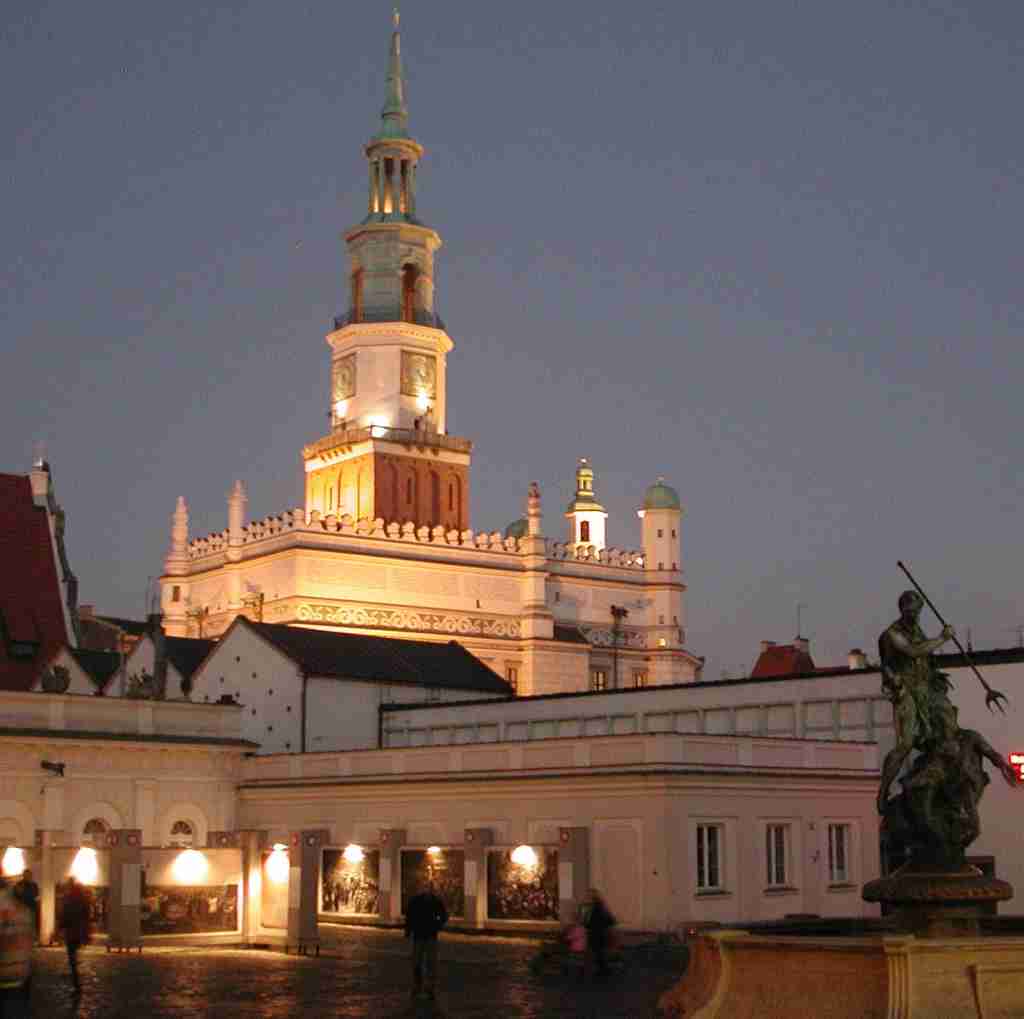
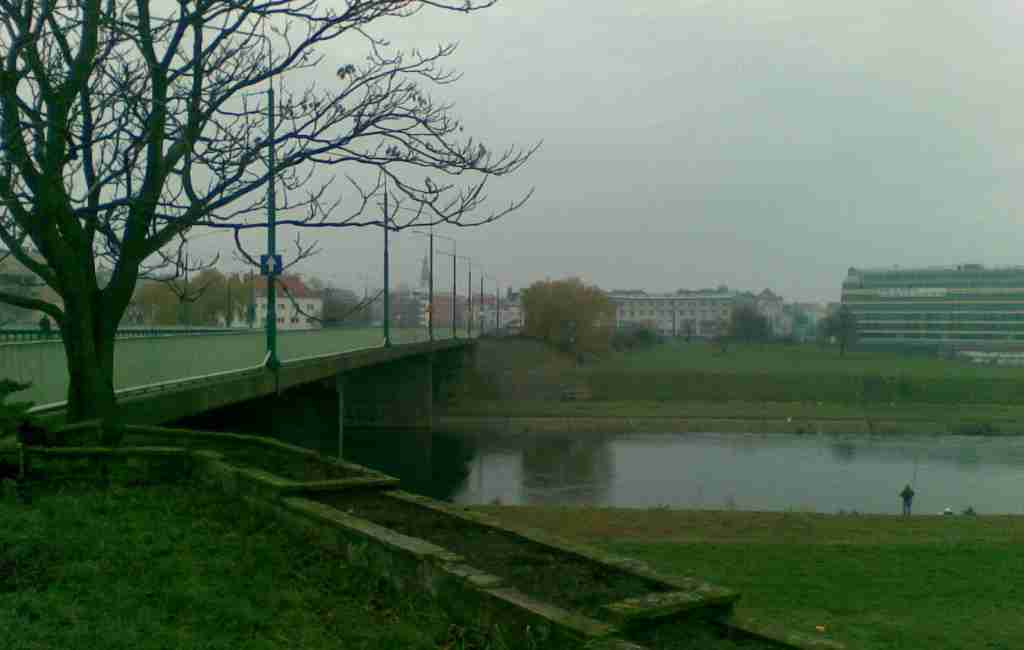
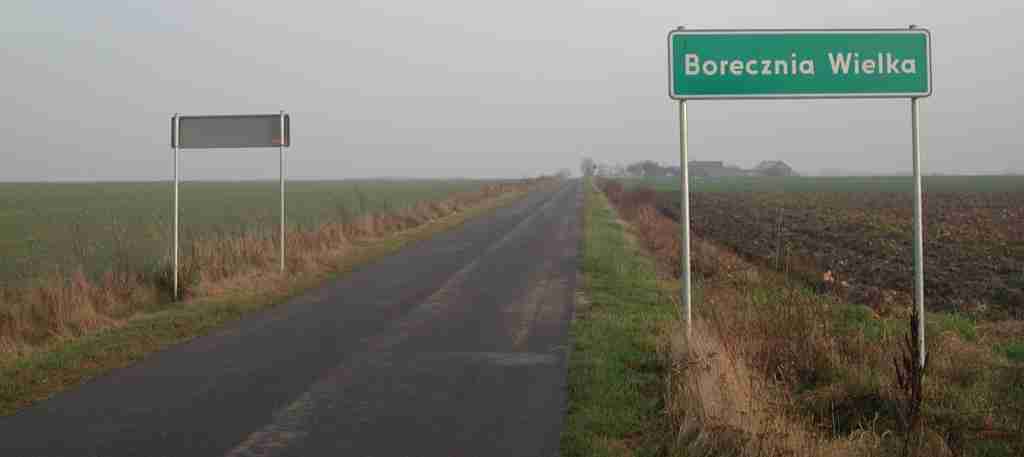
22.11.2009 So: Poznan: Jogging-Lauf über die Warthe zur Kathedrale, dann Zitadellen-Park. Fahrt mit Pkw nach Sompolno und Borecznia (Familiengeschichte)
Posener Dom, https://de.wikipedia.org/wiki/Posener_Dom: … die erzbischöfliche St.-Peter-und-Paul-Kathedrale … Als eine der frühesten Kirchen … des Landes steht der Posener Dom geschichtlich für den Beginn der Christianisierung Polens … Auf der Dominsel …, einer Binneninsel der Warthe, lag die früheste Ansiedlung der Posener Stadtgeschichte.
1.11.2009, Kunsthalle Hamburg: (i) Karl Blechen: Amalfi-Skizzenbuch, (ii) Hamburger Ansichten
Zu (i) Mit Licht gezeichnet. Das Amalfi-Skizzenbuch von Carl Blechen aus der Kunstsammlung der Akademie der Künste, Berlin
30.10.2009 – 17.1.2010
[ehemals:] www.hamburger-kunsthalle.de/archiv/seiten/blechen.html: Carl Blechen (1798 – 1840) galt schon seinen Zeitgenossen als ein Phänomen … bewunderten seine Genialität, zugleich jedoch provozierte er … mit seinen formal und inhaltlich neuen Sichtweisen. Heute … international als einer der bedeutendsten Künstler des 19. Jahrhunderts geschätzt. Als Landschaftsmaler bezieht sich Blechen motivisch und inhaltlich auf die Romantik. Im Malerischen weist er … weit über seine Zeit hinaus … verbindet eine Frühform realistischer Wahrnehmung mit einer Technik der Pleinairmalerei, die zu dieser Zeit und in dieser Form in Europa neu ist … ein für diese Zeit einzigartiges Oeuvre, das mit den Arbeiten William Turners verglichen werden kann. Höhepunkt sind die 1828/29 auf seiner ltalienreise entstandenen Arbeiten … Amalfi-Skizzenbuch … das Herzstück dieser ltalienreise …Das Blattkonvolut versammelt auf 66 großformatigen Seiten die mit Bleistift, Sepia und Aquarellfarben festgehaltenen Eindrucke einer zehntägigen Aanderung entlang der Amalfitanischen Küste. In den Bergorten Amalfi, Ravello, Minuto und Scala und im Mühlental hinter Amalfi fertigte Blechen im Mai 1829 eine große Anzahl von Landschaftszeichnungen.
Eine Ausstellung der Akademie der Künste, Berlin, und der Hamburger Kunsthalle.
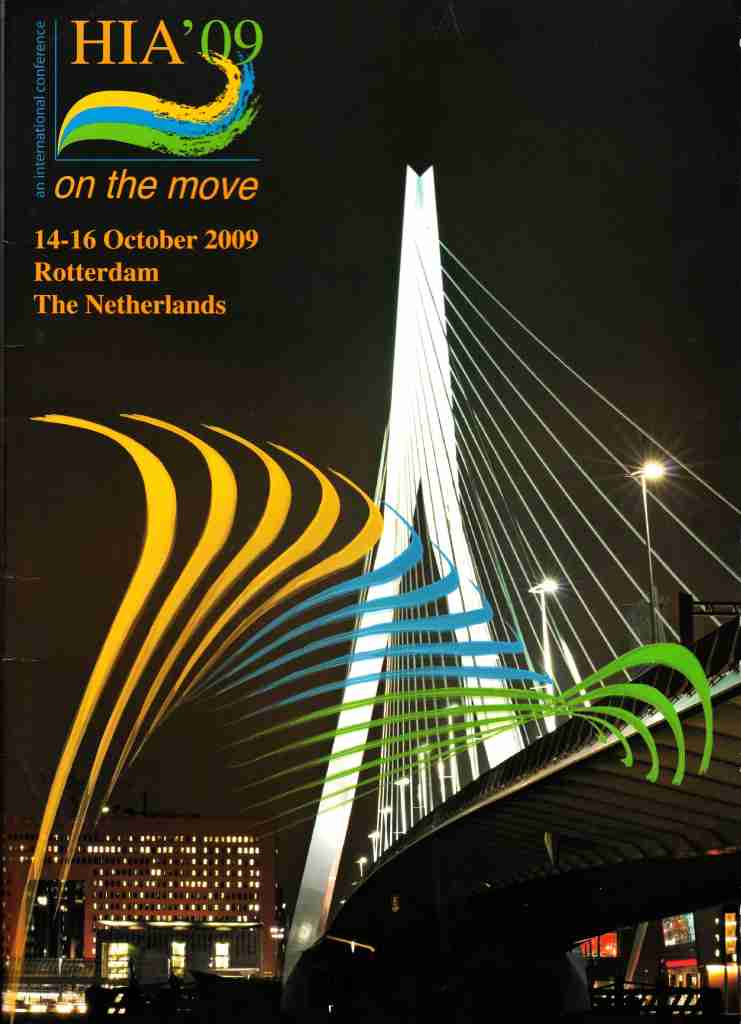
13.-16.10.2009, Φ ♣ Rotterdam, HIA ’09 – An International Conference: On the move
Organized by HIA ’09 Steering Group incl. Lea den Broeder (chair), RIVM; plus Windesheim U Applied Sciences; NL Ministry of Health, Welfare and Sport; NL Association of Municipal Helth Services; Vrije Universiteit Amsterdam; NL Institute of Health Promotion (NIGZ); Rotterdam Municipal Health Service. – Venue: Preconference workshops: Public Health Service Rotterdam-Rijnmond; and field trips. Main conference: Regardz Weena Point Rotterdam Meeting Center [08-72]
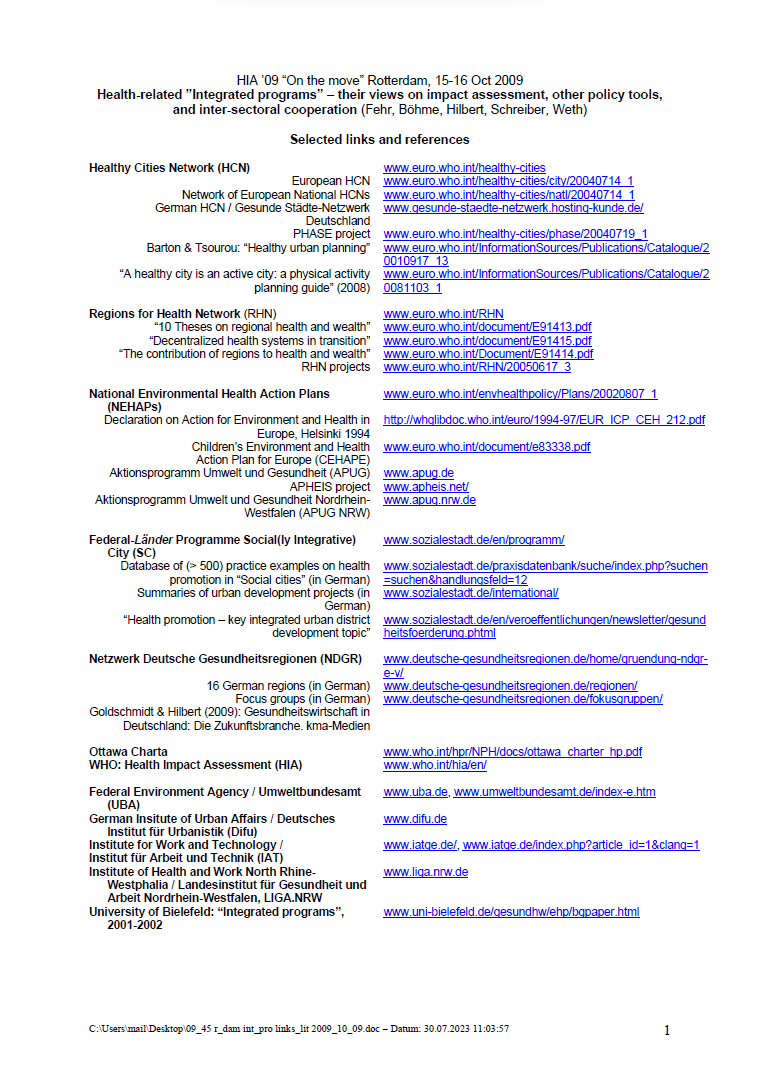
Fehr, C. Böhme, J. Hilbert, H. Schreiber, C. Weth: Health-related ”Integrated programs” – their views on impact assessment, other policy tools, and inter-sectoral cooperation (Poster presentation) [09-45]. For abstract, poster and handout reverse page: see below
Fehr (LIGA.NRW), J.M. den Broeder (RIVM, Bilthoven, NL), M.R. Partidário (Technical U Lisbon, Lisboa, PT), B. Cave (Ben Cave Assoc., Leeds, UK), B.A.M. Staatsen (RIVM, Bilthoven, NL), O.C.L. Mekel (LIGA.NRW, Bielefeld, DE): Workshop W8 „Family of health-related impact assessments – securing equity in situations of change and crisis?“ Format: World Cafe [09-46]. For abstract and outline: see below
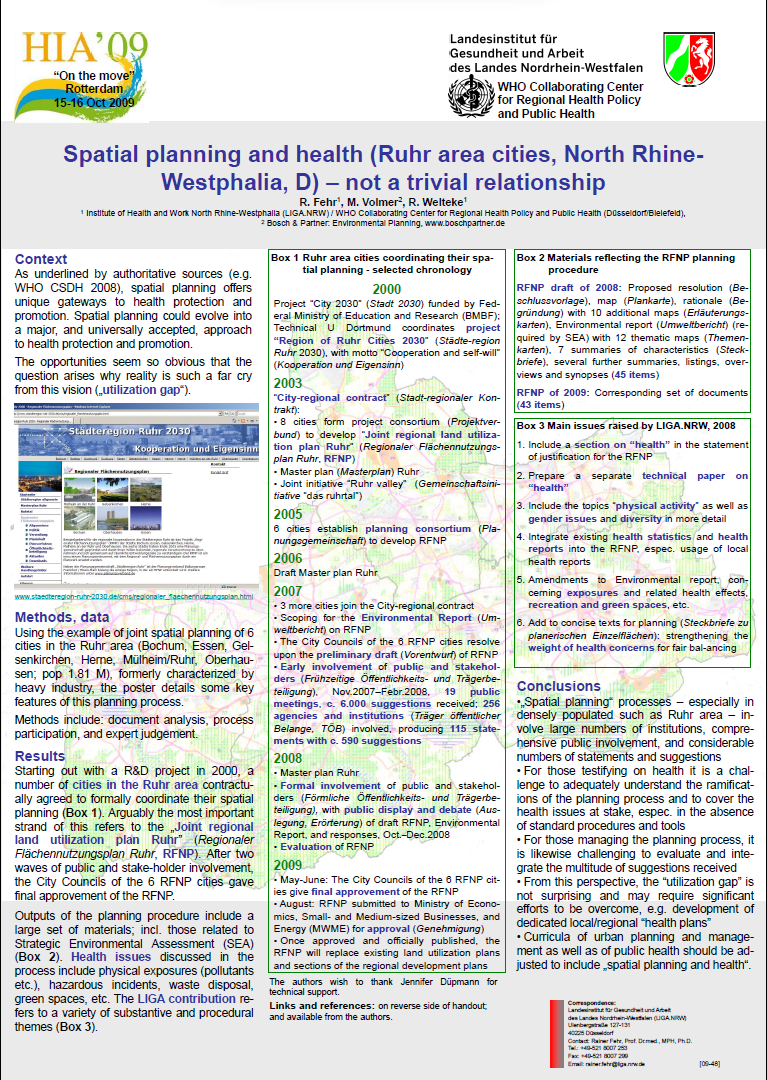
Fehr, M. Volmer (Bosch & Partner: Environmental planning, http://www.boschpartner.de), R. Welteke (WHO CC Regional Health Policy / LIGA.NRW): Spatial planning and health (Ruhr area cities, North Rhine-Westphalia, D) – not a trivial relationship (Poster presentation) [09-48]. For abstract, poster and handout reverse page: see below
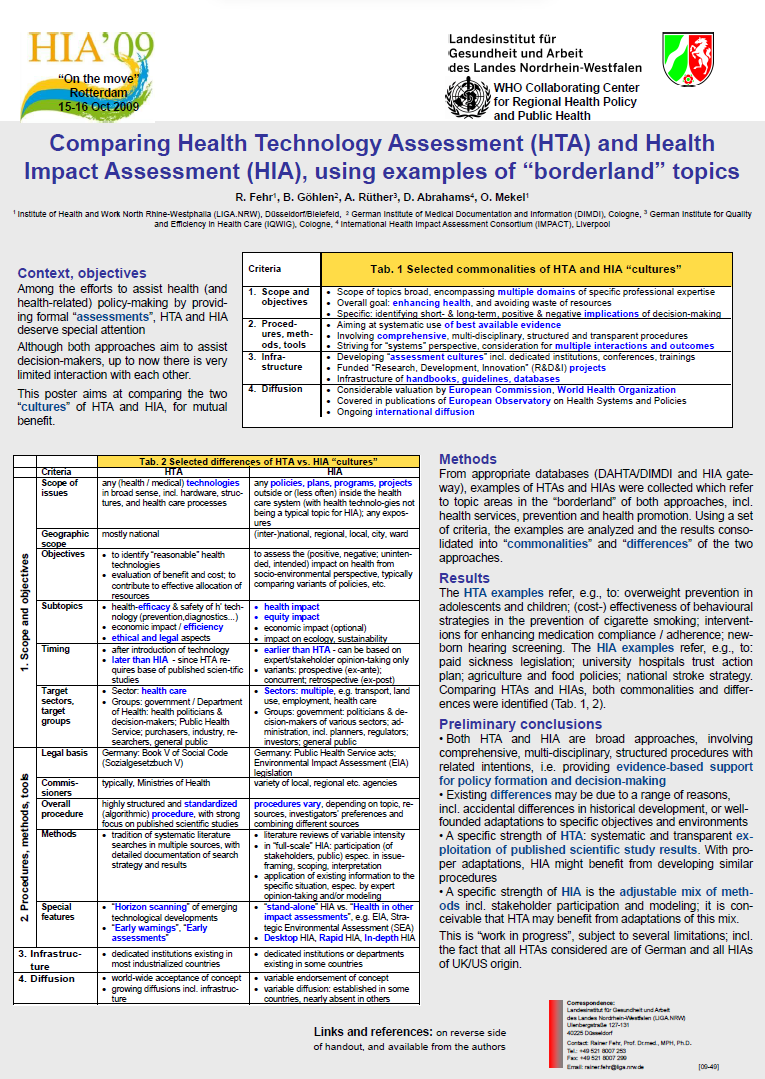
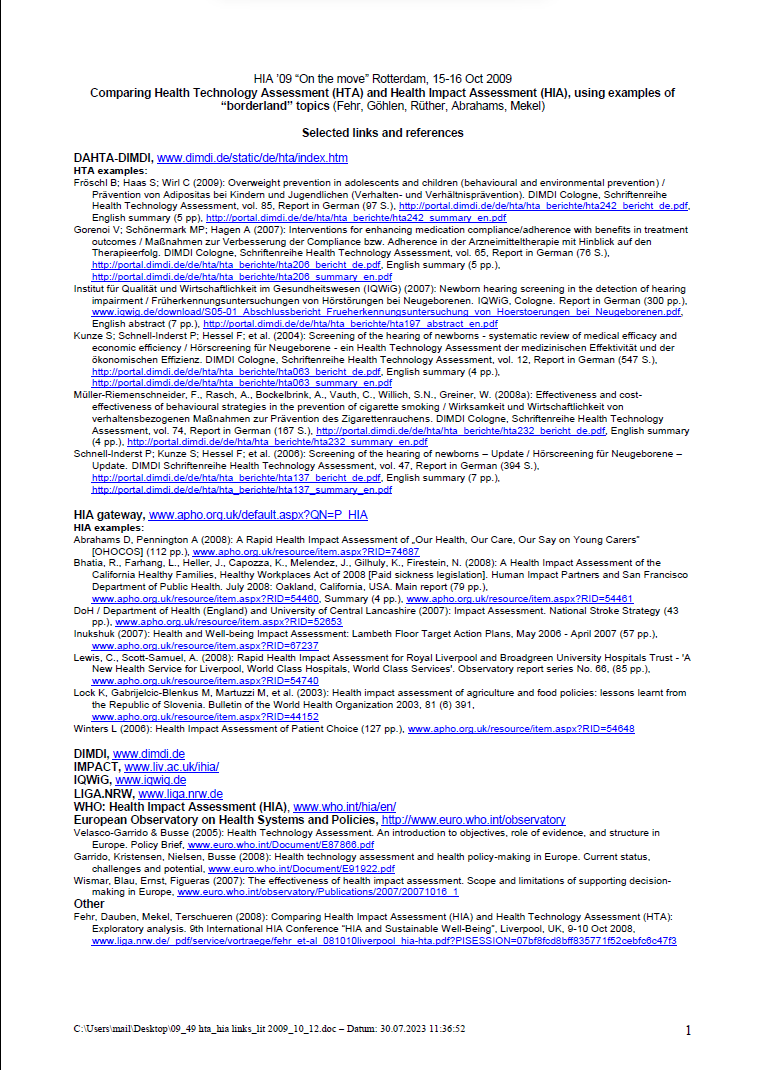
Fehr, B. Göhlen, A. Rüther, D. Abrahams, O. Mekel: Comparing Health Technology Assessment (HTA) and Health Impact Assessment (HIA), using examples of “borderland” topics [09-49]. For poster and handout reverse page: see below
OCL Mekel, C Terschüren, R. Fehr: Modelling the burdenof disease in aging populaitons‘ crucial input for HIAs [09-50]
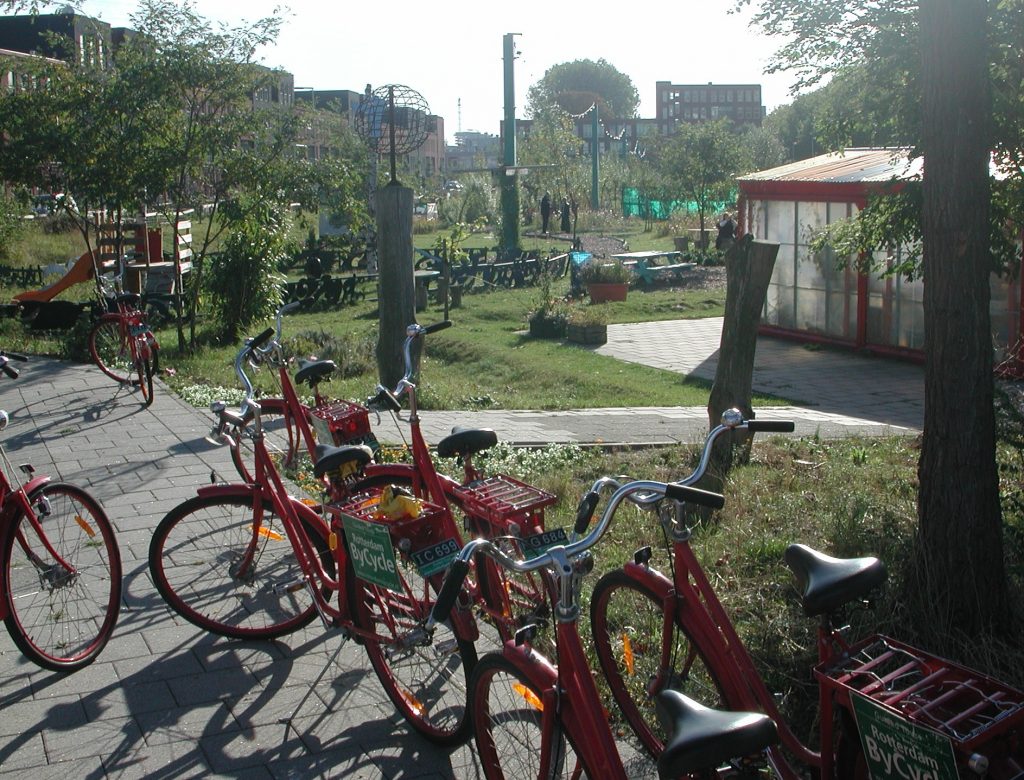
2009 Rotterdam Cycling tour / Photography excursion
14 Oct 2009, Pre-conference photography excursion [09-99]
16 Oct 2009, DYNAMO workshop [09-69]
Fehr, C. Böhme, J. Hilbert, H. Schreiber, C. Weth: Health-related ”Integrated programs” – their views on impact assessment, other policy tools, and inter-sectoral cooperation (Poster presentation) [09-45]
Abstract: In addition to traditional health policy approaches there are “integrated programs”, working across multiple topics. We investigate how such programs establish intersectoral connections, and what policy tools and procedures are being deployed. Methods: Starting from an existing synopsis (2005), five programs were selected: Healthy Cities network (HCN, since 1989), Regions for Health Network (RHN, 1992), Environmental Health Action Plans (EHAPs, 1994), Social City program (SC, 1999), and Network of German Health Regions (NDGR, 2008). Using published information sources and the authors’ expert knowledge, qualitative and quantitative criteria were applied to characterize the programs and their key approaches. Results: HCN (c. 2000 European cities), RHN (29 European regions), and EHAPs (c. 40 countries of WHO’s European Region) are primarily based on “Health in all Policies” thinking. The SC program (c. 500 urban areas in D) aims at improving the local living conditions in disadvantaged urban areas, with health promotion as one of the different action fields. NDGR (15 regions in D, with c. 1,000 health-related enterprises) focuses on innovations for health care, health technology, prevention and health promotion. Recent workprograms of the (advanced) European HCN include Health Impact Assessment (HIA); the EC-funded PHASE project was closely linked to HCN. The 16th annual RHN conference covered HIA. At WHO’s EHAP website, a link points to HIA; the German EHAP website mentions the EC-funded APHEIS project, and the North Rhine-Westphalian EHAP features a project on HIA-related planning instruments. Other (cross-sectoral) tools deployed by the programs include indicator development, monitoring and surveillance, focus groups (e.g. on new professions), centers of competence (e.g. on urban planning), competitions and prizes, manifestos, and joint project participation. Conclusions: The comparative analysis suggests that the potential to transfer policy tools, e.g. impact assessments, among integrated programs is underutilized. – Future analyses could include EC-based generic regional programs.
Fehr R (LIGA.NRW), J.M. den Broeder (RIVM, Bilthoven, NL), M.R. Partidário (Technical U Lisbon, Lisboa, PT), B. Cave (Ben Cave Assoc., Leeds, UK), B.A.M. Staatsen (RIVM, Bilthoven, NL), O.C.L. Mekel (LIGA.NRW, Bielefeld, DE): Workshop W8 „Family of health-related impact assessments – securing equity in situations of change and crisis?“ Format: World Cafe [09-46].
Abstract: Background: Impact assessment (IA) has developed to cover many aspects of policies, plans, programs and projects. In some regions of the world some forms of IA have a strong standing and a comprehensive infrastructure. This justifies the diagnosis of different IA “cultures” and a “family” of IAs. Beyond Health Impact Assessment (HIA), at least the following other IAs consider human health to some degree: Environmental Impact Assessment (EIA) and Strategic Environmental Assessment (SEA), Sustainability Assessment (SA), Health Technology Assessment (HTA), Social Impact Assessment (SIA), and Integrated IAs. An initiative was started to systematically study and foster the co-evolution of IAs from a Public Health perspective. Specific concerns relate to the fate of “health” issues in situations of strain. Approach: For this workshop our starting point will be a SWOT analysis of different IA family members. We will explore where commonalities and differences lie; what Public Health can learn from different IA types, their methods, approaches and ways of institutionalisation; where integration is possible and where this is not so easy. Special attention is given to the applicability of IAs to situations of change (e.g. climate) and crisis (e.g. economic), including the analysis of differential impacts on population subgroups. – To enable all participants to contribute we do this in a “world cafe” setting. Our hypothesis is that both within and outside the health (care) system, there are far-reaching changes (e.g., demographic / technological / environmental & climate) which, together with symptoms of economic crisis, have an inequitable effect. We explore the potential value and the limitations of IA approaches in tackling real-world changes of high complexity, giving special attention to strategic options available to decision-makers. Perspectives: The results will be used in an ongoing process. The end point is scheduled as a presentation at HIA 2010 of the final results.
Outline: Café table 1: Health Impact Assessment (HIA); Café table 2: Environmental Impact Assessment (EIA); Café table 3: Strategic Environmental Assessment (SEA); Café table 4: Health Technology Assessment (HTA) and other impact assessments. For Table 1-4: (i) Existing culture of this assessment type, (ii) Internal “Strengths” and external “Opportunities” of this assessment type, (iii) Internal “Weaknesses” of, and external “Threats” to this assessment type. Café table 5: Interrelationships and co-evolution of the Impact Assessments: (i) Situations where more than one single health-related IA is being conducted for a given policy, project or other innovation – How to deal with them? (ii) Pro’s and Con’s of merging different IAs into unified, integrated assessments (cf. EC model) (iii) Suggestions for the work of the “Family of IAs” initiative?
Fehr, M. Volmer (Bosch & Partner: Environmental planning, http://www.boschpartner.de), R. Welteke (WHO CC Regional Health Policy / LIGA.NRW): Spatial planning and health (Ruhr area cities, North Rhine-Westphalia, D) – not a trivial relationship (Poster presentation) [09-48]
Abstract: As pointed out by authoritative sources recently (e.g. WHO CSDH, 2008), spatial planning offers unique gateways to health protection and promotion. In a way, the opportunities seem so obvious that the question comes up why spatial planning, up to now, has not evolved to be a major, and universally accepted, approach to health protection and promotion („utilization gap“). Methods: Using the example of joint spatial planning of six cities (pop 1.8 M) in the Ruhr area, formerly characterized by heavy industry, the poster aims to detail some key features of this planning process, in particular the handling of health issues. Methods include document analysis, process participation, and expert judgement. Results: Spatial planning as examined here involves a complex process with a large number of institutions involved, many of them with competing interests. Outputs of the standard planning procedure include a variety of texts as well as maps. The procedure is subject to a Strategic Environmental Impact Assessment, adding another tier of texts and maps. Health issues discussed include physical exposures (air pollutants and other chemicals, noise, vibration, EMF), hazardous incidents, waste disposal, green spaces, etc. Out of 129 areas investigated, 69 areas had been identified as posing major threats to human health. Other topics such as injury risk, psycho-social impacts, mobility promotion, access to health care system, differential impacts on groups, e.g. handicapped and chronically ill persons were found absent in this planning process. Conclusions: Where complex planning procedures meet with the complexity of (physical, social) health determinants, and resources are limited, it proves difficult to adequately cover the whole range of conceivable health-related issues, espec. in the absence of standard procedures and tools. From this perspective, the “utilization gap” is not surprising and may require significant efforts to be overcome, e.g. development of dedicated “health plans”.
Fehr, B. Göhlen, A. Rüther, D. Abrahams, O. Mekel: Comparing Health Technology Assessment (HTA) and Health Impact Assessment (HIA), using examples of “borderland” topics [09-49].








 Human ecology and health