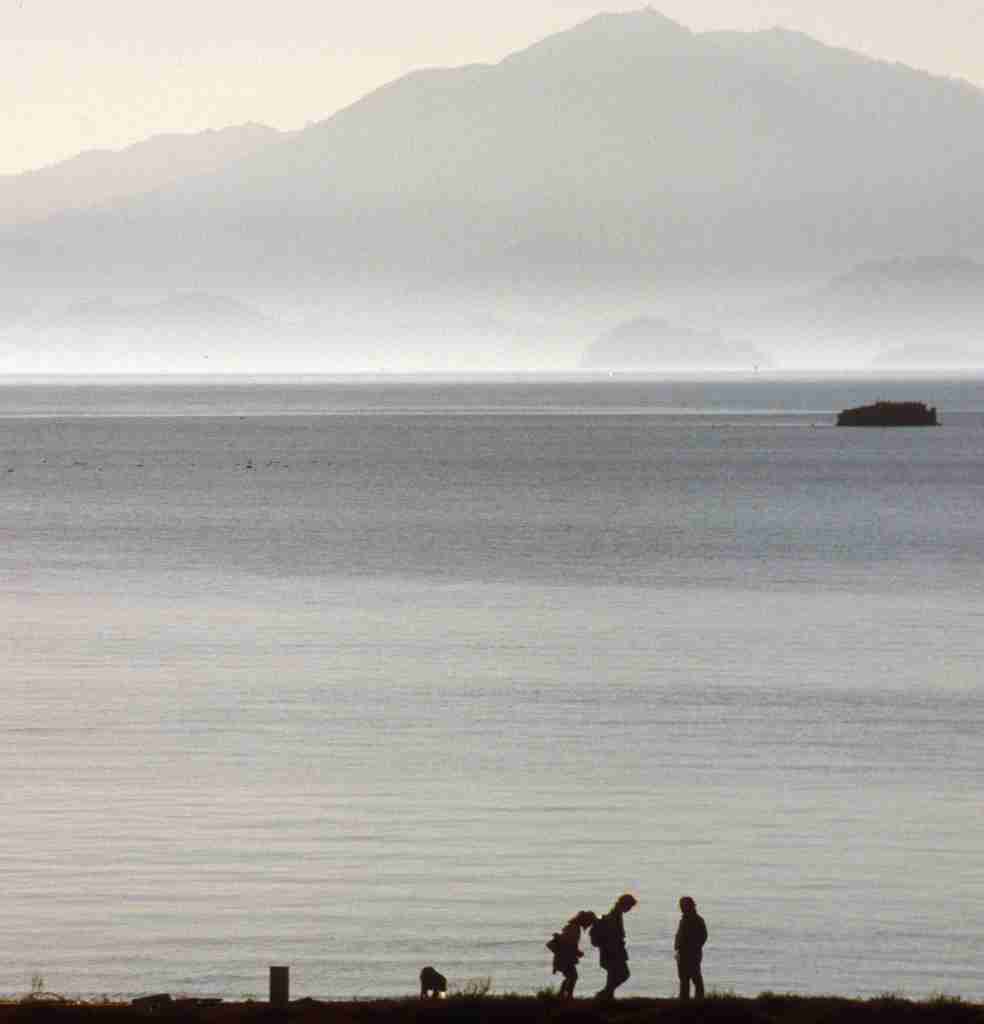
13 Mar 2022, Re-reading Jack Kerouac (1958): The Dharma Bums

13.3.2022, Re-reading Jack Kerouac: The Dharma Bums

Jack Kerouac (1958): The Dharma Bums. Signet Book, New American Library, New York, NY.

(Received as a gift from M.L. in Berkeley, 15 July 1986)

  • p.5 Hopping a freight out of Los Angeles at high noon one day in late September 1955 I got on a gondola and lay down with my duffel bag under my head … and contemplated the clouds as we rolled north to Santa Barbara … [Dieser erste Satz des Buches lässt schon die Grundstimmung des ganzen Werkes erkennen…]
  • p.6 … considered myself a religious wanderer …
  • p.10 … the number one Dharma bum of them all … Japhy Ryder
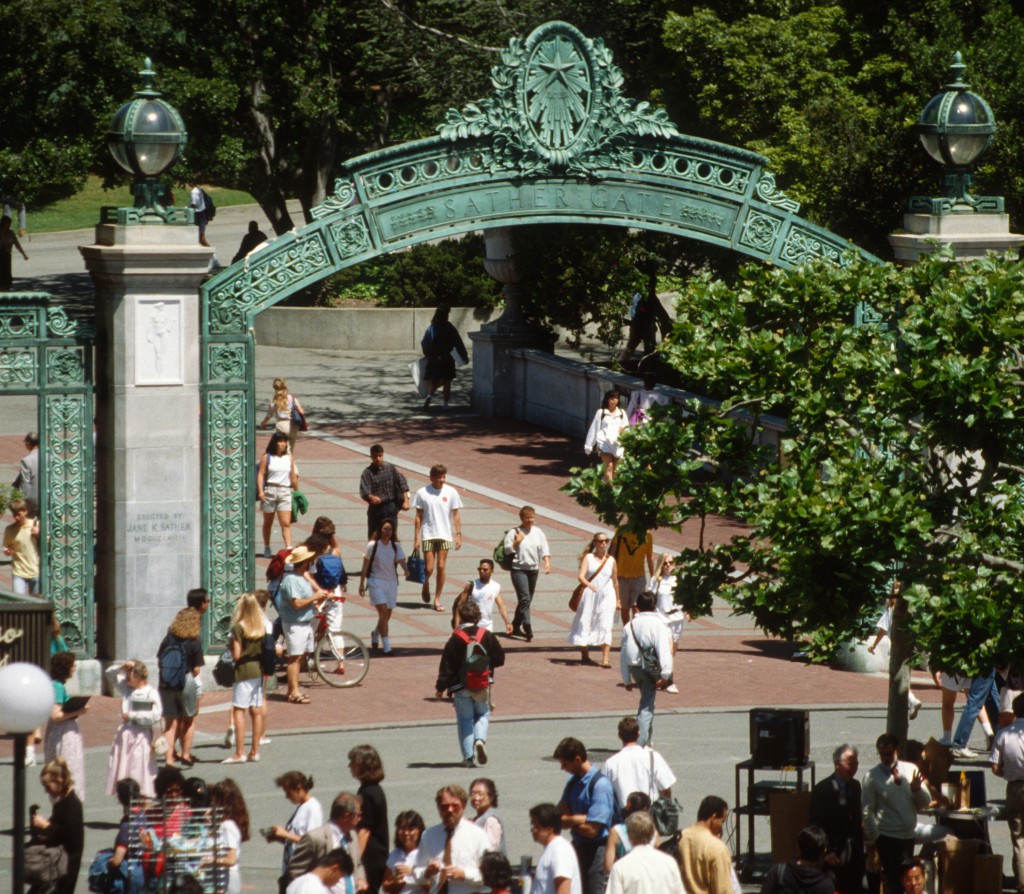
  • p.16 In Berkeley I was living with Alvah Goldbook in his little rose-covered cottage in the backyard … on Milvia Street …
  • p.18 … The Book of Tea … the knowledge of two thousand years … the effect of the first sip of tea, and the second …
  • p.19 “How would you like to climb Matterhorn?”
  • p.22 “Japhy travels around on that bicycle with his little knapsack on his back all up and down Berkeley …”
  • p.35 … Morley … strange secret scholarly linguistic clown …
  • p.50 “… when you get going there’s just no need to talk, as if we were animals and … communicated by silent telepathy”
  • p.52 “The secret of this kind of climbing”,” said Japhy, “is like Zen. Don’t think. Just dance along …”
  • p.54 “… the Oriental passion for tea … the first sip is joy, … the third is serenity, … the fifth is ecstasy …”
  • p.91 Japhy … Zen intellectual artistic Buddhism he loved …
  • p.123 There just isn’t any kind of night’s sleep in the world that can compare with the night’s sleep you get in the desert winter night, provided you are good and warm in a duck-down bag …
  • p.157 … orange early-morning sun of California golden days … we were back in our element: trails.”
  • p.157-8 … as though we were pack animals and didn’t feel right without a burden …
  • p.160 “Mount Tamalpais …as beautiful a mountain as you’ll see anywhere in the world …”
  • p.165 … Stinson Beach …
  • p.170 … Russian river …
  • p.184 … cycloramic universe of matter …

(Japhy Ryder: Gary Snyder; Alvah Goldbrook: Alan Ginsberg)

Niklas Elsenbruch (2022_03_12): Seele der Nacht. Der Mann, der schneller lebte, als andere gucken konnten: Vor 100 Jahren wurde Jack Kerouac, König des Beats, geboren. SZ, p.22: „… entwickelte Kerouac … einen eigenen Schreibstil: Spontanprosa … schreibt Kerouac in nur drei Wochen die erste Fassung von ‚On the road‘ … Die Natur und das Nachtleben der Großstadt waren die Pole von Kerouacs Spiritualität … Auch … ‚The Dharma Bums‘ verdient sich das Prädikat des gehobenen Nature-Writing …“

Fritz Göttler (2022_03_12): Klettere weiter. Unterwegs sein als buddhistische Übung: Jack Kerouacs Roman „Die Dharmajäger“ neu übersetzt. SZ, p.22: „… ein Jahr nach ‚On the road‘ … Das Pathos des großen Aufbruchs … auch in diesem Buch … ein Abenteuer-Buch ganz eigener Art, rückläufig und zirkulär in seinen Bewegungen … das Ziel zählt wenig … in Japhy [Gary Snyder] gehen amerikanische Naturerfahrung und fernöstliche Philosophie zusammen … Matterhorn … Selbsterfahrungstrip … Sommerjob … die ultimative Erfahrung eines Dharma Bum: ein paar Monate auf einem isolierten Feuerwachen-Ausguck auf dem Desolation Peak … Zwei Monate in Leere und Nichts …“
Cf.:

4 Nov 2021, Re-reading Jack Kerouac (1957): On the road

4.11.2021, Re-reading Jack Kerouac (1957): On the road

Jack Kerouac (1957): On the road. Penguin Books, New York, NY.

Book structure:

  • Part 1 (pp. 3-107): New York – Chicago – Denver – San Francisco – Mill City – Oakland – Bakersfield – Los Angeles – Hollywood – Bakersfield – Sabinal – New York
  • Part 2 (pp. 109-178): Virginia – New York – New Orleans – El Paso – Tucson – Bakersfield – San Francisco
  • Part 3 (pp. 179-247): Denver – San Francisco – Denver – Chicago – New York
  • Part 4 (pp. 249-303): New York – Denver – San Antonio – Gregoria (MX) – Mexico City
  • Part 5 (pp. 305-310): Mexico City – New York

Selected highlights:

  • p.3 With the coming of Dean Moriarty began the part of my life you could call my life on the road. Before that I’d often dreamed of going West …
  • p.5 Dean … came right out to Paterson, New Jersey, where I was living with my aunt.
  • p.8 the only-people for me are the mad ones, the ones who are mad to live, mad to talk …, desirous of everything at the same time, the ones who never yawn or say a commonplace thing, but burn, burn, burn …
  • p.11 Somewhere along the line I knew there’d be girls, visions, everything; somewhere along the line the pearl would be handed to me.
  • p.43 Carlo and I went through rickety streets in the Denver night. The air was soft, the stars so fine, the promise of every cobbled alley so great that I thought I was in a dream.
  • p.59 I suddenly realized I was in California. Warm, palmy air – air you can kiss – and palms.
  • p.124 I didn’t know where all this was leading; I didn’t care.
  • p.140 The air was so sweet in New Orleans it seemed to come in soft bandannas; and you could smell the river …
  • p.169-170 … we began rolling in the foothills before Oakland and suddenly reached a height and saw stretched out ahead of us the fabulous white city of San Francisco on her eleven mystic hills with the blue Pacific and its advancing wall of … fog beyond, and smoke and goldenness in the late afternoon of time.
  • p.205 Frisco … America’s most excited city – and overhead the pure blue sky and the joy of the foggy sea that always rolls in at night …
  • p.276 Dean and I had the whole of Mexico before us …
  • p.309 So in America when the sun goes down and I sit on the old broken-down river pier watching the long, long skies over New Jersey and sense all that raw land that rolls in one unbelievable huge bulge over to the West Coast …
  • p.310 … I think of Dean Moriarty, I even think of … the father we never found, I think of Dean Moriarty.

Back cover: … Gilbert Millstein (The New York Times): “A historic occasion … the most beautifully executed, the clearest and the most important utterance yet made by the generation Kerouac himself named years ago as ‘beat,’ and whose principal avatar he is.”

https://en.wikipedia.org/wiki/On_the_Road: … based on the travels of Kerouac and his friends across the United States … considered a defining work of the postwar Beat and Counterculture generations, with its protagonists living life against a backdrop of jazz, poetry, and drug use … many key figures of the Beat movement, such as … Allen Ginsberg (Carlo Marx), and Neal Cassady (Dean Moriarty) represented by characters in the book, including Kerouac himself as the narrator Sal Paradise …


Cf.

7 Nov 2019, Re-reading Pirsig (1974): Zen and the Art of Motorcycle Maintenance

Robert M. Pirsig (1974): Zen and the Art of Motorcycle Maintenance. An Inquiry into Values. Bantam edition (1975) / Bantam Books, New York, NY

p.iii: Author’s note. What follows is based on actual occurrences … However, it should in no way be associated with that great body of factual information relating to orthodox Zen Buddhist practice. It’s not very factual on motorcycles, either.

Part I. p.1: We are in an area of the Central Plains … heading northwest from Minneapolis … a kind of nowhere, famous for nothing at all and has an appeal because of just that … p.39: A copy of Thoreau’s Walden . . . which … can be read a hundred times without exhaustion … p.47: … a deep undulation of the earth begins … we approach the High plains … p.48: Nobody is concerned anymore about tidily conserving space … p.52: … a figure I recognize … It is Phaedrus … Insane … p.64: … looking across it into a kind of Western spaciousness …  p.78: Phaedrus spent his entire life pursuing a ghost … that underlies all of technology, … all of Western thought. It was the ghost of rationality itself … p.84: He was dead. Destroyed by order of the court, enforced by the transmission of high-voltage alternating current through the lobes of his brain … A whole personality had been liquidated … And yet strange wisps of memory suddenly match … this road … and then I know he has seen all of this …

Part II. p.95: … the sun is bright, the air is cool, … it’s a good day to be alive … p.114: … the truths Phaedrus began to pursue were lateral truths … p.119: … We’ve reached the high country, above the timberline … People spend their entire lives at those lower altitudes without any awareness that this high country exists … p.146: … this was the nineteen-fifties, not the nineteen-seventies. There were rumblings from the beatniks and early hippies … about “the system” …, but hardly anyone guessed how deeply the whole edifice would be brought into doubt … p.178: … What the hell is Quality? What is it?

Part III. p.183: Phaedrus’ second metaphysical phase was a total disaster … All he had left was his one crazy lone dream of Quality … for which he had sacrificed everything … p.281: … Weeds and grass and wild flowers grow where the concrete has cracked … Nature has a non-Euclidian geometry of her own that seems to soften the deliberate objectivity of these buildings with a kind of random spontaneity that architects would do well to study.

Part IV. p.325: … Phaedrus … waking up … p.394: … When the fog lifts we can see the ocean from a high cliff, far out and so blue and so distant … p.396: We’re on the Mendocino County coast now, and it’s all wild and beautiful … The hills are mostly grass … some old wooden fences, weathered grey … p.397: Coastal people never really know what the ocean symbolizes to landlocked inland people … p.406: … we ride on and on, down through … Cloverdale, down into the wine country … We pass through Asti and Santa Rosa, and Petaluma and Novato … and soon by the road are houses and boats and the water of the Bay. Trials never end … Unhappiness and misfortune are bound to occur as long as people live, but there is a feeling now, that … penetrates all the way through: We’ve won it …


https://en.wikipedia.org/wiki/Zen_and_the_Art_of_Motorcycle_Maintenance: Genre: Philosophical fiction, Autobiographical novel … explores … [the] Metaphysics of Quality … The title is an apparent play on … the 1948 book Zen in the Art of Archery … Pirsig received a remarkable 126 rejections before an editor finally accepted it for publication — …. Then it was on best-selling lists for decades … sold at least 5 million copies worldwide …

… a fictionalized autobiography of a 17-day journey that Pirsig made on a motorcycle from Minnesota to Northern California along with his son Chris … accompanied, for the first … days of the trip, by close friends … The trip is punctuated by numerous philosophical discussions … on topics including epistemology … Many of these discussions are tied together by the story of the narrator’s own past self, who is referred to in the third person as Phaedrus … Phaedrus, a teacher of creative … became engrossed in the question of what defines good writing, and what in general defines … “Quality” … His philosophical investigations eventually drove him insane, and he was subjected to electroconvulsive therapy, which permanently changed his personality. Towards the end of the book, Phaedrus’s strong and unorthodox personality … begins to re-emerge and the narrator is reconciled with his past …

… the book details two types of personalities: those who are interested mostly in gestalts (romantic viewpoints focused on being “in the moment” …), and those who seek to know details, understand inner workings, and master mechanics (classic viewpoints with application of rational analysis …). … The narrator … understands both viewpoints and is aiming for the middle ground … He seeks to demonstrate that rationality and Zen-like “being in the moment” can harmoniously coexist. He suggests such a combination of rationality and romanticism can potentially bring a higher quality of life … Pirsig’s romantic / classical dichotomy resembles Nietzsche’s Dionysian/Apollonian dichotomy …  Zen and the Art of Motorcycle Maintenance has become the best-selling philosophy book of all time.