15 Feb 2020, Φ Probabilistic Methods in Toxicology (updated version published)
Based on predecessors (2004 in German, 2014 in English), an updated version of the book chapter was published online today:
Mekel O, Fehr R (2020): Probabilistic Methods in Toxicology. Chapter in: Reichl F.-X. , Schwenk M. (eds.), Regulatory Toxicology. Rev. edition. Springer-Verlag GmbH Germany, part of Springer Nature, https://doi.org/10.1007/978-3-642-36206-4_47-2. For the chapter: first online 15 Feb 2020. [12-03]
This is a revised version of: Mekel, O., Fehr, R. (2014): Probabilistic methods in toxicology. Chapter in: Reichl, F.X., Schwenk, M. (eds.): Regulatory toxicology. Springer-Verlag, Berlin, Heidelberg, pp.253-259. Originally: Mekel, O., Fehr, R. (2004): Probabilistische Methoden. Kapitel 2.3.4 In: Reichl, F.-X., Schwenk, M. (Hrsg.): Regulatorische Toxikologie – Umweltschutz, Gesundheitsschutz, Verbraucherschutz. Springer, Berlin, pp.202-209.
Chapter structure:
Background
Methods for Quantifying Variability and Uncertainty in Risk Assessmen
Point Estimates
Probabilistic Estimates
Sensitivity Analysis
Application Potential in Dose–Response Assessment
Software for Probabilistic Exposure and Risk Assessment
Valentin-Karstadt-Musäum, Im Tal 50, 80331 München, www.valentin-musaeum.de/: … 1959 … eröffnet … Als Vorbild fuür die Gestaltung diente Karl Valentins Ritterspelunke, eine Verbindung aus Kellerkneipe, Bühne und Kuriositätenkabinett … seit 2018 … Museum der Landeshauptstadt München … Eine Mischung aus informativen Einheiten und kuriosen Überraschungen präsentiert Leben und Wirken von Karl Valentin und seiner kongenialen Partnerin Liesl Karlstadt … persönliche Gegenstände, Originaldokumente, Fotografien, Postkarten und dem Valentinschen Panoptikum nachempfundene Objekte wie der legendäre Winterzahnstocher und die geschmolzene Schneeplastik sowie zahlreiche Ton- und Filmdokumente …
2020_02_14 München: Valentin-Karstadt-Musäum
2020_02_16 München: Valentin-Brunnen
2020_02_16 München: Isartor Spezialuhr (Valentin)
2020_02_14 München: Liesl-Karstadt-Brunnen
2020_02_14 München: Isartor
2020_02_14 München: Vom Isartor in Richtung Frauenkirche
Valentinstag, https://de.wikipedia.org/wiki/Valentinstag: In Martyrologien werden in Verbindung mit dem 14. Februar Viten verschiedener Märtyrer namens Valentinus angeführt … Es gab mehrere frühchristliche Heilige, die Valentinus hießen … In Slowenien gilt der hl. Valentin … als Heiliger des Frühlings, der Gesundheit und als Schutzpatron der Imker und Pilger …
Isartor: Östliches Stadttor der Altstadt von München. https://de.wikipedia.org/wiki/Isartor: 1337 erbaut … 1833 bis 1835 … im neugotischen Stil restauriert … In den Flankentürmen … seit 1959 das Valentin-Karlstadt-Musäum … am östlichen Ende der Straße „Tal“ … Als einziges der Münchner Stadttore besitzt es heute noch den Hauptturm, der als Mittelturm die gesamte Anlage überragt. Ebenso sind die Flankentürme und der Mauerhof … erhalten … Historienwandfresken …, die den Siegeszug Kaiser Ludwig des Bayern nach seiner Schlacht bei Ampfing im Jahre 1322 zeigen … 2005 … am Hauptturm wieder eine große Uhr … Auf der Westseite ist das Zifferblatt spiegelbildlich, entsprechend laufen die Zeiger … entgegengesetzt, um an Valentin bzw. an Bayern zu erinnern (Willy Brandt: „In Bayern gehen die Uhren anders“).
Viktualienmarkt, www.viktualienmarkt-muenchen.de/: … ein ständiger Markt für Lebensmittel … findet seit 1807 täglich, außer an Sonn- und Feiertagen, statt. Das Erscheinungsbild … wird durch fest errichtete Buden mit zum Teil großen Auslagen geprägt. Dazu … saisonal unterschiedliche fliegende Stände. Die Marktstände sind in mehreren Abteilungen um einen Biergarten angeordnet … Das Wort Viktualienmarkt leitet sich von Viktualien (Lebensmittel) ab … Die Bezeichnung Viktualienmarkt kam im 19. Jahrhundert auf, als es im Bildungsbürgertum modern war, deutsche Begriffe zu latinisieren.
www.elbphilharmonie.de/de/programm/les-siecles-francois-xavier-roth/12641: „Seit der Gründung der ‘Académie royale de danse‘ 1661 durch Ludwig XIV. ist Paris so etwas wie die Welthauptstadt des Tanzes … Das Programm reicht von den barocken Meistern Jean-Baptiste Lully und Jean-Philippe Rameau über die Romantiker Léo Delibes und Jules Massenet bis hin zu Igor Strawinskys berühmt-berüchtigtem Skandalballett »Le sacre du printemps« … ausschließlich Werke, die einst in Paris uraufgeführt wurden.“
Jean-Baptiste Lully: Le bourgeois gentilhomme (Auszüge, inkl. Cérémonie pour les Turcs) (1670)
Léo Delibes: Coppélia (Entracte et Valse; Prélude et Mazurka) (1870); Programmheft: … basiert auf der Erzählung Der Sandmann von ETA Hoffmann … Dr. Coppélius … Wunsch …, seine mechanische Puppe Coppélia zum Leben zu erwecken …, siehe 19.8.2019 E.T.A. Hoffmann (1817): Der Sandmann
Igor Strawinsky: Le sacre du printemps / Bilder aus dem heidnischen Russland (1911-1913)
Programmheft:
… Die Musiker von Les Siècles initiieren regelmäßig … Bildungsaktionen in Schulen, Krankenhäusern, Altenheimen und Gefängnissen … Hieraus entstand beispielsweise die Initiative für das Projekt Music in the hospital, das in zwei Krankenhäusern in Paris und Beauvais ins Leben gerufen wurde …
… Les Siècles verwendet im heutigen Konzert folgende Instrumente und Stimmungen:
Lully, Rameau: Instrumente des Barock; Kammerton a = 415 Hz
Delibes, Massenet: Französische Instrumente um 1850, 438 Hz
Strawinsky: Französische Instrumente um 1900, 440 Hz.
2020_01_10 Hamburg: Grasbrook, von Baakenhafenquartier
2020_01_10 Hamburg: Grasbrook nach W
(1) Grasbrook: ehemalige Elbinsel, https://de.wikipedia.org/wiki/Grasbrook: „Der Grasbrook … war eine sumpfige Insellandschaft im Urstromtal der Elbe vor Hamburg … nie eingedeicht … Am westlichen Ende … lange Zeit der für die Hinrichtung von Seeräubern bestimmte Richtplatz … Klaus Störtebeker und Gödeke Michels … 1532 wurde der nördliche Teil des Grasbrooks, die Inseln Kehrwieder und Wandrahm, in die befestigte Stadt einbezogen. Zwischen 1568 und 1605 wurde die Insel mit einem Durchstich für die umgeleitete Norderelbe geteilt, um den Hamburger Hafen für Seeschiffe tauglich zu machen. So entstanden die beiden getrennten Gebiete:
Großer Grasbrook (nördlich der Norderelbe), seit 2008 … Stadtteil HafenCity …
Kleiner Grasbrook (südlich der Norderelbe), seit 1894 als eigener Stadtteil.”
(2) Kleiner Grasbrook: ein Stadtteil im Bezirk Hamburg-Mitte, https://de.wikipedia.org/wiki/Hamburg-Kleiner_Grasbrook: “…besteht derzeit fast ausschließlich aus Anlagen des Hamburger Hafens. Seit sich der Güterumschlag durch den Einsatz von Containern in die elbabwärts gelegenen Containerterminals verlagert hat, liegen … viele Flächen brach … 2017 gab der Senat bekannt, dass auf Teilen des Stadtteils Kleiner Grasbrook ein neuer „Stadtteil“ mit dem Namen „Grasbrook“ entstehen soll. Dies … soll … den … städtebaulichen „Sprung über die Elbe“ realisieren. Geplant sind Wohnungen für etwa 6.000 Bewohner und bis zu 16.000 Arbeitsplätze sowie Einkaufsmöglichkeiten, eine Grundschule und Kitas.“
(3) Projekt Grasbrook der HafenCity, www.grasbrook.de/ausgangsbedingungen/: „Herausforderungen und Chancen der Stadtentwicklung liegen bei der Entwicklung des Grasbrook nah beieinander … entsteht auf ehemaligen Hafenflächen, mehr als die Hälfte des Kleinen Grasbrook verbleibt in Hafennutzung. Ein intelligenter Umgang mit Lärmbelastungen aus dem Bahn- und Straßenbereich sowie Gewerbe sind … Voraussetzung für das Schaffen eines neuen Wohn- und Arbeitsortes. Ebenso bedeutend ist es, neue physische und soziale Verknüpfungen zwischen der Veddel und dem neuen Stadtteil … zu schaffen …“
Wettbewerblicher Dialog, www.grasbrook.de/wettbewerb-uebersicht/wettbewerblicher-dialog/: Der Weg zu einem städtebaulichen und freiraumplanerischen Entwurf. „… eine qualitätvolle städtebauliche und freiraumbezogene Funktionsplanung als Grundlage für die spätere Bebauungsplanung … Wettbewerbliche Dialog …, der eine kontinuierliche Bearbeitung im Dialog und eine weitergehende Beteiligung der Öffentlichkeit ermöglicht. Als besonders innovatives Element … wird die Freiraumplanung nicht als „nachträgliche Begrünung“, sondern als gleichberechtigter Wettbewerbsbestandteil … bearbeitet.”
Kernthemen der Aufgabenstellung [Auswahl]: … Hohe Dichte und innerstädtische Nutzungsintensität; Hochwertige Freiräume und Förderung urbaner Ökosysteme; Urbanität durch Nutzungsmischung aus Wohnen, Büro, Bildung, Kultur, Forschung und Entwicklung; Lärmschutz gegenüber den Verkehrstrassen im Osten und dem Hafen im Süden; Berücksichtigung von Biodiversität und Klimawandel …; Ökologische Aufwertung der Uferzonen und Einbindung der Wasserflächen; Erarbeitung eines nachhaltigen Erschließungs- und Mobilitätskonzepts; Mitdenken einer innovativer Ver- und Entsorgung (CO2 Neutralität) …
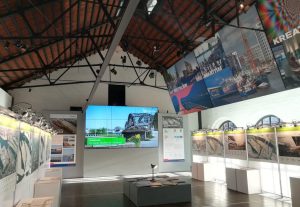
2019_12_31 Kesselhaus Exponate Grasbrook
Ausstellung der 12 Wettbewerbsbeiträge im HafenCity Info InfoCenter im Kesselhaus, 4.12.2019-12.1.2020
Beobachtung: In den Ergebnissen der teilnehmenden Büros findet sich eine Wortwolke „Themen im Grasbrook“ mit 41 Einträgen. Je dreimal eingetragen sind: Biodiversität, Freizeit, Mobilität, Wasser, Wohnen. Je zweimal eingetragen sind: Arbeiten, Bildung, Ökologie, Urban Mining. Je einmal eingetragen finden sich hier: Active City, Dichte, Digitalisierung, Hafenatmosphäre, Hafennutzung, Kreativität, Kultur, Kunst, Landschaftsraum, Laut, Lebendigkeit, Leise, Natur, Urban Gardening, Urbanität, Verbindungen, Vernetzung, Weite.
Anregung: Neben diesen 27 Begriffen dürfte (über „Laut“ und „Leise“ hinaus) auch „Gesundheit“ einen Platz verdienen.
4.1.2020, Johann Peter Hebel: Kalendergeschichten. Mit 32 Lithographien von Josef Jakob Dambacher. Aufbau-Verlag Berlin und Weimar, 1983 (2. Aufl.)
Klappentext (Auszug): „… dieser Pastor, der … alle Register vom niedrigsten Schacher bis zur schenkenden Großmut zu ziehen wußte, war nicht der Mann, das Dämonische im bürgerlichen Erwerbsleben zu übersehen … auf ihn trifft … zu, daß neuere deutsche Prosa eine höchst … dialektische Auseinandersetzung zwischen zwei Polen ist … der erste ist das Deutsch der Lutherbibel und der zweite die Mundart. Wie sich bei Hebel beide durchdringen, das ist der Schlüssel seiner artistischen Meisterschaft.“ Walter Benjamin
Inhalt (Auszug):
Der Herr Wunderlich
Das Vivat der Königin
Wie einmal ein schönes Roß um fünf Prügel feil gewesen ist
Die Schlafkameraden
Der geheilte Patient [“Reiche Leute haben trotz ihrer gelben Vögel doch manchmal auch allerlei Lasten und Krankheiten auszustehen, von denen gottlob! der arme Mann nichts weiß; denn es gibt Krankheiten, die nicht in der Luft stecken, sondern in den vollen Schüsseln und Gläsern und in den weichen Sesseln und seidenen Betten, wie jener reiche Arnsterdamer ein Wort davon reden kann …”]
Die Verwechslung
Schlechter Gewinn
Wie man aus Barmherzigkeit rasiert wird
Der Barbierjunge von Segringen
Mißverstand oder Der Wegweiser
Eine sonderbare Wirtszeche
Der Bauersmann und der Visitator
Der Zirkelschmied
List gegen List
Geschwinde Reise
Gleiches mit Gleichem
Zu dieser Ausgabe
Steinfeld T (24.12.2019): Bald wird’s wieder Tag. Weltgewandter kann die Provinz nicht werden als in den Geschichten und Gedichten Johann Peter Hebels. SZ Nr. 297 (2019), p.14: …Die Kalendergeschichten sind in einer klaren, scheinbar anspruchslosen Sprache verfasst, die zu ihrer Zeit neu war und noch lange nachwirkte, bis hin zu Robert Walser und Franz Kafka … Hebels Alemannisch erscheint als ein[e] Art von Gemeineigentum, in dem es in freien Versen genug Raum und Form für jeden Gedanken gibt, der sich überhaupt fassen lässt, unter den Voraussetzungen einer eng umrissenen Region … Weltgewandter kann die Provinz nicht werden, woran sich zuletzt die Frage anschließt, ob es überhaupt etwas Urbaneres geben kann als eine gründlich gebildete Provinz. Von Hebel aus betrachtet, wäre diese Frage mit einem entschlossenen ,,Nein“ zu beantworten.
Johann Peter Hebel, 1760 (Basel) – 1826 (Schwetzingen), https://de.wikipedia.org/wiki/Johann_Peter_Hebel: deutscher Schriftsteller, evangelischer Geistlicher und Lehrer. Aufgrund seines Gedichtbands Allemannische Gedichte gilt er … als Pionier der alemannischen Mundartliteratur. Sein zweites bekanntes Werk sind zahlreiche, auf Hochdeutsch verfasste Kalendergeschichten.
Siehe 23.6.2019, Basel: Die Vergänglichkeit [Großbrand Schweizerhalle].