23 Jul 2016, ♣ Horticulture: Was uns blüht (Süddeutsche Zeitung)

2014_07_20
Gift received in 2014 from a clairvoyant horticulturist friend

Süddeutsche Zeitung, 23.7.16, p.57, Titus Arnu: (Each year, trade fairs proclaim new trends for gardening – this year, it is Hydrangeas, raised flower beds, and jeans planted with flowers) / Was uns blüht. Jedes Jahr rufen Fachmessen neue Garten-Trends aus – in diesem Jahr sind das Hortensien, Hochbeete oder Jeans, die man bepflanzen kann

How do such fashions come about? And how are they able to expand so extensively, persevering like goutweed …? … / Wie entstehen solche Moden? Und wie können sie sich so großflächig ausbreiten, mit der Hartnäckigkeit von Giersch …? …

2016_07_23 detailRobert Musil wrote: „A garden is art nature”… / „Ein Garten ist eine Kunstnatur“, schrieb … Robert Musil…

International horticultural  trade fair IPM in Essen … Increasing relevance of organic production and sustainable horticulture… /  Internationale Fachmesse des Gartenbaus IPM in Essen … Biologischer Anbau und nachhaltige Gartengestaltung werden immer wichtiger…


SZ: www.sueddeutsche.de/

IPM: „The world’s leading trade fair for horticulture“, www.ipm-essen.de/world-trade-fair/ / Die Weltleitmesse des Gartenbaus, www.ipm-essen.de/weltleitmesse/

16 Jul 2016, ♣ Urban horticulture proj (in INHERIT)

[Horticult evolution 26 Jun – 9 Jul – today]IMG_5836

It is impressive to learn about the EU funded “Intersectoral Health and Environment Research for Innovation” (INHERIT) project which looks at the links between our living, moving or consuming patterns and the environment, our health and equity / Ein eindrucksvolles EU-gefördertes Projekt ist INHERIT (Intersectoral Health and Environment Research for Innovation), welches die Verbindungen zwischen Lebensstil, Bewegungs- und Konsumverhalten sowie Umwelt, Gesundheit und Chancengleichheit untersucht.

The 18-partner INHERIT project (Jan 2016 – Dec 2019), coordinated by EuroHealthNet within the Horizon 2020 research and innovation programme, looks for “triple win” ideas for a more sustainable future: initiatives that simultaneously protect the environment, improve our health and contribute to fairer societies / Dieses 18 Partner umfassende Projekt (Jan. 2016 – Dez. 2019), koordiniert von EuroHealthNet im Horizon 2020 Forschungs- und Innovationsprogramm, hält Ausschau nach Initiativen mit „Dreifachnutzen“ (Umweltschutz, Gesundheitsförderung und soziale Gerechtigkeit) für nachhaltige Zukunftsgestaltung.


INHERIT includes initiatives to develop urban gardens which foster social inclusion, local production and healthy consumption, e.g. those brought together through the “European Urban Garden Otesha”(EU’GO) project, funded under the EU’s Lifelong Learning Programme (Grundtvig Multilateral) / Hierzu gehören u.a. Initiativen zum urbanen Gartenbau mit Förderung sozialer Inklusion, lokaler Produktion und gesunden Verzehrs, z.B. aus dem im Rahmen des EU-Programms “Lebenslanges Lernen” geförderten “EU’GO” Projekt (EU’s Lifelong Learning Programme (Grundtvig Multilateral).

Selected examples / Ausgewählte Beispiele:

  • “Let’s open the gardens!” / „Öffnen wir die Gärten!“ (Atelier Marseillais d’Initiátives en Ecologie Urbaine, France)
  • Seed bank / Samenbank (Spain)
  • Brunch in the garden / Nachbarschaftsbrunch (Projekthaus Potsdam Babelsberg, Germany)
  • Permaculture / Permakultur (Italy)
  • Horticultural therapy / Gartentherapie (Italy).

9 Jul 2016, ♣ Horticulture & ecology

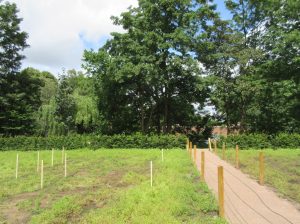
IMG_5821

For urban leisure gardening (allotment gardening), the protection of nature and environment plays an important role. 97% of allotment holders were found to use rain water for watering, 96% to do composting. Awareness is strongest among younger allotment gardeners, i.e. those with up to 10 years of gardening experience. More than half of these organically cultivate fruits and vegetables; nearly two thirds abstain from chemical fertiliser; more than four out of five disapprove of chemical pest control / „Natur- und Umweltschutz spielen bei Kleingärtnern eine wichtige Rolle… So nutzen 97% Regenwasser zum Bewässern, 96% kompostieren. Besonders ausgeprägt ist das Bewusstsein … bei jüngeren Kleingärtnern, die ihren Garten seit höchstens zehn Jahren bewirtschaften. Mehr als jeder Zweite dieser Neu-Kleingärtner … betreibt biologischen Anbau von Obst und Gemüse, fast zwei Drittel… verzichten auf Kunstdünger, mehr als vier Fünftel… lehnen chemische Schädlingsbekämpfung ab.

This development is being fostered by specialist counselling in the gardening clubs. 84% of clubs use this approach for strengthening their members’ awareness of nature and environmental issues. Ecologic model allotment gardens give further support /  Gefördert wird diese Entwicklung durch die Fachberatung der Vereine… 84% der Vereine nutzen diesen Weg, um das Natur- und Umweltbewusstsein ihrer Mitglieder zu fördern… Ökologische Musterkleingärten … unterstützen diesen Prozess…“, https://de.wikipedia.org/wiki/Kleingarten

26 Jun 2016, ♣ Urban horticulture: biotope & sociotope

Office International du Coin de Terre et des Jardins Familiaux (www.jardins-familiaux.org): an association of > 2 million European leisure gardeners, founded in 1926 / seit 1926 bestehende Vereinigung von über zwei Millionen europäischen Kleingärtnern)

IMG_5782

Social functions of leisure gardening, according to Office International / Soziale Funktionen von Kleingärten aus Sicht des Office International:

  • Leisure gardens offer the community a better quality of urban life through the reduction of noise, the binding of dust, the establishment of green areas and more open spaces; the conservation of biotopes and species, the creation of linked biotopes … / Der Allgemeinheit bieten die Kleingärten eine bessere Lebensqualität in den Städten durch Lärmverringerung, Staubbindung, Durchgrünung, Auflockerung der Bebauung, Biotop- und Artenschutz …
  • Leisure gardens offer families … a gardening hobby and an economic growing of healthy vegetables; the personal experience of sowing, growing, cultivating and harvesting healthy vegetables … the furtherance of harmony and fellowship … / Familien bieten die Kleingärten … eine gärtnerische Betätigung und das preiswerte Züchten von gesundem Gemüse; das persönliche Erlebnis vom Säen, Wachsen, Gedeihen und Ernten von gesundem Gemüse; … Förderung von harmonischen zwischenmenschlichen Beziehungen…
  • Leisure gardens offer children and young people … a place to play and communicate; a place to discover Nature and its wonders; practical lessons in biology / Kindern und Jugendlichen bieten die Kleingärten … ein Spiel- und Kommunikationsfeld; Erlebnisräume in der Natur und Wahrnehmung ihrer natürlichen Zusammenhänge; Anschauungsunterricht in Biologie
  • Leisure gardens offer working people relaxation through a healthy activity from the stress of work … / Berufstätigen bieten die Kleingärten eine Entspannung vom Arbeitsstress ….
  • Leisure gardens offer the unemployed the feeling of being useful and not excluded … / Arbeitslosen bieten die Kleingärten das Gefühl, gebraucht zu werden und noch dazuzugehören …
  • Leisure gardens offer immigrant families a possibility of communication and better integration in their host country / Immigranten bieten die Kleingärten eine Möglichkeit … sich besser im Aufnahmeland zu integrieren …
  • Leisure gardens offer disabled persons a place allowing them to participate in club life, establish contacts and overcome loneliness … / Behinderten bieten die Kleingärten einen Ort, an dem sie am Vereinsleben teilnehmen, Kontakte knüpfen und so der Isolierung entgehen …
  • Leisure gardens offer senior citizens a place of communication and rest through contacts with persons having the same interests; … an opportunity of self-fulfilment and an activity in one’s own garden for the period of retirement / Senioren bieten die Kleingärten einen Ort des Gesprächs und der Ruhe durch die Zusammenführung von Menschen mit gleichen Interessen; … individuelle Selbstverwirklichung und Beschäftigung im 3. Lebensabschnitt im eigenen Garten.

15 Jun 2016, ♣ Urban horticulture

Urban horticulture / gardening / farming / agriculture: a range of terms for closely related concepts, especially cultivating fruits, vegetables and flowers in urban areas / Urbane(r) Hortikultur / Gartenbau / Ackerbau: unterschiedliche Begriffe für eng verwandte Konzepte, insbesondere Anbau von Früchten, Gemüse und Blumen in Stadtgebieten.

Basics from Wikipedia: “Horticulture … includes the cultivation of medicinal plants, fruits, vegetables, nuts, … herbs, sprouts, mushrooms, algae, … seaweeds … grass and ornamental … plants. It also includes plant conservation, landscape restoration, landscape and garden design, construction, and maintenance, and arboriculture” (https://en.wikipedia.org/wiki/Horticulture) / Grundkurs bei Wikipedia: Gartenbau umfasst den Anbau von Heilpflanzen, Früchen, Gemüse, Nüssen, Kräutern, Sprossen, Pilzen, Algen, Seetang, Grass und Zierpflanzen. Auch Pflanzenartenschutz, Wiederherstellung von Landschaftsräumen, Landschafts- und Gartengestaltung, -bau und -pflege sowie Arboristik gehören dazu.

“Urban horticulture … is the study of the relationship between plants and the urban environment. … this field of study … has only recently gained momentum. … fruits, vegetables and other plants are grown for harvest, aesthetic, architectural, recreational and psychological purposes …. The value of plants in the urban environment has yet to be thoroughly researched or quantified” (https://en.wikipedia.org/wiki/Urban_horticulture) / Urbane Hortikultur untersucht die Beziehungen zwischen Pflanzen und urbaner Umwelt. Dieses Themenfeld wird erst seit kurzem intensiv bearbeitet. Früchte, Gemüse und andere Pflanzen werden angebaut zum Ernten, aus ästhetischen, gestalterischen und psychologischen Gründen sowie zur Erholung. Der Wert von Pflanzen in der städtischen Umwelt ist bisher nicht gründlich erforscht.

Urban agriculture can reflect varying levels of economic and social development: “In the global north, it often takes the form of a social movement for sustainable communities, where organic growers … and ‘locavores’ form social networks founded on a shared ethos of nature and community holism… In the developing south, food security, nutrition, and income generation are key motivations” (https://en.wikipedia.org/wiki/Urban_agriculture) / Urbane Landwirtschaft kann unterschiedliche Niveaus ökonomischer und sozialer Entwicklung widerspiegeln: Im globalen Norden oft als soziale Bewegung für Nachhaltigkeit, mit organischem und lokalem Anbau … Im sich entwickelnden Süden stehen Nahrungssicherheit, -qualität und Einkommenssicherung im Mittelpunkt.


“An allotment garden … is a plot of land made available for individual, non-commercial gardening or growing food plants. … The history … in Germany is closely connected with the period of … urbanization in Europe during the 19th century when a large number of people migrated … to the cities to find employment and a better life. Very often, these families were living under extremely poor conditions …. To improve their overall situation and to allow them to grow their own food, the city administrations, the churches or their employers provided open spaces for garden purposes…“ (https://en.wikipedia.org/wiki/Allotment_(gardening)) / „Der Kleingarten, auch Schrebergarten, Laube, Heimgarten, Familiengarten … oder Parzelle, bezeichnet ein eingezäuntes Stück Land als Garten, insbesondere eine Anlage von Grundstücken, die von Vereinen (… Kleingartenvereinen, ostdeutsch auch Gartensparte) verwaltet und günstig an Mitglieder verpachtet werden. Solche Anlagen werden auch als Gartenkolonien oder Laubenkolonien bezeichnet… „Laubenpieper“ ist eine scherzhafte Bezeichnung für den Inhaber eines Kleingartens …“ (https://de.wikipedia.org/wiki/Kleingarten).