29.3.–2.4.1976, Bayerische Akademie für Arbeits- und Sozialmedizin: 2 Lehrgänge „Epidemiologie und epidemiologische Methodik“
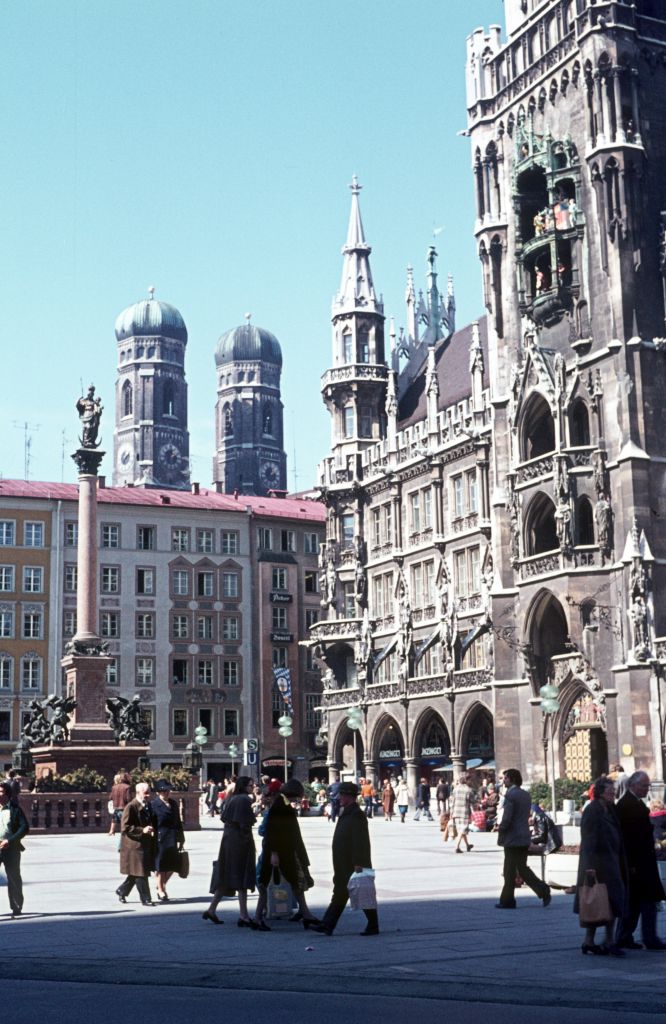
Kursleitung: Prof. Dr. med. Maria Blohmke und Mitarbeiter. Veranstalter: Bayerische Akademie für Arbeits- und Sozialmedizin. Tagungsort: München 22, Pfarrstr.3.
Grundlagenlehrgang: Epidemiologie und epidemiologische Methodik I, 29.3.-2.4.1976. Themenauswahl: Modelle und Modellfindung; Messung von Morbidität und Mortalität; Studienformen; Datenquellen und Datenerfassung; Bevölkerungsstruktur und Entwicklung; Soziale Faktoren und Morbidität; Stichprobenauswahl; Übungen …
Fortgeschrittenenlehrgang: Epidemiologie und epidemiologische Methodik II, 5.4.-9.4.1976. Praxis der Durchführung von epidemiologischen Studien; Altersstandardisierung; Randomisierte klinische Versuche; Effektivität und Effizienz in der Medizin; Sterbetafeln; Literaturdokumentation; Übersicht über statistische Programmpakete; multivariate Methoden; Formulierung eines Forschungsantrags; Übungen …
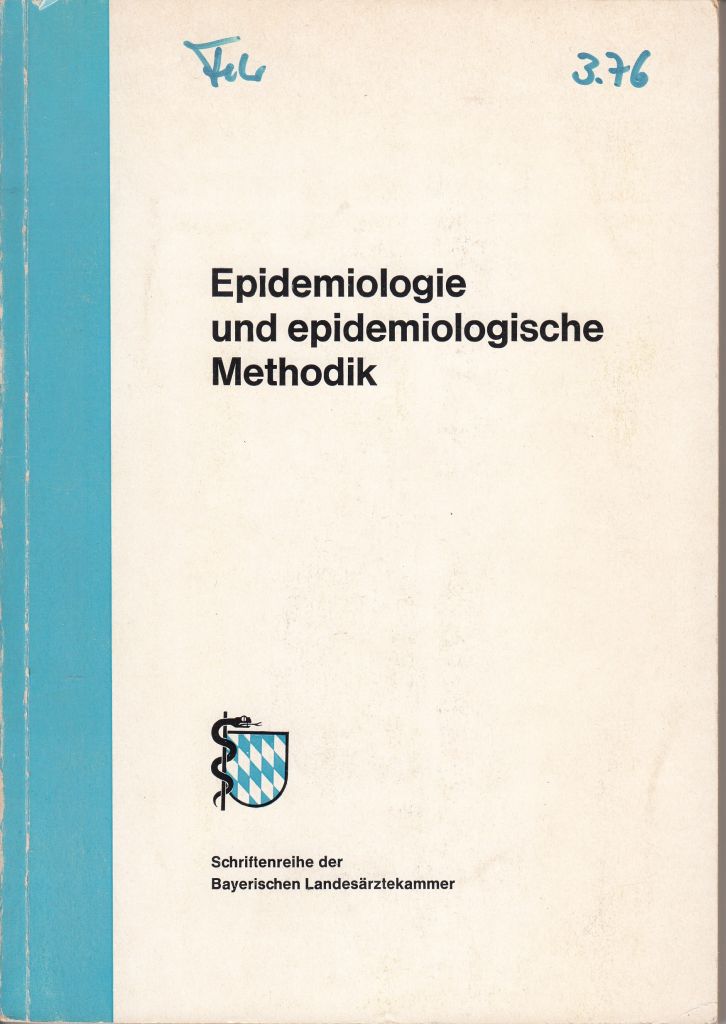
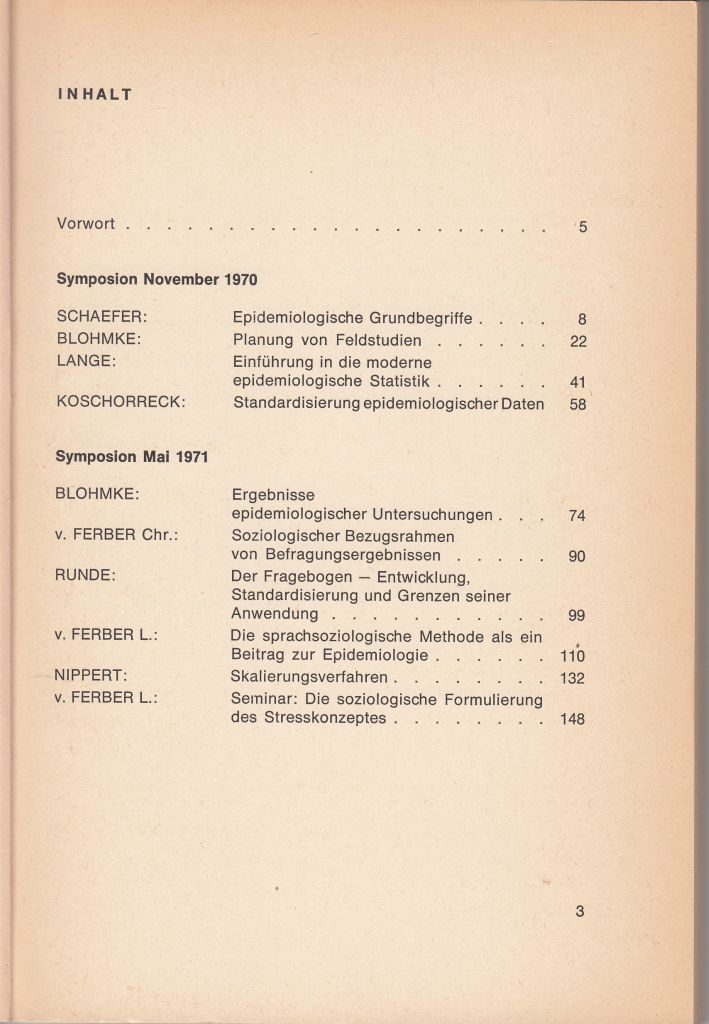
Bayerische Akademie für Arbeitsmedizin und soziale Medizin (1972): Epidemiologie und epidemiologische Methodik. Vorträge der Symposien „Epidemiologie und epidemiologische Methodik“ in München am 25./26. November 1970 und vom 11. Bis 14. Mai 1971. Schriftenreihe der Bayerischen Landesärztekammer, Band 29, 158 Seiten. – Mit Beiträgen (1970) von: Schaefer, Blohmke, Lange, Koschorrek und (1971) von: Blohmke, Chr. v. Ferber, Runde, L. v. Ferber, Nippert [erhalten März 1976]
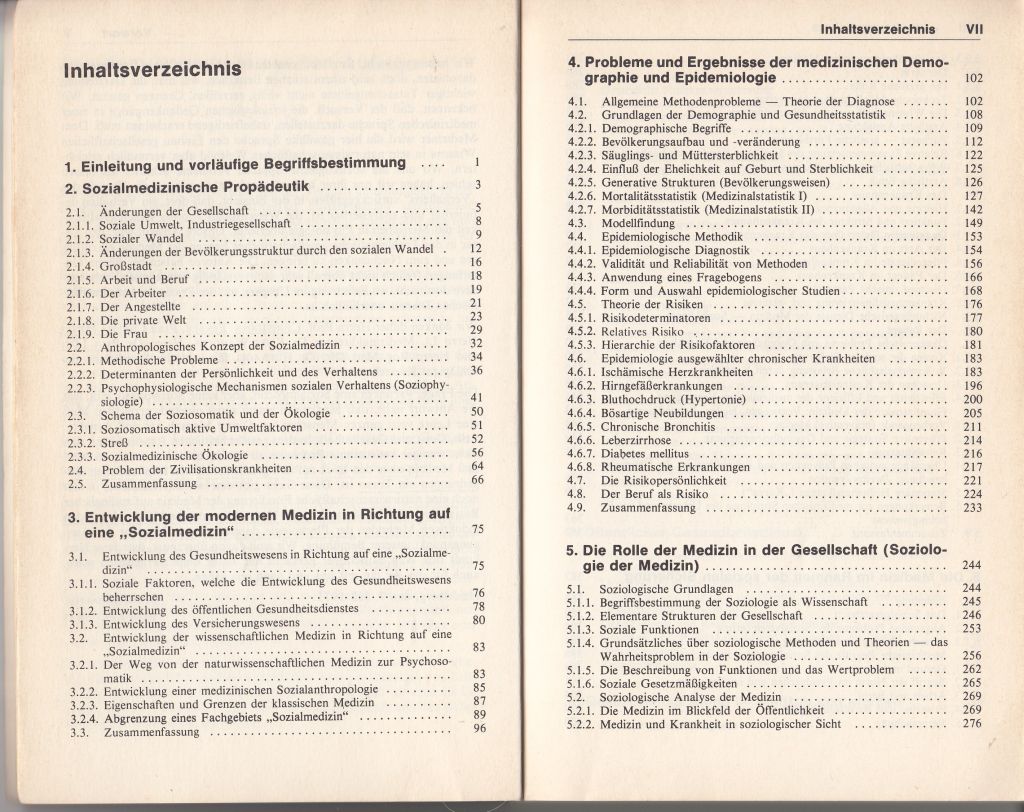
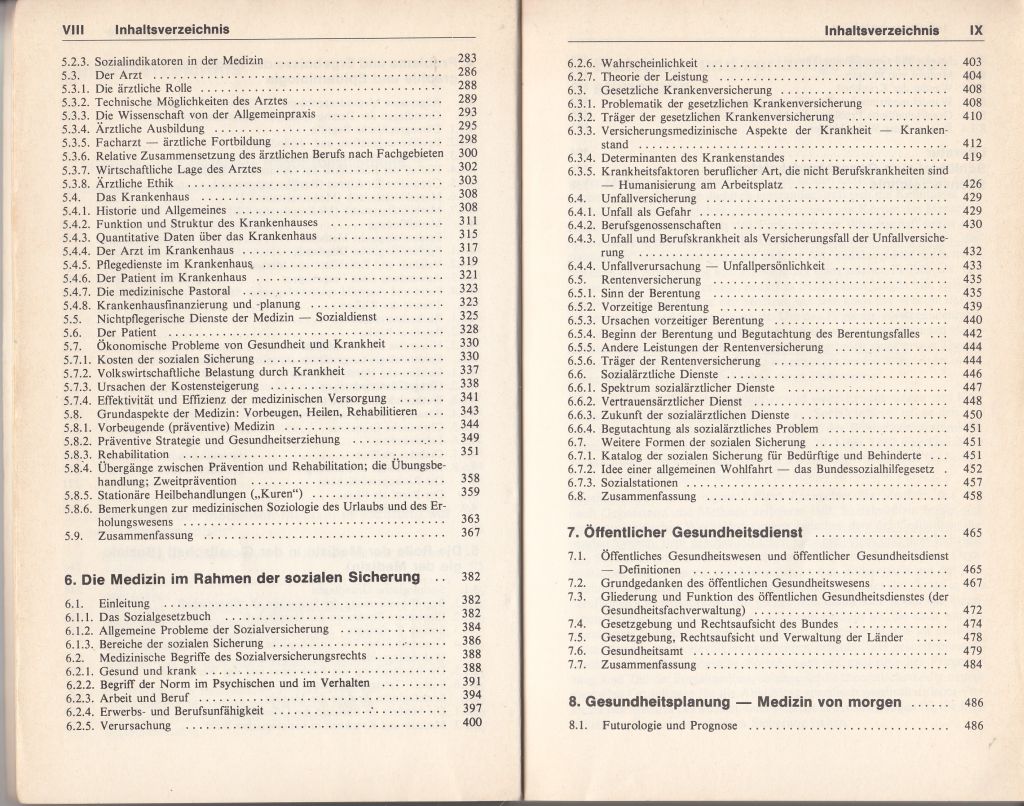
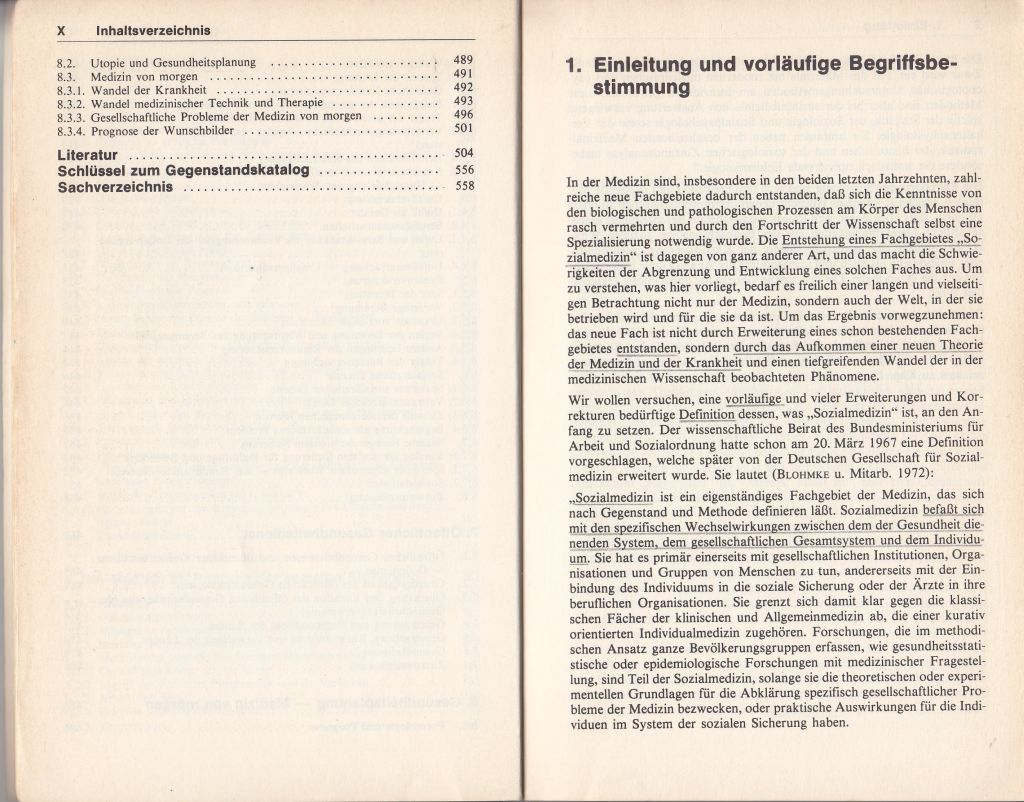
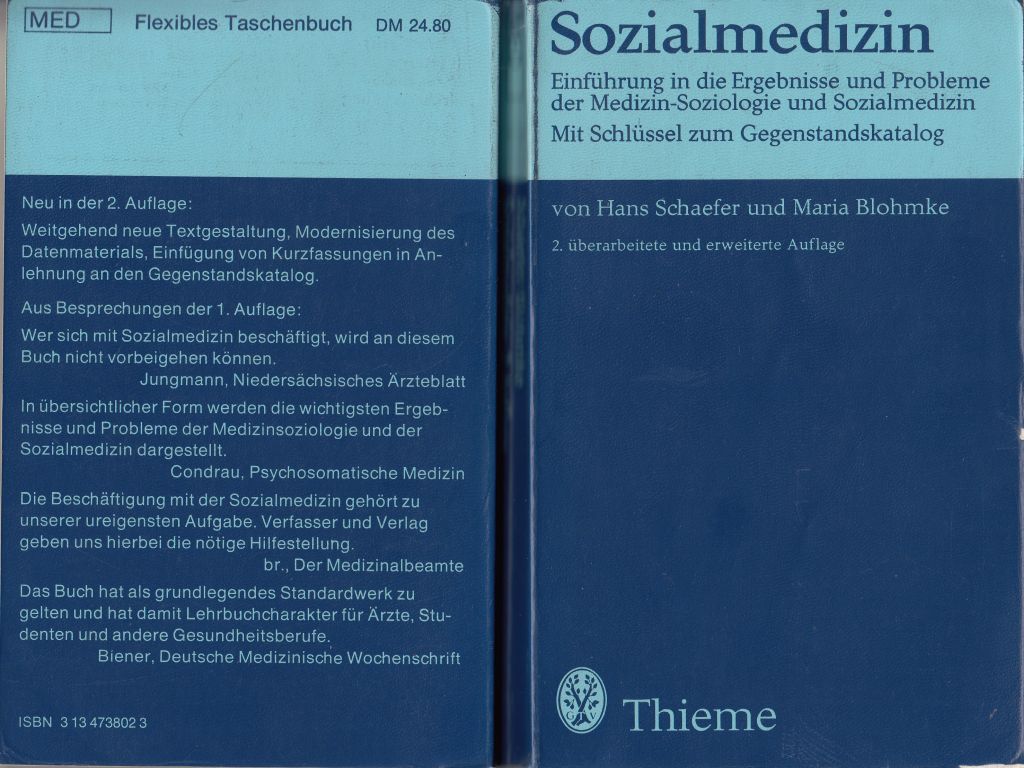
Schaefer, Hans; Blohmke, Maria (1972 / 1978, 2. überarbeitete und erweiterte Aufl.): Sozialmedizin. Einführung in die Ergebnisse und Probleme der Medizin-Soziologie und Sozialmedizin. Mit Schlüssel zum Gegenstandskatalog. Georg Thieme Verlag, Stuttgart, X+571 Seiten. – Aus dem Vorwort zur ersten Auflage, p.iv: „Ein ‚Vielmänner-Buch‘ haben wir nicht schreiben wollen, um … den Versuch, ein Konzept der gesellschaftlichen Probleme der Medizin zu geben, nicht mit allzu vielen Meinungen zu belasten. Irgendwo muß ein Anfang aus einem Guß gesetzt werden. Nun kann die Entwicklung ruhig über uns hinweggehen …“
Marxismus: historisch-dialektische Methodik; Dialektik als allgemeines Bewegungsgesetz der Natur, der menschlichen Geschichte und des Denkens.
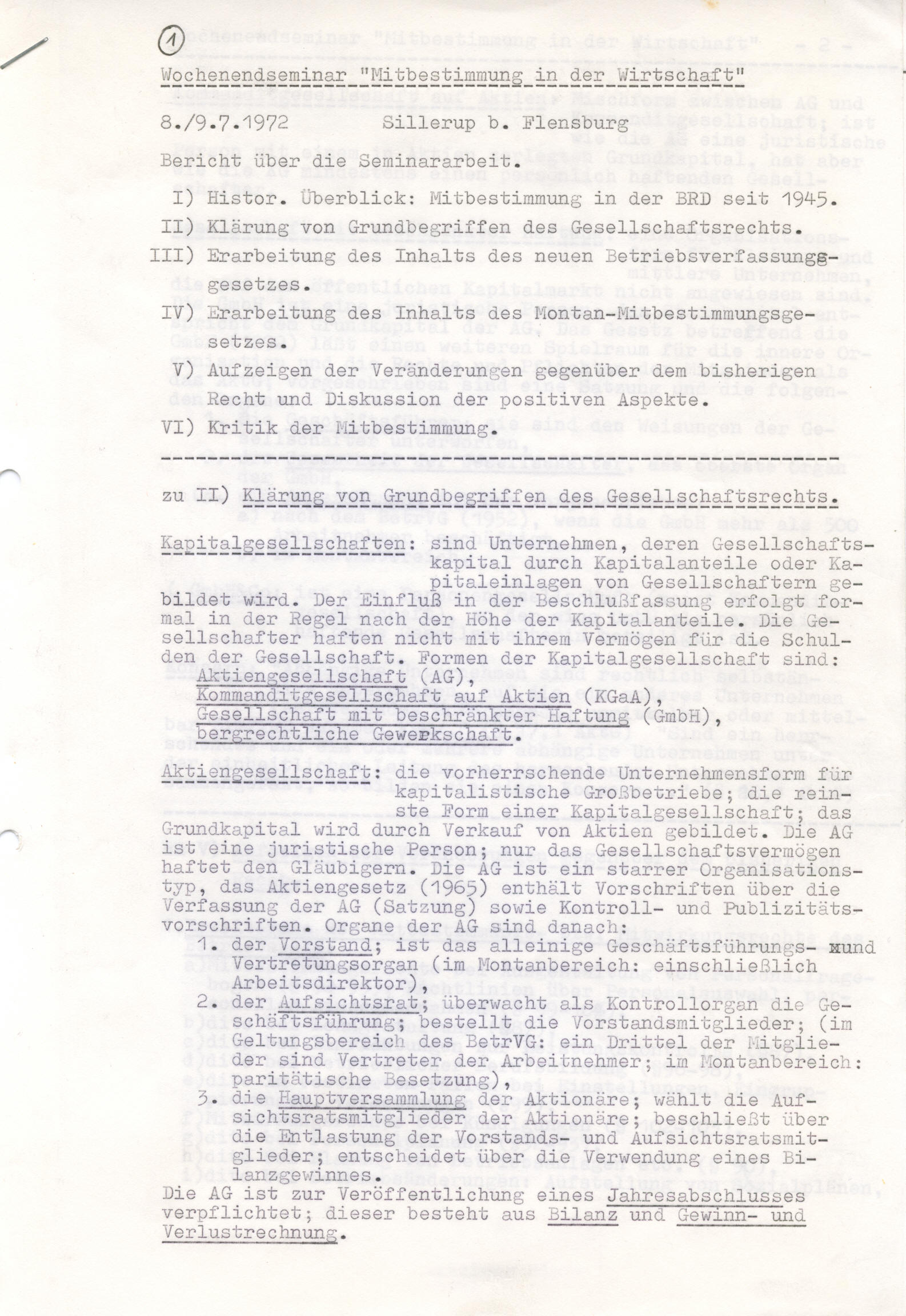
Kapitalismus-Formen: Konkurrenz-K.; Monopol-K.; Staatsmonopolistischer K. (Stamokap), mit systemsichernder Funktion des Staates. Systemerhaltende vs. systemüberwindende Reformen. JM Keynes: Stabilisierung durch antizyklische Interventionen des Staates.
Hauptthemen für weitere Arbeit (Auswahl): Widerspruch Lohnarbeit – Kapital; Rolle des Staates und der Parteien; Klassenanalyse; Bündnispartner.
Literaturauswahl
Jungsozialisten in der SPD, Landesverband Hamburg (1971): Hamburger Strategie-Papier. I. Vorbemerkungen, II. Ökonomische Entwicklungstendenzen, III. Strategische Konsequenzen der ökonomischen Analyse, IV. Die SPD im politischen System der BRD und die Aufgaben der Jungsozialisten
Gansel, Norbert (Hrsg.) (1971): Überwindet den Kapitalismus oder Was wollen die Jungsozialisten? Rowohlt, Reinbek bei Hamburg
Wirth, Margret (1971): Kapitalismustheorie in der DDR. Entstehung und Entwicklung der Theorie des staatsmonopolistischen Kapitalismus. Edition suhrkamp, Suhrkamp Verlag, Frankfurt am Main, p.127: „Nicht der Staat als patriarchal ‚im Interesse der Werktätigen‘ organisierende Zentrale, sondern die bewußte gesellschaftliche Selbstorganisation ist die Alternative zum Kapitalismus“.
Schneider, P (1972): Können wir aus den italienischen Klassenkämpfen lernen? Kursbuch 26, pp.1-3
Schneider, P (1972): Die Massen, die Gewerkschaften und die politische Avantgarde. Kursbuch 26, pp. 135-162.
21 Oct 1969, Erstes FORTRAN IV-Programm geschrieben
23 Oct 1969, Erstmals Hollerith-Kartenlocher bedient
30 Oct 1969, 1st Symposium on Medical Computing, Birmingham: „Computers do whatever can be done with data arithmetic and simple logic“, record linkage … real-time systems (as used in banks) also usable for medical wards …problems of how to record medical histories and the results of medical examinations … “daily quality control data” …
11 Dez 1969, Epidemiologie-Klausur
Gegen Ende des Aufenthaltes: U Birmingham fragt nach meinem Diagnostik-Programm (inkl. Flowchart und Dokumentation) und bietet mir an, für Postgraduate Work nach Birmingham zurückzukehren.
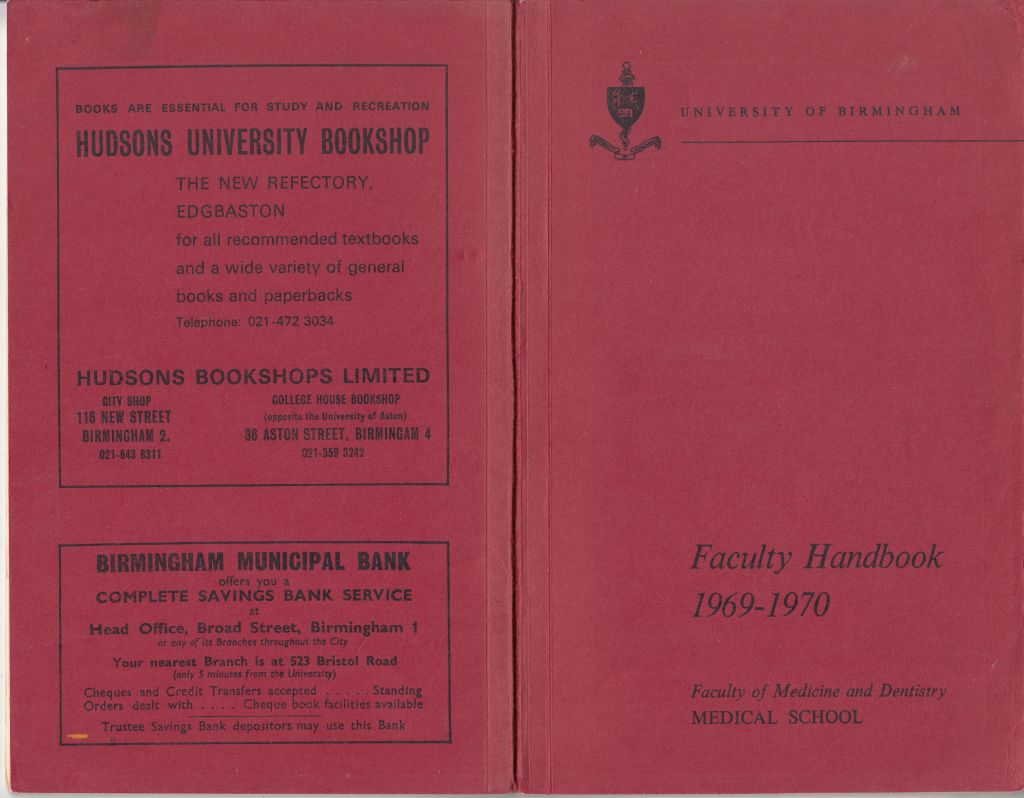
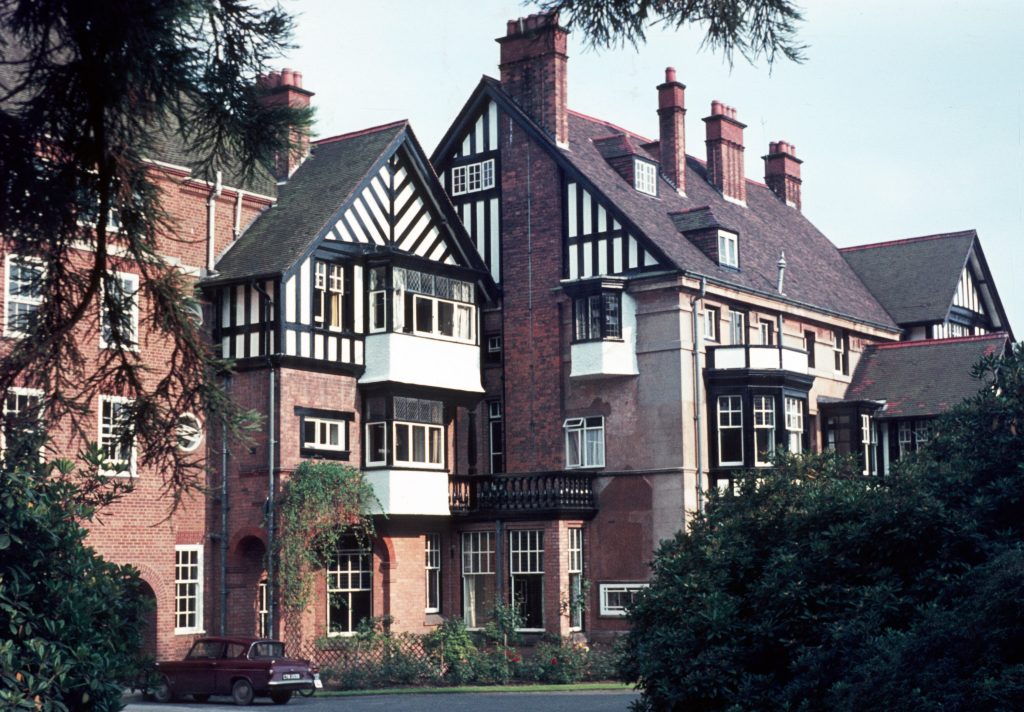
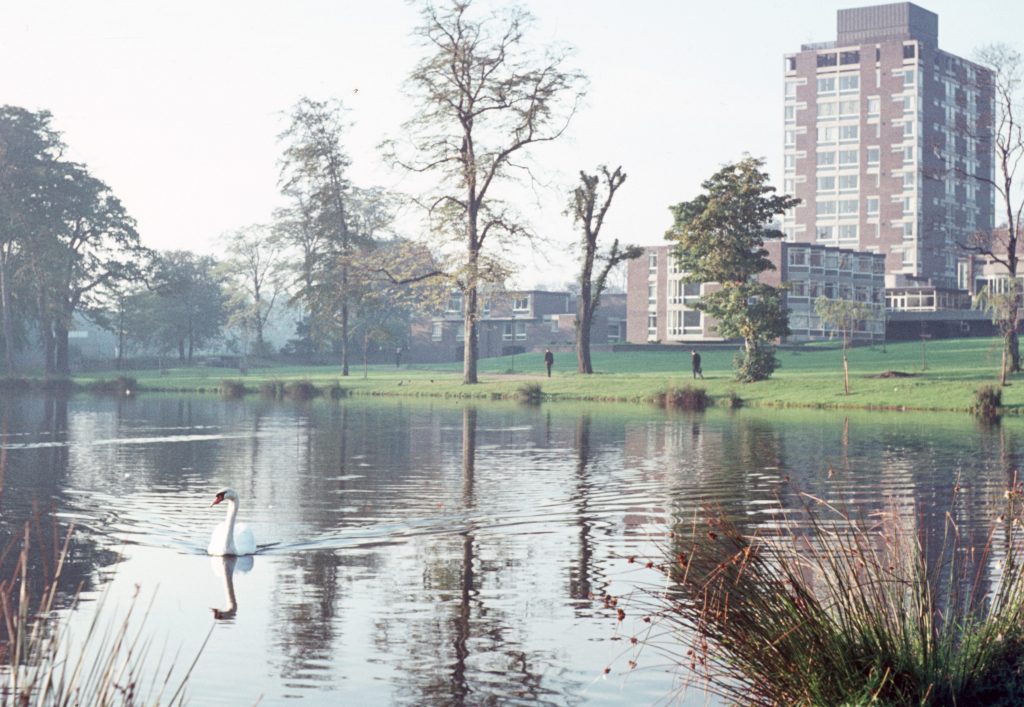
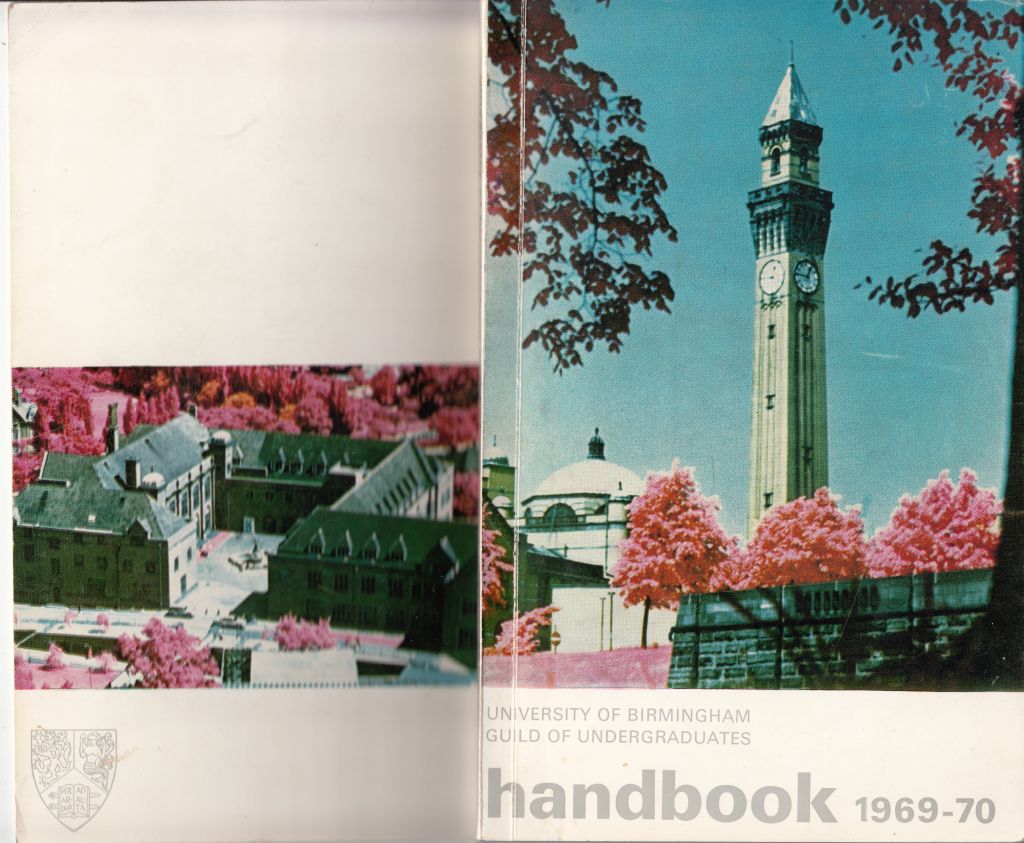
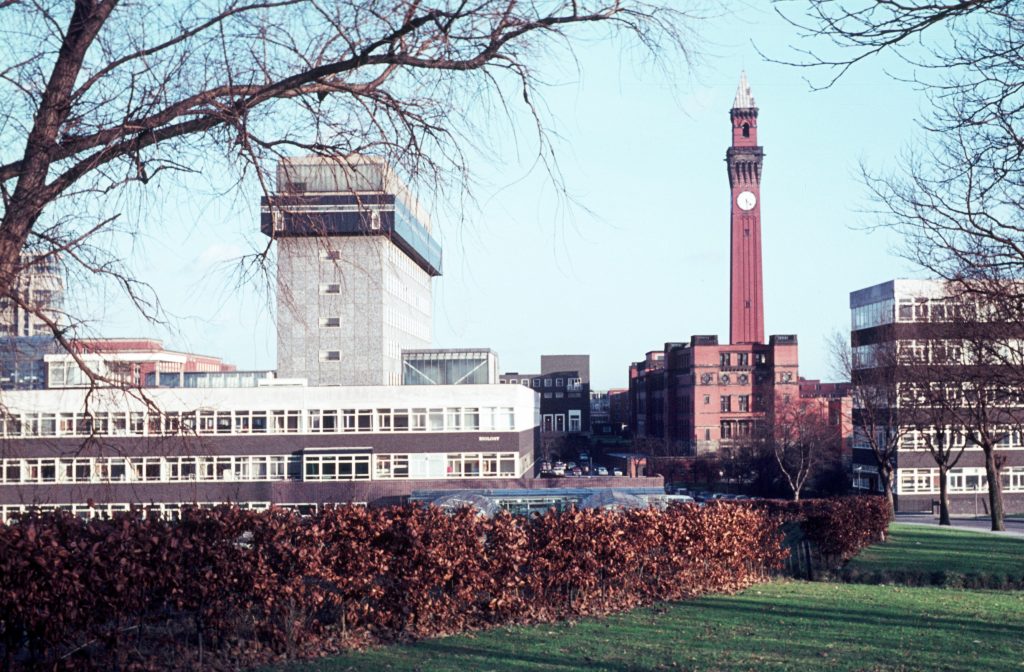
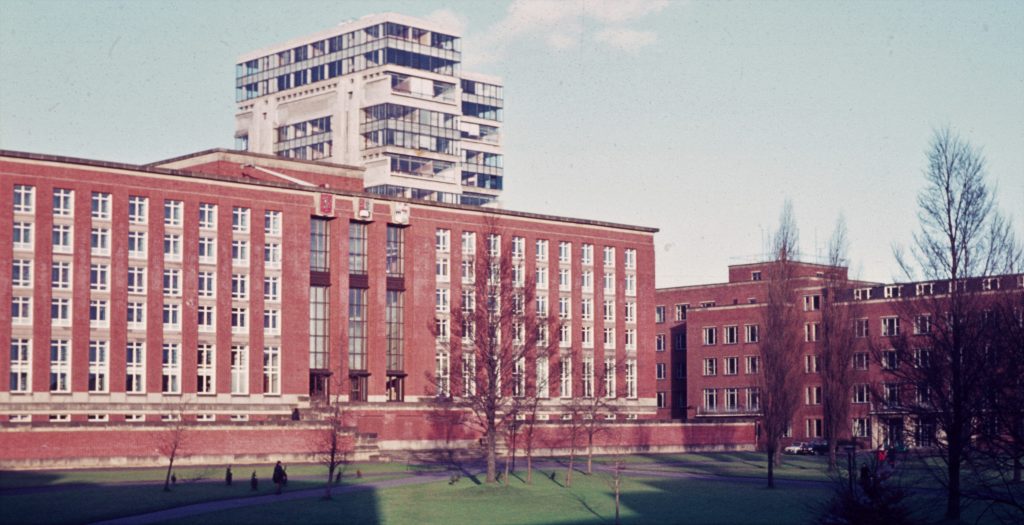
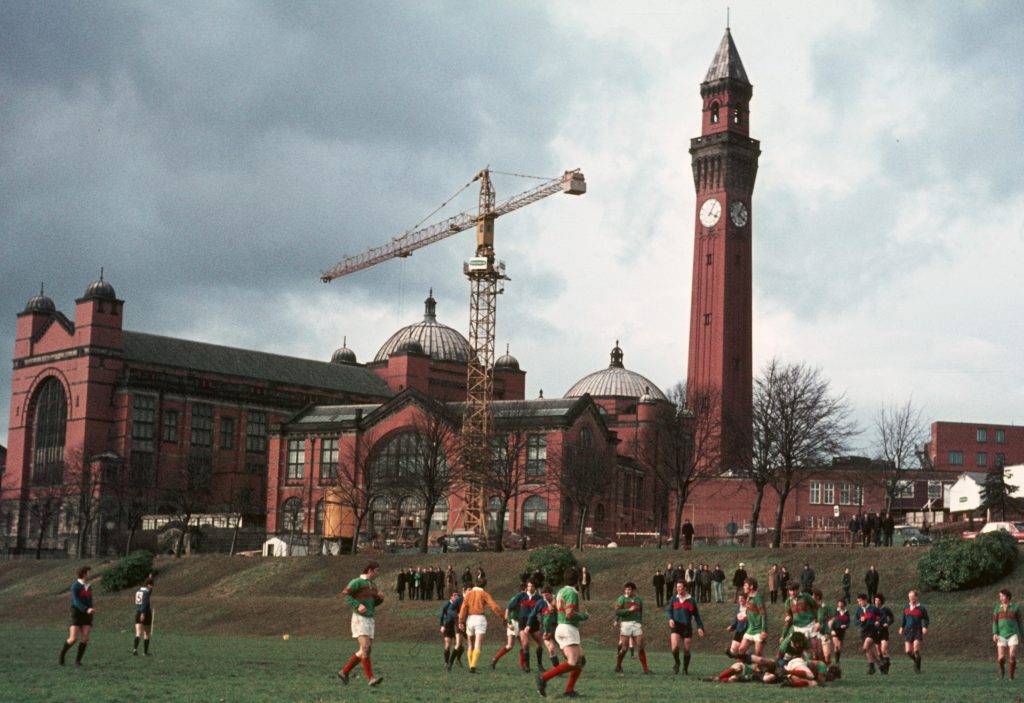
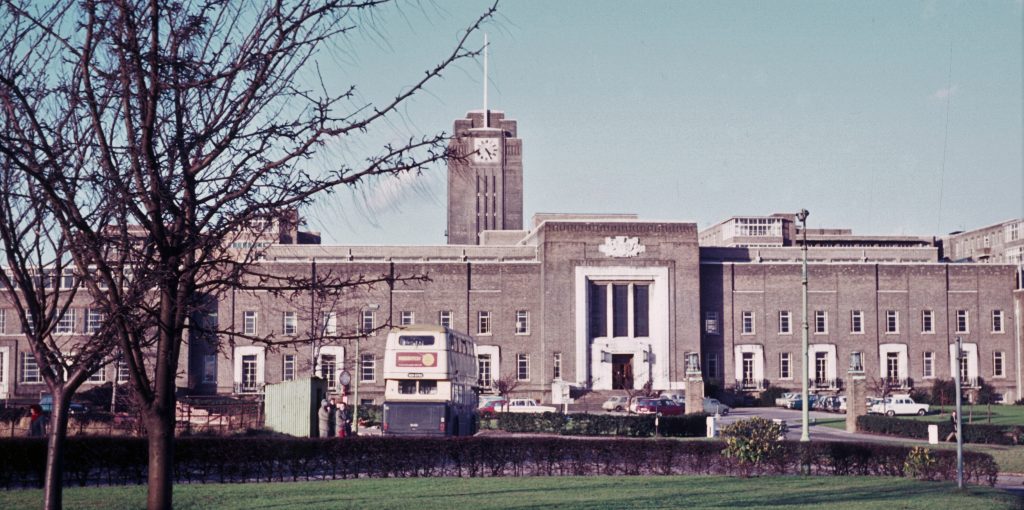
Die mein Medizin-Studium fördernde Studienstiftung des deutschen Volkes (www.studienstiftung.de) erwartete von ihren Stipendiaten eine internationale Mobilität. Ich bewarb ich mich um einen Studienplatz in Edinburgh (alternativ in London oder Aberdeen). Diese Bewerbungen waren nicht erfolgreich. Mit einem Schreiben des „Educational Interchange Council (Incorporated)” vom 23.4.69 (“Dear Herr Fehr, …”) wurde mir ein Studienplatz in Birmingham angeboten, den ich dann annahm. Am 15.-16.9.69 reiste ich mit der Fähre von Bremerhaven nach Harwich und via London nach Birmingham. Ankunft in der Universität (www.birmingham.ac.uk/index.aspx), Vorläufige Unterkunft im Manor House.
17-25 Sep 1969, Introductory Course for Overseas Students
Ein Handout “General information for students from overseas” behandelte folgende Themen: “Living in England”, “English customs”, “Personal matters”, “Communications”, “Money matters” und “Travelling in England”
18 Sep 1969, English language test; “Morris Dancing and Music by the Faithful City Morris Men of Worcester” (Folklore)
19 Sep 1969, Lecture on politics; visit to Cadbury’s. “Cadbury, formerly Cadbury’s and Cadbury Schweppes, is a British multinational confectionery company … Cadbury was established in Birmingham, England in 1824, by John Cadbury who sold tea, coffee and drinking chocolate…, https://en.wikipedia.org/wiki/Cadbury
20 Sep 1969, “Legal rights of overseas studens”; Filmabend: “British travel films”
21 Sep 1969, Lecture “Religion and social customs in Britain”
25-28 Sep 1969, Twenty-second Annual Freshmen’s Conference, held at The University and the Guild of Undergraduates’ Union
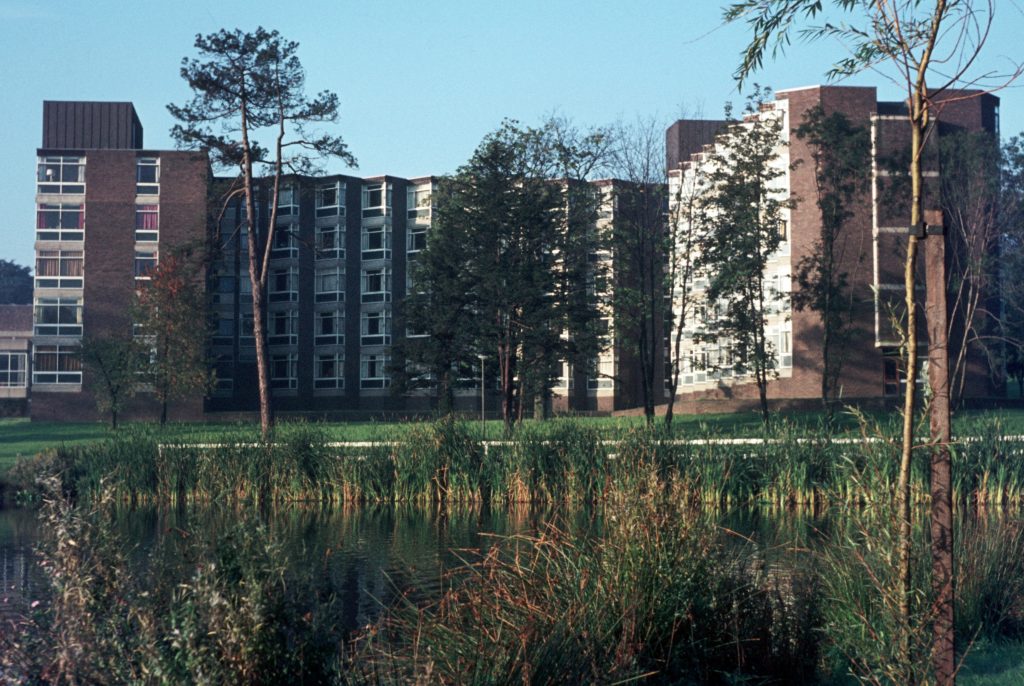
25 Sep 1969, Einzug in Mason Hall, Adresse: The Vale, Edgbaston Park Road, Edgbaston, Birmingham, 15 (Heute: www.birmingham.ac.uk/study/accommodation/UG-accommodation/vale/mason.aspx). “Mason Hall was named after Sir Josiah Mason who founded Mason’s Science College which gave rise to the University of Birmingham” (Mason Hall Handbook 1969/1970, p. 2)
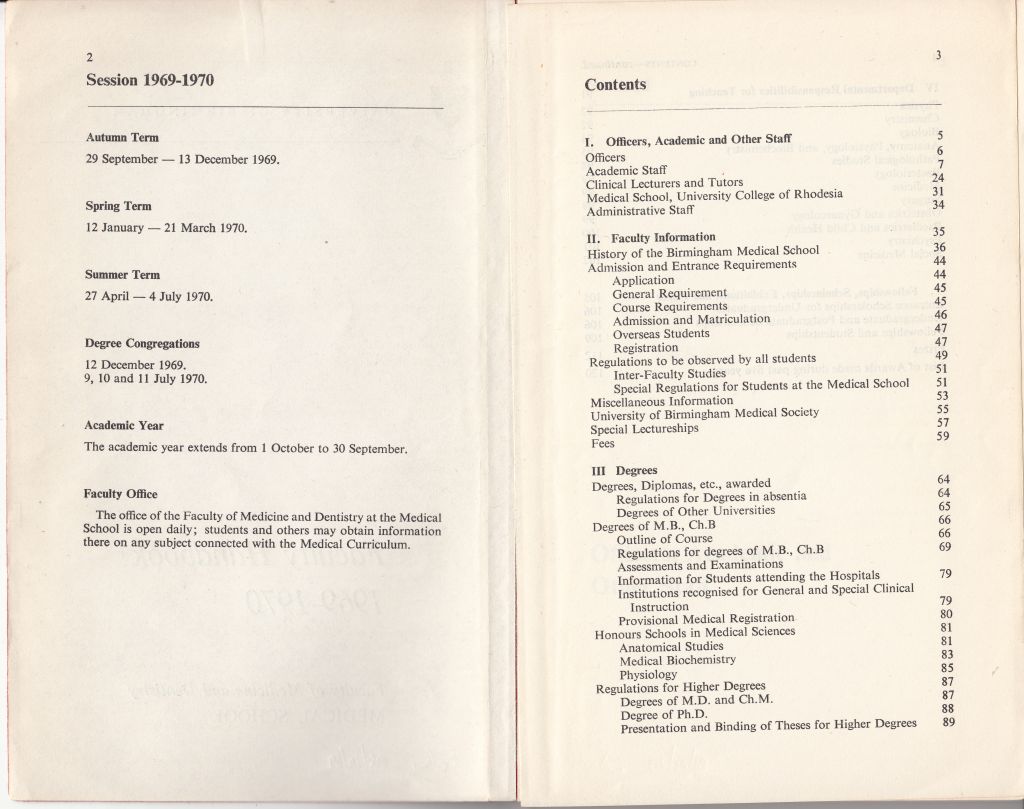
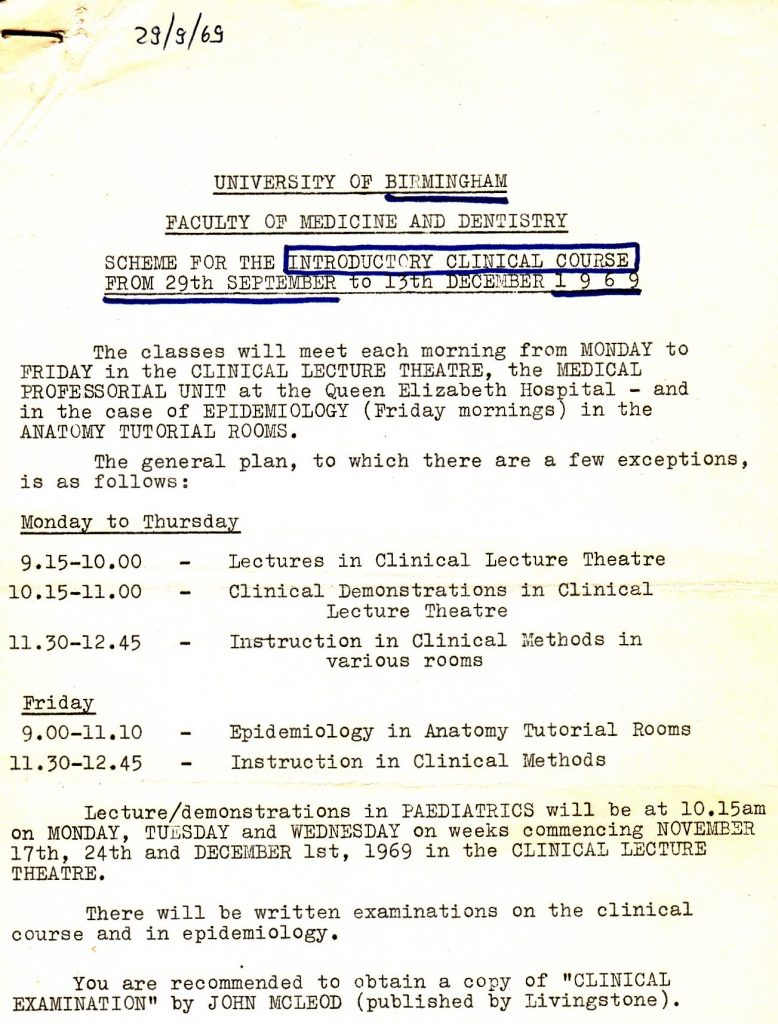
29 Sep 1969, Das “Autumn Term” beginnt. „Opening address“ im “Clinical lecture theatre”
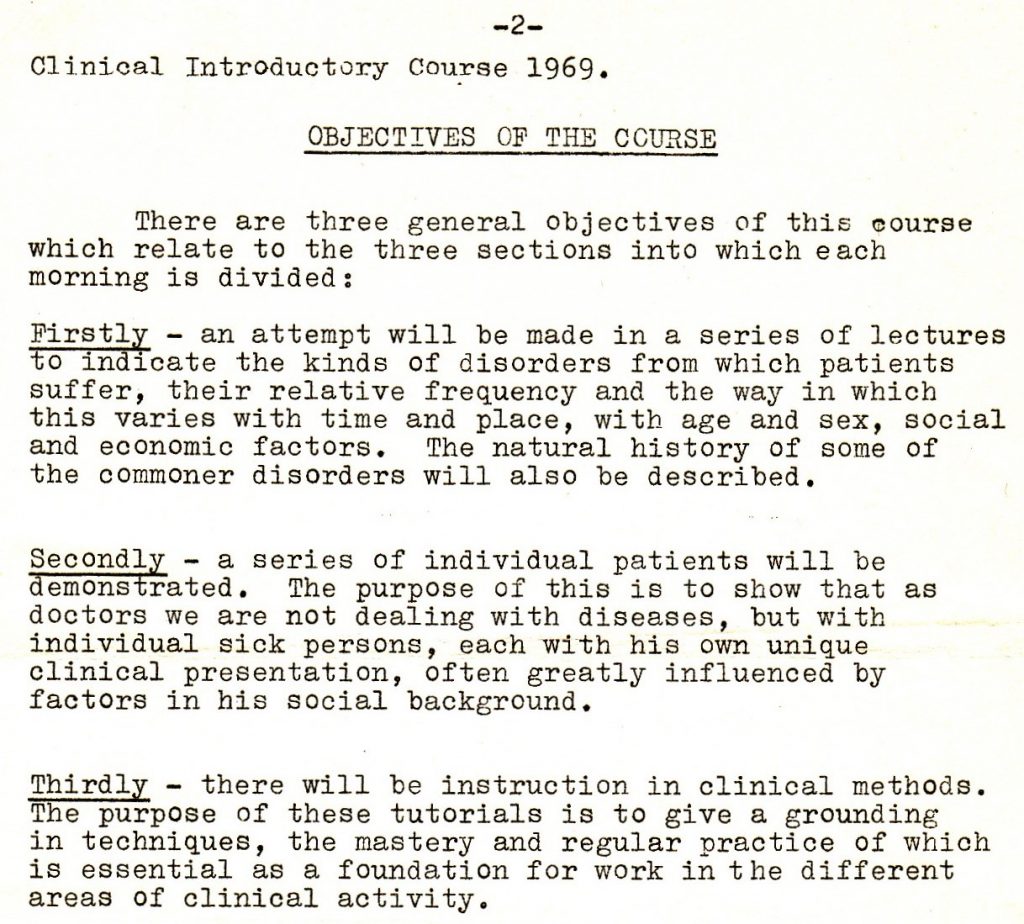
29 Sep – 13 Dec 1969, Introductory Clinical Course; on Friday mornings: Epidemiology (in Anatomy Tutorial Rooms)
Birmingham book chapters: 1. A Village Worth Twenty Shillings, 2. The Smiths who Built a Town, 3. Civil War in Birmingham, 4. Thieves and Forgers, 5. Buttons and Buckles, Trinkets and Toys, 6. Boulton and Watt of Soho, 7. The Lunar Society, 8. Birmingham Runs Riot, 9. Years of Hardship, 10. The Struggle for Reform, 11. A Century of Expansion, 12. Workshop of the World. – p.95: “the members of the Lunar Society were the top manufacturers, scientists and professional men of that age of change, and their discussions, plans and projects pioneered the great achievements which inexorably were making the Midlands and the North the industrial backbone of England…” p.103: “1780, when John Priestley decided to move to Birmingham … p.104: “Turning to chemistry, he had discovered hydrochloric acid and nitrous oxide and it was his suggestion for saturating water with carbon dioxide which led to the rise of a new industry in the manufacture of mineral waters. Two years later he had discovered, although not named, oxygen – one of the most important events in the history of chemistry – nitrogen, nitrogen peroxide, sulphur dioxide, ammonia, silicon tetrafluoride and sulphuretted hydrogen gases.” Source: Sanders 1969.
25 Oct 1969, Squash; mit dem International Student Centre: Tour nach Coventry
5 Nov 1969, Guy Fawkes Night. “Guy Fawkes Night originates from the Gunpowder Plot of 1605, a failed conspiracy by a group of provincial English Catholics to assassinate the Protestant King James I of England and replace him with a Catholic head of state. In the immediate aftermath of the 5 November arrest of Guy Fawkes, caught guarding a cache of explosives placed beneath the House of Lords, James’s Council allowed the public to celebrate the king’s survival with bonfires …”, https://en.wikipedia.org/wiki/Guy_Fawkes_Night
13 Nov 1969, Ausflug mit der Medical Society zum Shakespeare Theatre in Stratford-on-Avon. Royal Shakespeare Company (RSC), Thoma Middleton: „Women beware women“
19 Nov 1969, In Arthur Thompsen Hall: Beziehung zur Medical School in Salisbury, Rhodesia.
19 Nov 1969, Barber Institute of Fine Arts, Birmingham, Evening concerts: If Music be the Food of Love – Music of the English Stage before 1700. The Early Music Consort, directed by David Munrow:
Restoration Theatre (by Henry Purcell), incl. If Music be the Food of Love (first setting, 1692); ‘Come all ye songsters of the sky’ from The Fairy Queen (adapted from Shakespeare by E. Settle, 1692)
The Court Masque, incl. The Satyr’s Masque (from Jonson’s Oberon, 1611 – Robert Johnson)
Mysteries and Miracles (all the music is anonymus), incl. Carol: ‘Sing we now to this merry company’ (15th century); ‘Lux hodie; Orientis partibus’ (13th century)
Elizabethan and Jacobean Theatre, incl. ‘Greensleves’ (mentioned in Shakespeare’s The Merry Wives of Windsor, c. 1597 – Divisions on the tune for recorder and continuo, Anon., 17th century); Two of Ariel’s songs from Shakespeare’s The Tempest, 1611
Pageant and Disguisings, incl. ‘Gentil duc de Lorraine’ (by Henry VIII).
28 Nov 1969, Ausstellung “Baroque in Bohemia”; Ausstellung “So what?” (3. Welt, Ressourcenschonung)
5 Dez 1969, Film: “Battle of Britain”. “It was a battle fit for heroes to fight in – the Battle of
Britain. The first and last complete war in the air. It lasted for 16 weeks in the summer of 1940 when Britain, after the defeat at Dunkirk in May, 1940, waited for Operation Sealion – the moment when Hitler would Iaunch his promised invasion of Britain. Hitler had tried, through von Richter, to negotiate for peace with the British Minister in Switzerland, but had been rejected…” – “Never in the field of human conflict was so much owed by so many to so few”, Winston C. Churchill. Source: Movie booklet, edited by Peter Tipthorp. Sackville Publishing Ltd.
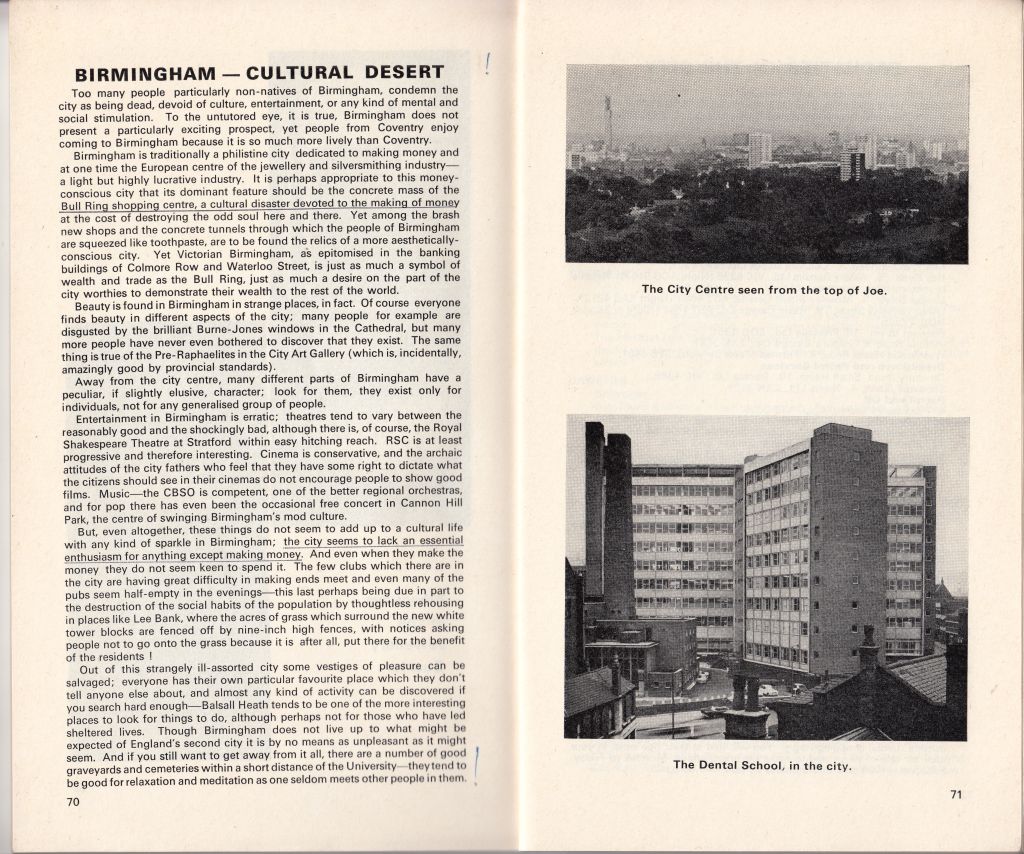
1 Jan 1970, Erster Bericht an die Studienstiftung: „After my first term in B’ham it seems to me to be safe to say that for German medical students a temporary attendance of the clinical training at the B’ham Teaching Hospitals is very useful. The teaching in small tutorial groups was of particular value to me, in both scientific and personal respect: it is a more efficient and agreeable way of learning […], and it made me feel at home in a community of a limited number of members very quickly. […] A course in Epidemiology showed me many interesting problems in Social Medicine – a subject widely neglected in our medical education. I made myself familiar with the content of the first (numerical) course of that Department; and got some experience in FORTRAN IV programming. […] The B’ham Medical School possesses a remarkably active Medical Society […] The B’ham University organises an “Introductory Course for Overseas Students”, the attendance of which should be strongly recommended […] I am glad to live in one of the university’s halls of residence, where […] many facilities are provided [… The] “international atmosphere” which I found at so many various occasions and places is perhaps what impressed me most up to now here in Britain […] As far as B’ham itself is concerned, everybody whose main interests differ from big shopping centres, modern buildings and multi-lane ring roads will be somewhat disappointed. But I was lucky enough to come across a small publication of the Geographical Society, concerning B’ham and the West Midlands and containing detailed description of geographical field excursions some of which I did during 1969’s beautiful autumn days. So I got to know not only the old B’ham of the Industrial Revolution but also the results of the slum-clearance scheme, the residential suburbs, the smokeless zones – a good lesson in town-planning and what happens if it is not cared about […] I was very glad to be able to spend nine days in London […] the Welcome Historical Medical Museum […] Summarizing […] reason enough to be very content with the first term […]”
Obviously, the educative potential of such experience is considerable. As a fellow student from the USA observed: “The British are funny: They call Americans foreigners!“
Lektürenauswahl 1969-1970
Anscombe EM (1959 / 1967): An introduction to Wittgenstein’s Tractatus. Hutchinson University Library, London
British Council (1952 / 1968): How to live in Britain. A handbook for students from overseas.Longmans, Green & Co, London. Contents: “Before leaving home”, “Arrival in Britain”, “The first month” (incl. “British attitudes to strangers”), “The married student” (incl. “How can my wife occupy her time?”); Appendices incl. Clothing list (Men), Clothing list (Women)
Carroll L (1865): Alice’s adventures in wonderland.
City of Birmingham Information Department (o.J.): A guide to Birmingham. Publication No. 149. Content: How Birmingham began. Birmingham today. Living in Birmingham. Filling leisure hours. Workshop of the world. The surrounding countryside.
Eysenck HJ (1953): Uses and abuses of psychology
Sanders J (1969): Birmingham. Longmans Young Books, London.
Webb CJ (1915 / 1964): A history of philosophy. The Home University Library of Modern Knowledge, vol. 102. Oxford University Press, London.
Wittgenstein L (1921): Tractatus logico-philosophicus. The German text of Ludwig Wittgenstein’s Logisch-philosophische Abhandlung with a new translation by D.F. Pears & B.F. McGuiness and with the introduction by Bertrand Russell. International Library of Philosophy and Scientific Method, Routledge & Kegan Paul, London. [First German edition in Annalen der Naturphilosophie, 1921]
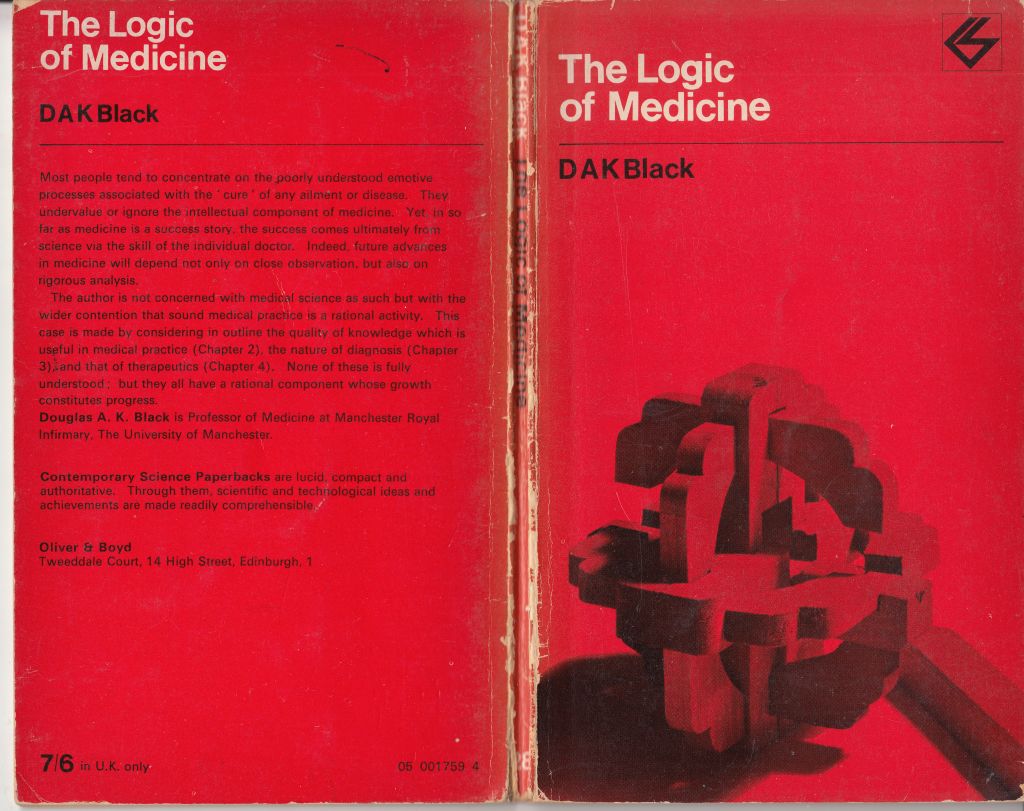
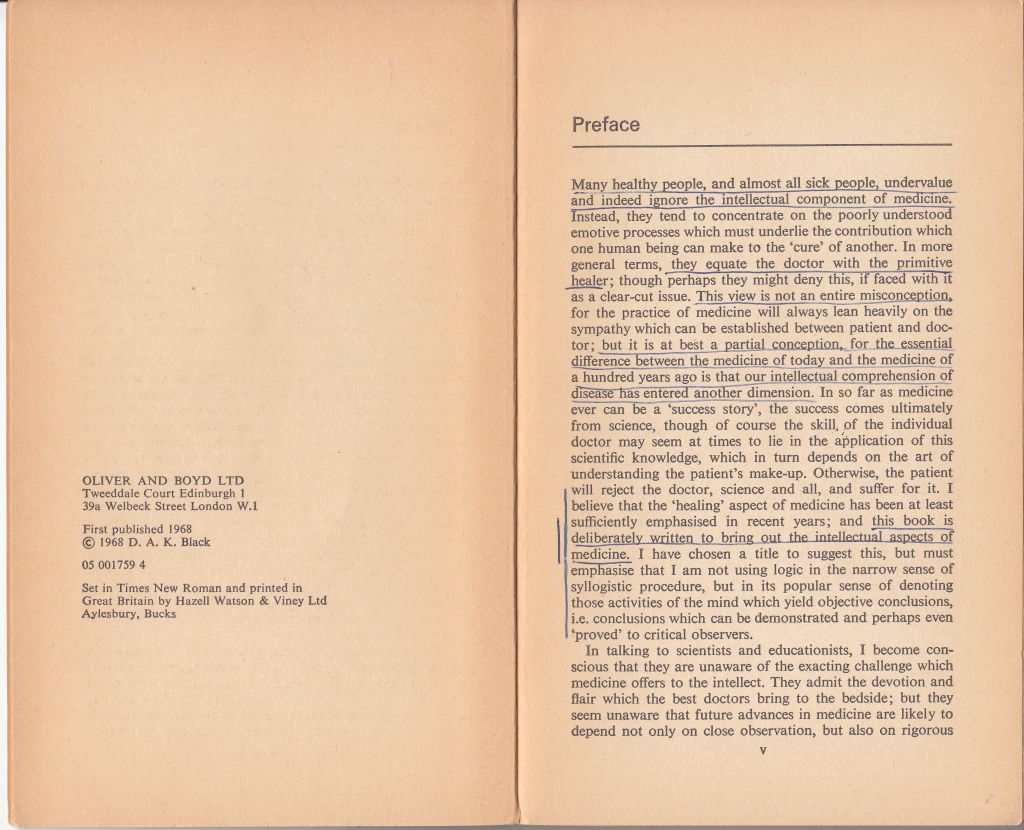
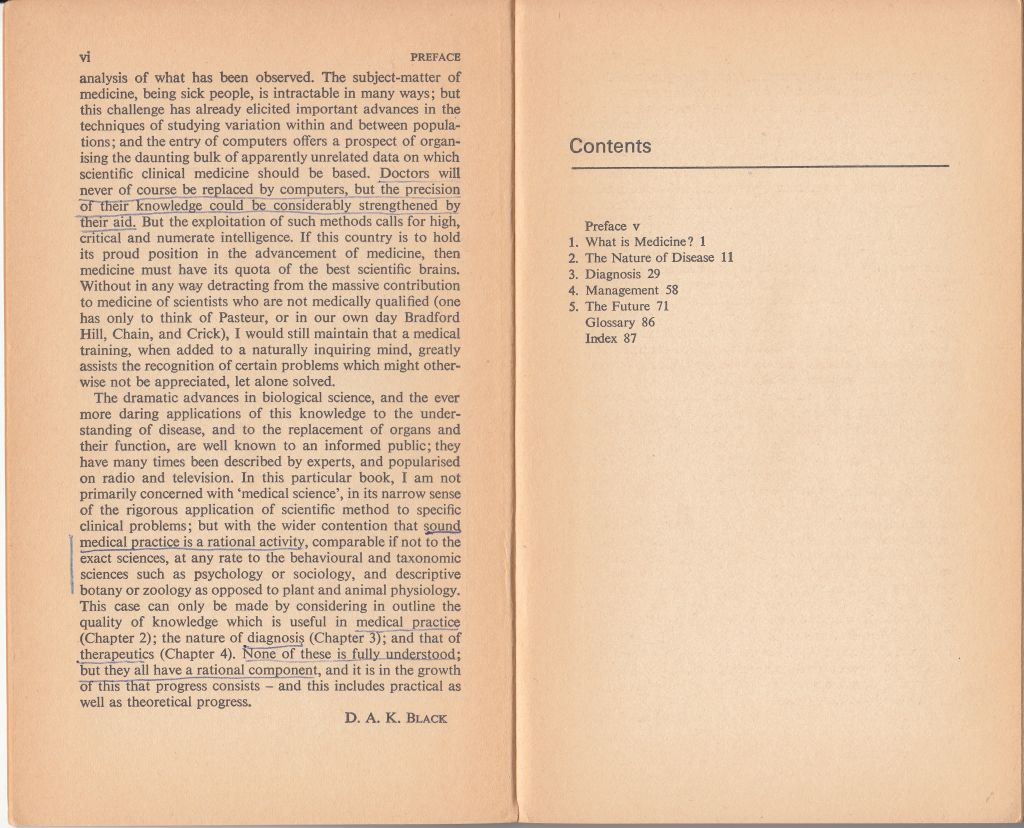
Black, D.A.K. (1968): The Logic of Medicine. Contemporary Science Paperbacks 28, Oliver & Boyd, Edinburgh and London (erworben 29.9.1969).
p.vi: “Doctors will never of course be replaced by computers, but the precision of their knowledge could be considerably strengthenedby their aid …”



 Human ecology and health