18.9.2025, Th. Fromm: 10 Jahre Dieselskandal / Ten years of the diesel scandal
Thomas Fromm (18.9.2025, Süddeutsche Zeitung): Hybris. Zehn Jahre Dieselskandal / Hubris. Ten years of the diesel scandal.
… Die amerikanische Umweltbehörde EPA veröffentlichte eine … „Notice of Violation“. Tests hatten ergeben, dass Hunderttausende Autos des VW-Konzerns per Software manipuliert worden waren. Konkret hatte Volkswagen die Abgaswerte … mithilfe einer Abschalteinrichtung gefälscht, um sie bei Tests besser aussehen zu lassen, als sie … im Straßenbetrieb tatsächlich waren … Mit … elf Millionen betroffenen Autos weltweit handelte es sich um den vermutlich größten Betrugsskandal in der Geschichte der deutschen Automobilindustrie … Es folgten Milliardenstrafen und Entschädigungen, Manager wurden zu Gefängnisstrafen verurteilt … wichtiges Vertrauen verspielt … wertvolle Jahre vertrödelt, die man in … zukunftsträchtige Technologien hätte investieren können … Der Dieselskandal hat viel Zeit und Geld gekostet. Beides könnte man angesichts der vielen aktuellen Probleme heute gut gebrauchen / [DeepL:] The US Environmental Protection Agency (EPA) published a … “Notice of Violation.” Tests had revealed that hundreds of thousands of cars manufactured by the VW Group had been manipulated using software. Specifically, Volkswagen had falsified emissions values … with the help of a defeat device to make them look better in tests than they … actually were in road use … With … eleven million cars affected worldwide, this was probably the biggest fraud scandal in the history of the German automotive industry … This was followed by fines and compensation payments running into the billions, managers were sentenced to prison … important trust was squandered … valuable years were wasted that could have been invested in … promising technologies … The diesel scandal cost a lot of time and money. In view of the many current problems, both could be put to good use today.
“Global Urban Health” hub community, chairs: Timo Falkenberg, Dennis Schmiege; within “Global Health Hub” [incl. branches for “non-state global health actors” / for “policy makers”], https://globalhealthhub.de, Steering Committee representing 8 stakeholder groups
IAP Urban Health working group, Chair: Jo Ivy Boufford; within the InterAcademyPartnership (IAP), www.interacademies.org/, Presidents: Margaret (Peggy) A. Hamburg, Masresha Fetene.
International Society for Urban Health (ISUH), www.isuh.org/; Board of directors: Jeffrey L. Sturchio; Jo Ivy Boufford; Carlos Dora.
Cf.:
1 Sep 2025, Φ Inter-Academy Partnership & Berlin-Brandenburgische Akademie der Wissenschaften: International Urban Health Summit (IUHS) report
9-11 Apr 2025, Φ♣ Hannover-Herrenhausen, InterAcademyPartnership (IAP) et al.: International Urban Health Summit (IUHS)
22 Nov 2024, Φ Steering committee membership in 2 EUPHA sections expired; EUPHA retrospection
6 Nov 2024, Φ♣ Akademientag 2024: In Städten gesund leben – in gesunden Städten leben
24 Aug 2023, Φ♣ Sustainable Urban Health: Exploratory US trip 2023 – travel notes [incl. ISUH]
19 May 2021, Φ European Public Health Week, 17-21 May, incl. “Your local community”, with Photo elicitation community project [EUPHA]
18 Jan 2021, Φ EUPHA section “Urban Health” newsletter, incl. recent developments in Germany
5-7 Mar 2014, Φ Manchester: 11th Int Urban Health conference. Crossing boundaries: Partnerships for Global Urban Health.
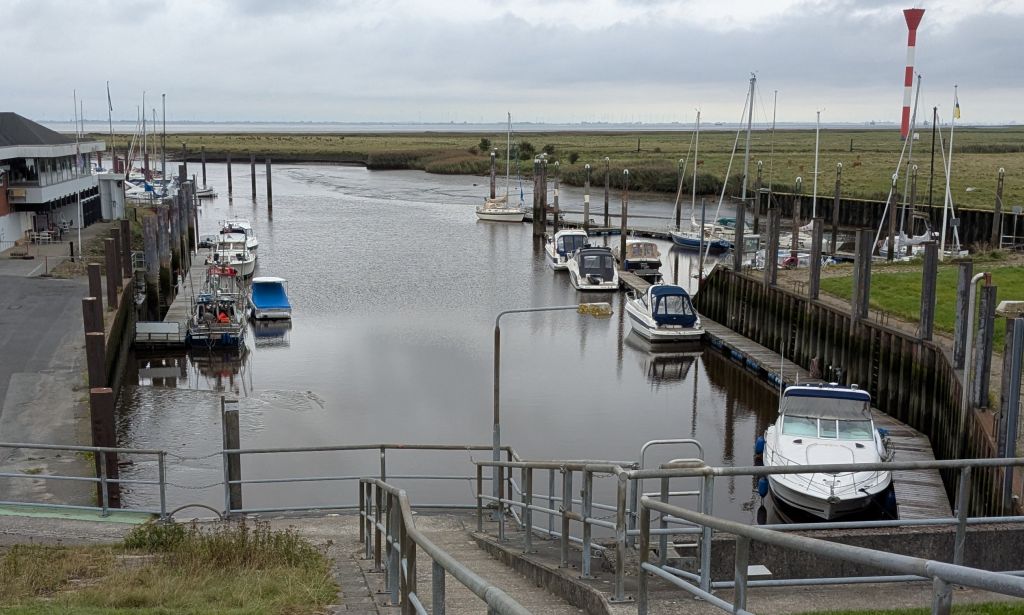
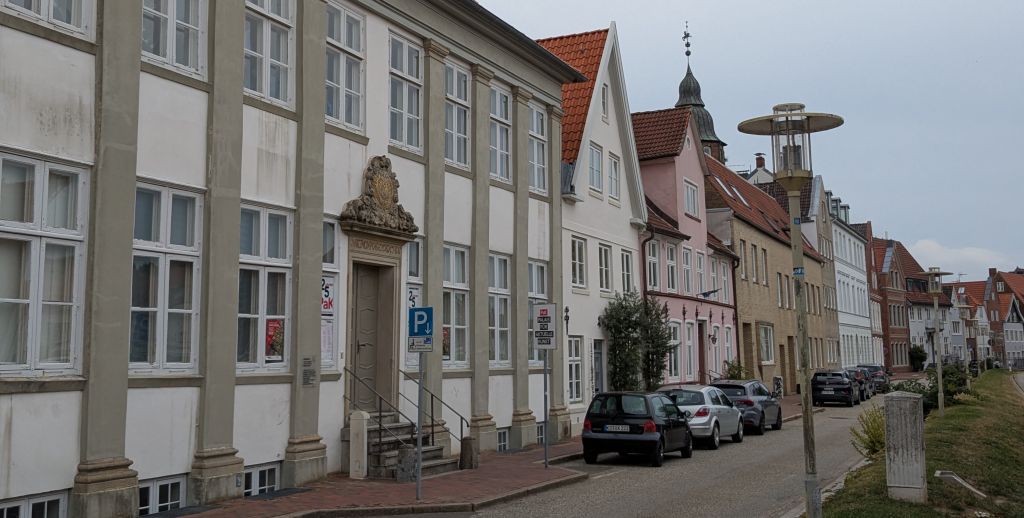
Otterndorf: Niedersachsen, Landkreis / county of Cuxhaven, „Land Hadeln“, https://de.wikipedia.org/wiki/Otterndorf: Die erste Lateinschule ist seit dem 15. Jahrhundert nachweisbar. Von 1778 bis 1782 wirkte Johann Heinrich Voß als Rektor der Lateinschule … / The first Latin school can be traced back to the 15th century. From 1778 to 1782, Johann Heinrich Voß served as headmaster of the Latin school …
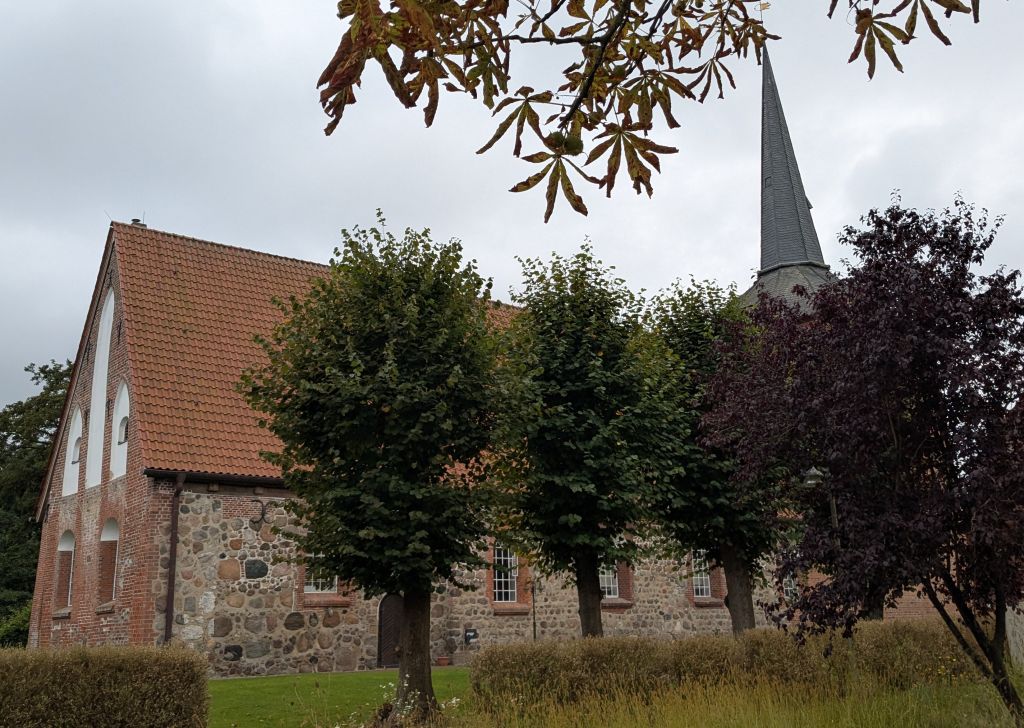
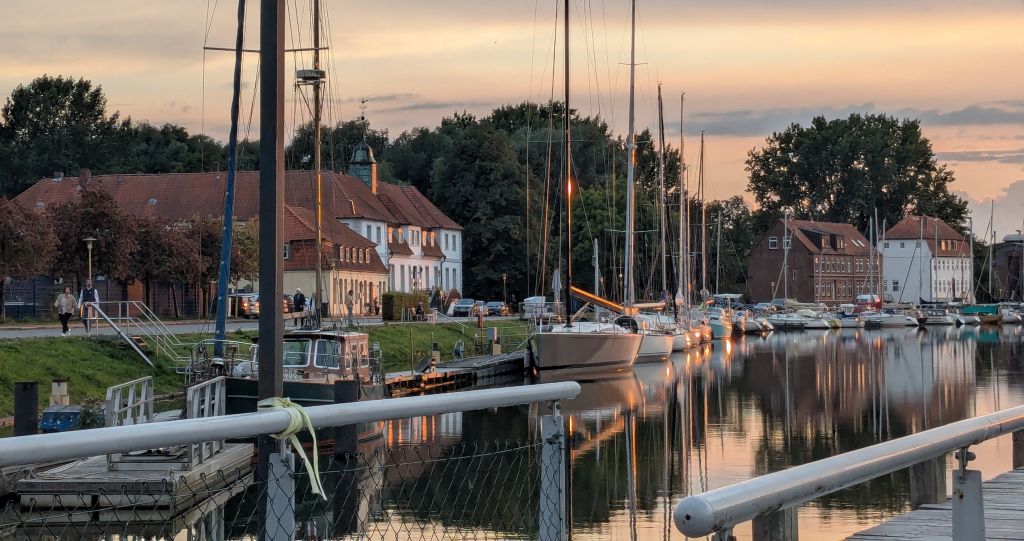
Freiburg/Elbe,https://de.wikipedia.org/wiki/Freiburg/Elbe: … ein niedersächsischer Flecken im Landkreis Stade … gehört zur Samtgemeinde Nordkehdingen … Plinius der Ältere, der mit einer römischen Flotte unter … Drusus bis zur Elbe gelangte, berichtete über Uferanrainer, die überwiegend vom Fischfang leben … / … a small town in Lower Saxony in the district of Stade … belongs to the municipality of Nordkehdingen … Pliny the Elder, who reached the Elbe with a Roman fleet under Drusus, reported on coastal residents who lived mainly from fishing …
Land Hadeln, Land Wursten, https://de.wikipedia.org/wiki/Geschichte_von_Hadeln_und_Wursten: … im Mittelalter bäuerliche Gemeinwesen mit einem hohen Maß an Autonomie … liegen im Norden des Elbe-Weser-Dreiecks im Landkreis Cuxhaven … / … in the Middle Ages, rural communities with a high degree of autonomy … are located in the north of the Elbe-Weser triangle in the district of Cuxhaven …
Kehdingen, https://de.wikipedia.org/wiki/Kehdingen: … im Landkreis Stade … am Unterlauf der Elbe … beiderseits der unteren Oste … / … in the district of Stade … on the lower reaches of the Elbe … on both sides of the lower Oste …
Cf.
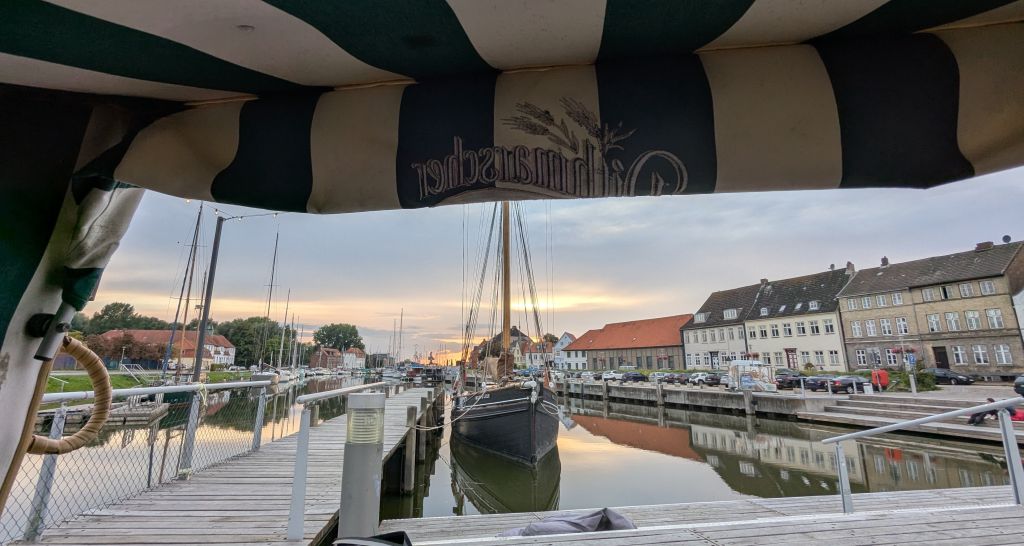
30 Aug 2025, Radtour / Cycling tour Wedel -Glückstadt
15 Dec 2023, Orgelexkursion nach Bützfleth und Freiburg (Elbe)
6 Dec 2019, Kehdingen: Advent concert / (Orgel- etc.) Adventskonzert
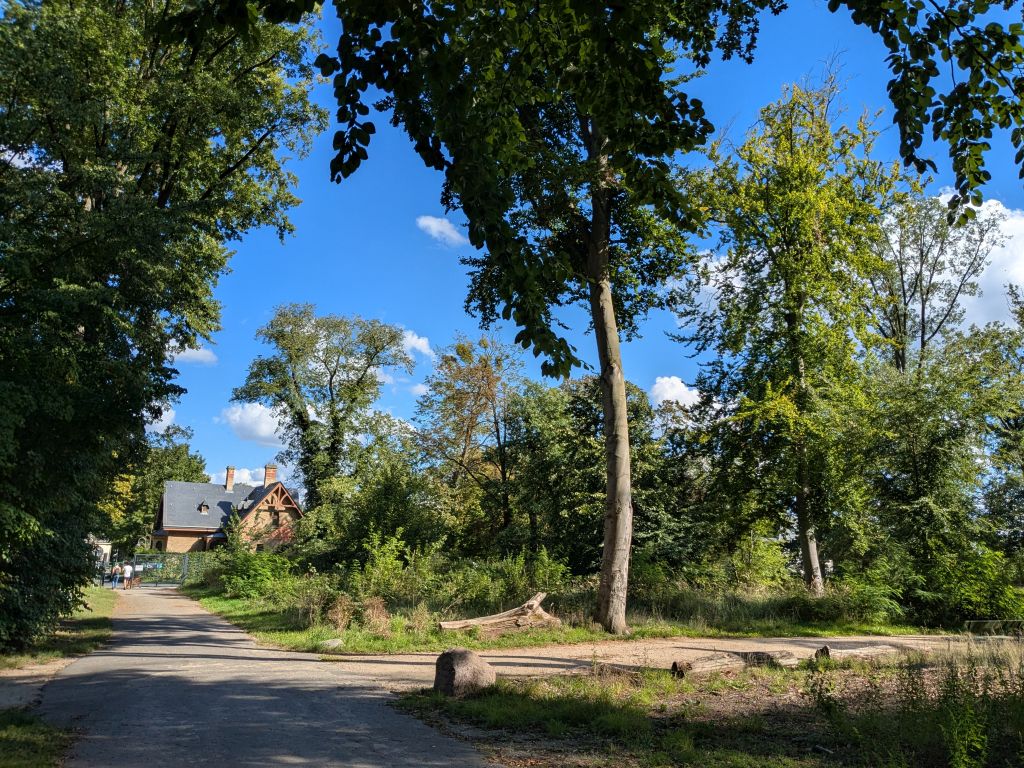
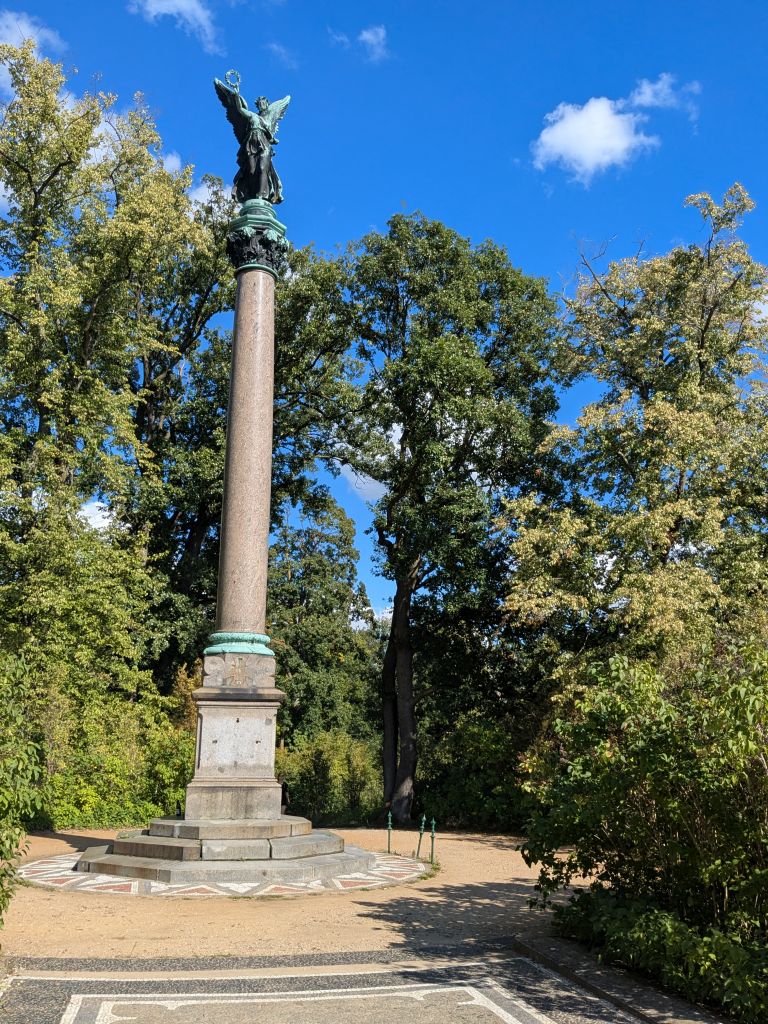
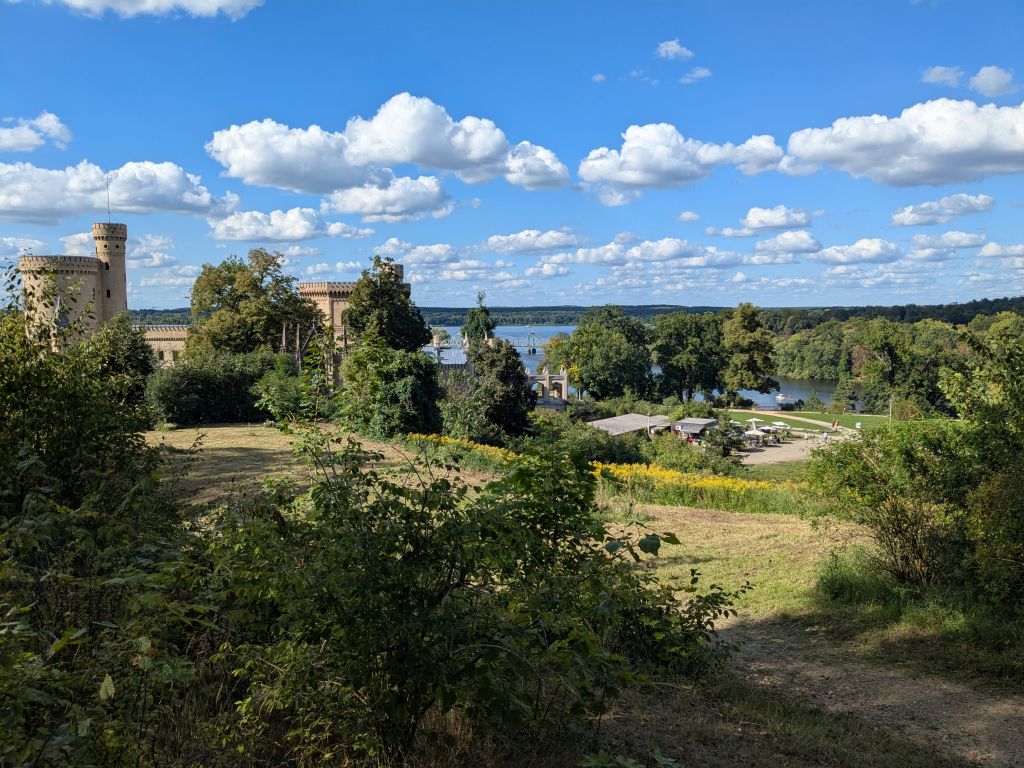
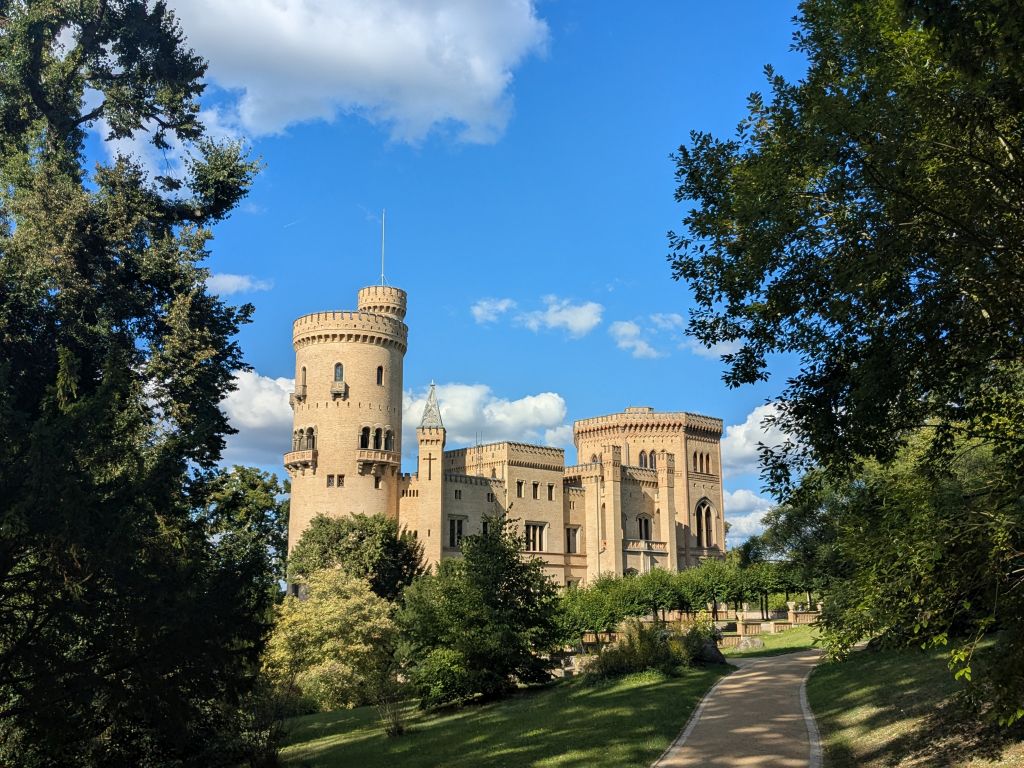
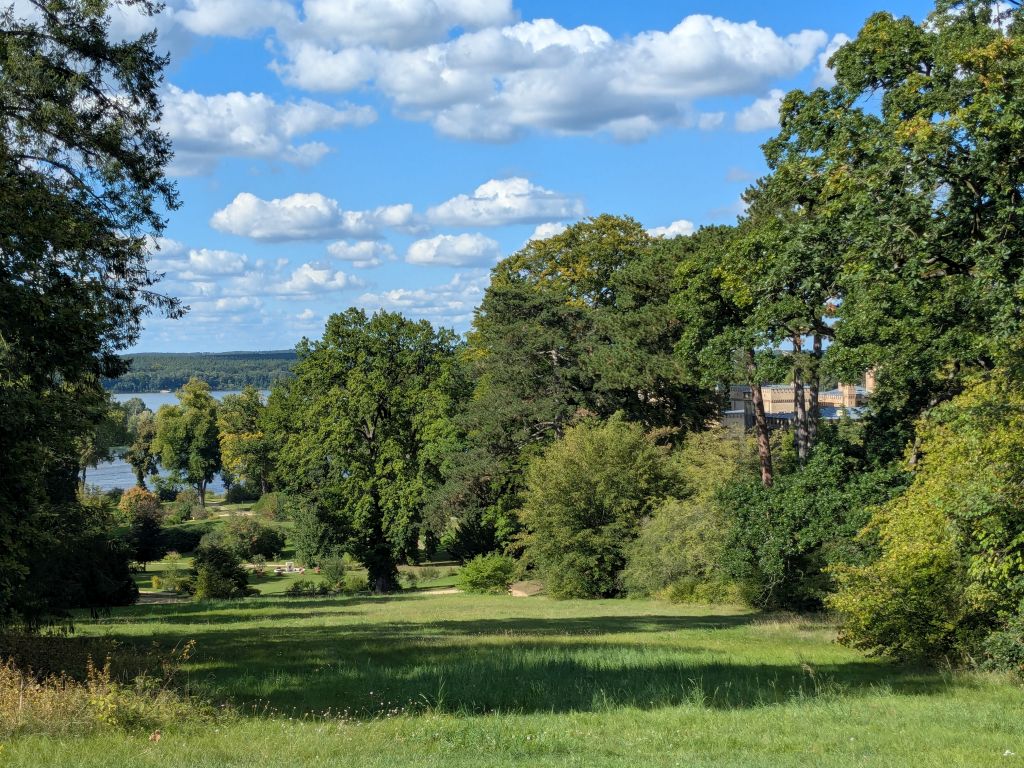
Park Babelsberg, https://de.wikipedia.org/wiki/Park_Babelsberg: … gehört wie der Neue Garten und der Park Sanssouci zum Ensemble der Berlin-Potsdamer Schlossparks … um das Schloss Babelsberg, die ehemalige Sommerresidenz Kaiser Wilhelms I. und seiner Frau Augusta, angelegt. Das zum See abfallende, hügelige Gelände … gestaltete ab 1833 der Gartenarchitekt Peter Joseph Lenné, ab 1842/1843 dann Fürst Hermann von Pückler-Muskau … grenzt an den Tiefen See der Havel und den Glienicker See an . Seit 1990 … UNESCO-Weltkulturerbe … Unterstützung … von dem Gartenarchitekten Peter Joseph Lenné, der die Umgebung Potsdams in ein Gesamtkunstwerk verwandeln wollte … Hauptbauwerk … ist das neogotische Schloss Babelsberg … entstand zwischen 1834 und 1849 nach den Plänen von Karl Friedrich Schinkel und Ludwig Persius für Prinz Wilhelm, dem späteren König von Preußen und Deutschen Kaiser … Auf dem Babelsberg, der Friedrich-Wilhelm-Höhe, … zur Erinnerung an den 1866 gewonnenen Preußisch-Österreichischen Krieg eine Siegessäule … Das Ensemble erfüllt die Ansprüche gemäß den Kriterien I, II und IV der UNESCO. Es ist … eine einzigartige künstlerische Leistung, ein Meisterwerk des schöpferischen Geistes (I). Es hat beträchtlichen Einfluss auf die Entwicklung der Architektur, des Städtebaus und der Landschaftsgestaltung ausgeübt (II) … ein herausragendes Beispiel von architektonischen Ensembles oder einer Landschaft, die bedeutsame Abschnitte in der menschlichen Geschichte darstellen (IV) … / [DeepL:] … belongs, like the New Garden and Sanssouci Park, to the ensemble of Berlin-Potsdam palace parks … laid out around Babelsberg Palace, the former summer residence of Emperor Wilhelm I and his wife Augusta. The hilly terrain sloping down to the lake … was designed from 1833 onwards by the landscape architect Peter Joseph Lenné, and from 1842/1843 onwards by Prince Hermann von Pückler-Muskau … borders the Deep Lake of the Havel and Lake Glienicke. Since 1990 … UNESCO World Heritage Site … Support … from landscape architect Peter Joseph Lenné, who wanted to transform the surroundings of Potsdam into a total work of art … The main building … is the neo-Gothic Babelsberg Palace … built between 1834 and 1849 according to plans by Karl Friedrich Schinkel and Ludwig Persius for Prince Wilhelm, later King of Prussia and German Emperor … On Babelsberg, the Friedrich Wilhelm Height, … a victory column commemorating the Prussian-Austrian War won in 1866 … The ensemble meets the requirements of UNESCO criteria I, II, and IV. It is … a unique artistic achievement, a masterpiece of creative genius (I). It has exerted considerable influence on the development of architecture, urban planning, and landscape design (II) … an outstanding example of architectural ensembles or a landscape that represent significant stages in human history (IV) …
1.9.2025, Inter-Academy Partnership & Berlin-Brandenburgische Akademie der Wissenschaften: International Urban Health Summit (IUHS) report
https://urbanhealth.bbaw.de/en/summit-publication/: Report [on the] International Urban Health Summit 2025, April 9–11, Herrenhausen Palace, Hanover. Urban health is one of the defining challenges of our time … at Herrenhausen Palace in Hanover. Organized by the Berlin-Brandenburg Academy of Sciences and Humanities (BBAW), in cooperation with the InterAcademy Partnership (IAP) and the International Society for Urban Health (ISUH), and supported by the Volkswagen Foundation, the summit brought together over 300 participants from 34 countries – researchers, decision-makers, civil society actors, and international organizations … Special emphasis … on interdisciplinary exchange, scientific evidence, and inclusive participation – especially of early-career researchers and local practitioners. Urban health was … framed … as a complex societal challenge that intersects with policy, infrastructure, democracy, and everyday life … The summit’s core message:Healthy cities require shared responsibility, scientific insight, and collaborative action.
Jo Ivey Boufford, Robin Fears (2025): Report, International Urban Health Summit / IUHS, 9 – 11 April 2025 Herrenhausen Palace, Hanover, Germany (22 pages).
… … … Four common themes to drive progress on urban health emerged throughout IUHS:
(i) The importance of governance, based on the understanding that government cannot act alone, but requires identifying, informing and engaging stakeholders and affected communities in the planning, implementation and evaluation of actions … Good governance involves political support for progressing health-in-all policies, commitment to health equity, and strong long-term partnerships.
(ii) That health is produced beyond the health sector and promoting urban health requires new ways of working in policymaking, practice, research, and education …
(iii) Engagement of affected communities is critical for success in identifying problems, creating sustainable solutions and evaluating the effectiveness of programmes and policies …
(iv) The importance of “place” in achieving urban health goals. Taking advantage of the value of proximity and density in urban planning; … honouring local culture and heritage; … bringing nature into cities for positive mental and physical health impacts.
Achieving these priorities also depends on filling some critical gaps identified by Summit participants:
i. Gaps in data: the lack of robust data and data systems … to both inform action and permit the use of AI and future digital technologies and forecasting expertise to collect and mobilize evidence that will advance health more effectively.
ii. Gaps in implementation: we increasingly know what to do but action is not taken for complex reasons including lack of capacity or technical knowledge, failure to implement approved legislation and regulations, and lack of political will.
iii. Gaps in communication: overcoming the barrage of bad information and disinformation …; and improving communication between policy makers, practitioners, academics, business and the public to enhance problem identification and development of solutions.
(p.4ff) Report
(p.5) … Jo Ivey Boufford (New York University, IAP and ISUH, USA) … A governance approach that progresses “health-in-all-policies” in housing, transportation, education, urban planning … and avoids health disparities, “your zip code is a better predictor of your health than your genetic code”, requires transformation from a medical to cross-sectoral model …. While the SDGs provide context for a new urban agenda …, truly joined-up policy requires more. For example, “urban” is not mentioned in SDG3 (good health and well-being) and “health” is not mentioned in SDG11 (sustainable cities and communities) …
(p.6) … Peter McGrath (IAP, Italy) explained …, how IAP is contributing to the continuing development of ideas. An Urban Health Working Group (UHWG) was launched in 2018 and IAP outputs in 2022 included an inventory of academy activity in urban health and a Statement on implications of urbanization in LMICs. The UHWG … will serve as advisors on the development of a new IAP regional-to-global project on urban health that was explored during the … Summit to help define potential scope and criteria for selecting priorities …
(pp.6-7) Plenary session 1: Urban planning and governance
In his introduction, the Chair Rainer Fehr … advised that knowledge generation alone is not enough to advance health in cities when barriers are created by competing, vested interests. The role of urban governance is central for “making things happen” andhas several dimensions: goals and values; actors and stakeholders; strategies (such as health-in-all-policies and addressing health inequities); and resources.
Marcus Grant (Editor-in-Chief of Cities & Health, London, UK) …
Heike Koeckler (Bochum University of Applied Sciences, Germany) …
Carlos Moreno (Paris-Sorbonne University, France) …
Samuel Gachohi Njuguna (UN-Habitat, Nairobi, Kenya) …
Wu Zhiqiang (Chinese Academy of Engineering, Beijing, China) …
Speakers agreed with the Chair’s proposition that a deeper understanding of good governance is essential for urban health … a consensus on the importance of learning from past mistakes, involving multiple stakeholders, and ensuring that plans are sustainable … importance of developing indicators for, and evaluation of, governance practices … Case studies that foster and embed a culture of evaluation will facilitate the development of evidence to inform the choice of “what to do” and “how best to do it” and improving governance to get things done.
(pp.7-9) Plenary 2: Built environment and urban health
… the Chair Giselle Sebag (ISUH, USA) acknowledged the collective responsibility to reimagine cities for health, equity and resilience.
Gil Penalosa (8-80 Cities, Toronto, Canada)
Mazda Adli (Interdisciplinary Forum on Neurourbanism, Berlin, Germany)
Jaime Montoya (National Academy of Science and Technology, Philippines)
Anne Bach Nielsen (University of Copenhagen, Denmark)
Locana Gunaratna (Institute of Architects, National Academy of Sciences, Sri Lanka)
Nathalie Laure Roebbel (WHO, Switzerland
Key points for advancing urban health through the built environment relate to breaking down silos across sectors and disciplines and changing the paradigm so that the healthy choice is the easy choice and not seen as a “sacrifice”.
(p.9) Plenary 3: Natural environment, climate change and urban health
Gabriel David (Technical University Braunschweig, Germany)
Bruno Marques (International Federation of Landscape Architects, New Zealand)
Georg Seifert (Charité University Hospital, Berlin, Germany)
The session Chair, Ourania Kosti (IAP, USA) stimulated further discussion of emerging points by asking “what are cities getting wrong?” perhaps by their insufficient inclusivity and flexibility in adopting solutions. Action is often catch-up, e.g. adding green space to an existing urban environment rather than initially planning the environment for health …
(p.9-11) Plenary 4: Public engagement and urban decision-making
… chaired by Blessing Mberu (African Population and Health Research, Kenya)…
Christopher Bailey (Arts and Health, WHO, Switzerland)
Waleska Teixeira Caiaffa (Federal University of Minas Gerais, Brazil)
Joerg Fingerhut (Berlin School of Mind and Brain, Germany)
Ethan Kent (PlacemakingX, New York, USA)
David Napier (UCL, UK)
Mari Vaattovaara (University of Helsinki, Finland)
… The speakers agreed that science must be publicly explained but in a way, that acknowledges people as experts in their own lives. Self-agency and trust are critical domains that have to take account of emotional reality as well as factual reality.
(pp.11-12) Plenary 5: AI and urban health
… … …The Chair Aljoscha Burchardt (German Research Center for AI, Berlin, Germany) introduced the session by observing that AI as a tool can now be used to address problem areas between multiple disciplines and across boundaries.
Betty Chemier (UNDP Panama Accelerator Lab)
Ahmed Hassoon (John Hopkins Bloomberg School of Public Health, USA)
Jude Kong (AI and Mathematical Modelling Lab, Toronto, Canada)
Kathrin Wolf (Helmholtz Munich, Germany)
Peter Speyer (Novartis Foundation, Basel, Switzerland)
… There is optimism that insights can be translated from data-rich regions to data-poorer populations particularly if augmented by local insight from lived experience …
(p.12-13) Plenary 6: Education and urban health
The Chair Annette Grueters-Kieslich (BBAW and ALLEA, Germany) remarked that comprehensive education strategies are essential for all dimensions of urban health and … required participatory approaches based on community engagement.
Atiya Mosam (Mayibuye Health and University of the Witwaterstrand, South Africa)
Keiko Nakamura (Institute of Science, Tokyo, Japan)
Tania Singer (Laboratory Social Neuroscience, Max Planck Society, Berlin, Germany)
… All agreed that a multilevel approach was needed. Early intervention must combine school and household settings and must extend to reforming the medical school curriculum to emphasise issues for preventive medicine and patient empowerment, for teacher training and in curricula for public health and urban planning.
(pp.13-17) Final plenary: Wrap-up and next steps
Jo Ivey Boufford … Four common themes [cf. Summary] … Thematic priorities …
Thematic priorities for urban health
Actions needed
Governance- “what it takes to get things done”
– … Identifying and engaging critical stakeholders and affected communities in the planning, implementation and evaluation of actions … – Progressing health-in-all policies and commitment to health equity – Renewing emphasis on legislative and regulatory frameworks that support implementation … – Understanding both co-benefits and unintended consequences of actions on health.
New ways of working needed in research, education, and practice to promote health
… … …
Community engagement
… … …
The importance of place
… … …
Filling gaps
… … …
Ourania Kosti and Peter McGrath moderated final interaction with national academy participants from the African, Asian, American and European regions to inform the proposed new IAP regional-to-global project on urban health. In his final synthesis, Christoph Markschies interpreted urban health challenges in terms of: (i) questions of power … and (ii) questions of how to share information in open discourse, while also balancing emotion-driven considerations and respecting cultural values.
Cf.
9-11 Apr 2025, Φ♣ Hannover-Herrenhausen, InterAcademyPartnership (IAP) et al.: International Urban Health Summit (IUHS)
6 Mar 2025, Φ International Urban Health Summit (9-12 April 2025): program update
6 Feb 2025, Φ Towards the International Urban Health Summit (IUHS), Hannover, 9-11 April 2025 – Draft program
8 Nov 2024, Φ Announcements of the International Urban Health Summit (IUHS), Herrenhausen Castle, Hannover, 9-11 April, 2025
6 Nov 2024, Φ♣ Akademientag 2024: In Städten gesund leben – in gesunden Städten leben