
Akademie der Künste, Hanseatenweg 10, www.adk.de
Special exhibition / Sonderausstellung: Käthe-Kollwitz-Preis 2017 – Katharina Sieverding
This year, Katharina Sieverding received the Käthe Kollwitz Prize which is awarded by the Akademie der Künste / Katharina Sieverding erhielt den diesjährigen Käthe-Kollwitz-Preis der Akademie der Künste.
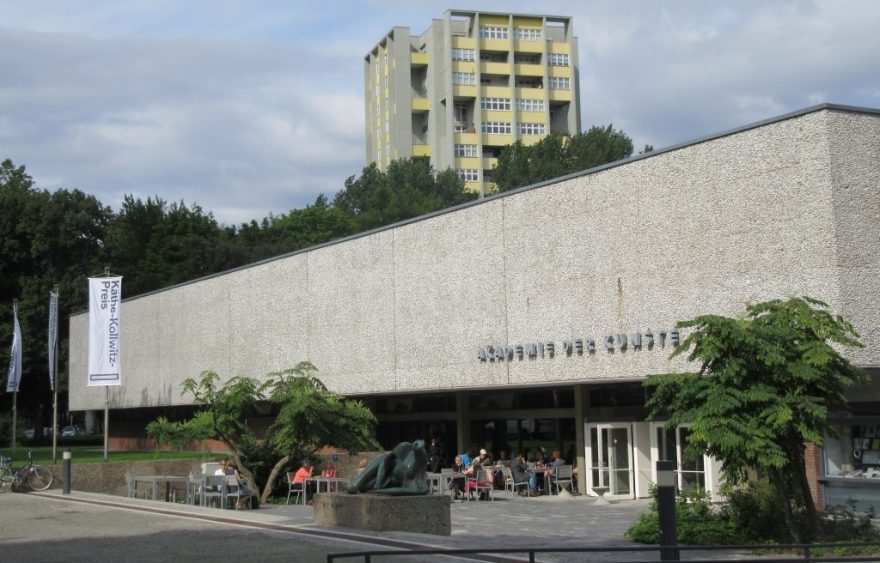 The exhibition includes 19 works sized 252 x 356 cm, several of them publicly posted since the 1990s, and nine wall-sized projections, each of them including 580 triptychs of photo compositions TESTCUTS 1966-2010 / Die Ausstellung zeigt 19 Arbeiten im Format 252 x 356 cm, die zum Teil seit den 1990er Jahren im öffentlichen Raum großflächig plakatiert wurden, und neun wandgroße Projektionen von jeweils 580 Fotomontage-Triptychen TESTCUTS 1966-2010.
With the Käthe Kollwitz Prize, the Akademie der Künste is honouring a German artist who has been a pioneer in an age of large-scale photo art since the 1960s. An underlying theme in her work is concerned with “identity as individuality and dividualism as a collective individual” / Mit dem Käthe-Kollwitz-Preis ehrt die Akademie eine deutsche Künstlerin, die seit den 1960er Jahren das Zeitalter der großformatigen Fotokunst einleitete. Ihr Grundthema ist die „Identität als Individualität und Dividualität und als kollektives Individuum“.


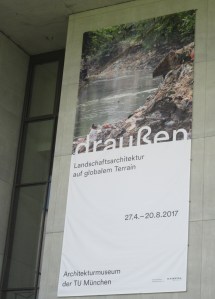 “In the public imagination, landscape architecture seems still to be determined by the desire to plan for harmony between the burgeoning advance of cities, on the one hand, and nature, on the other. But this idea ceased long ago to reflect the current state of a discipline that … has since evolved in a more analytic, critical direction“


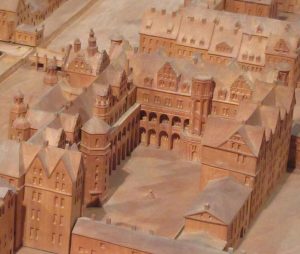 Fortified town of Berlin-Cölln-Friedrichswerder around 1690, model scale 1:450, lime wood and copper beech, produced by Armin Luda 1970/71; based on the perspective plan Residentia Electoralis Brandenburgica by Johann Bernhard Schultz, 1688; Stadtmuseum Berlin
 Human ecology and health