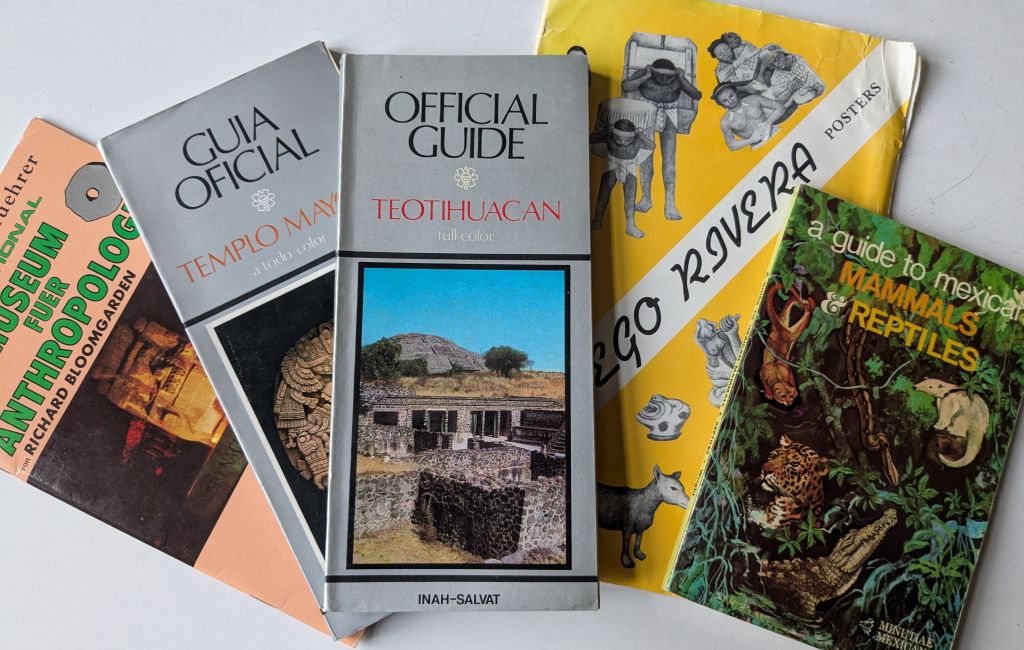
15-19 Dec 1986, Mexico (Teil 1 von 5): Mexico City

15.-19.12.1986, Mexico (Teil 1 von 5): Mexico City

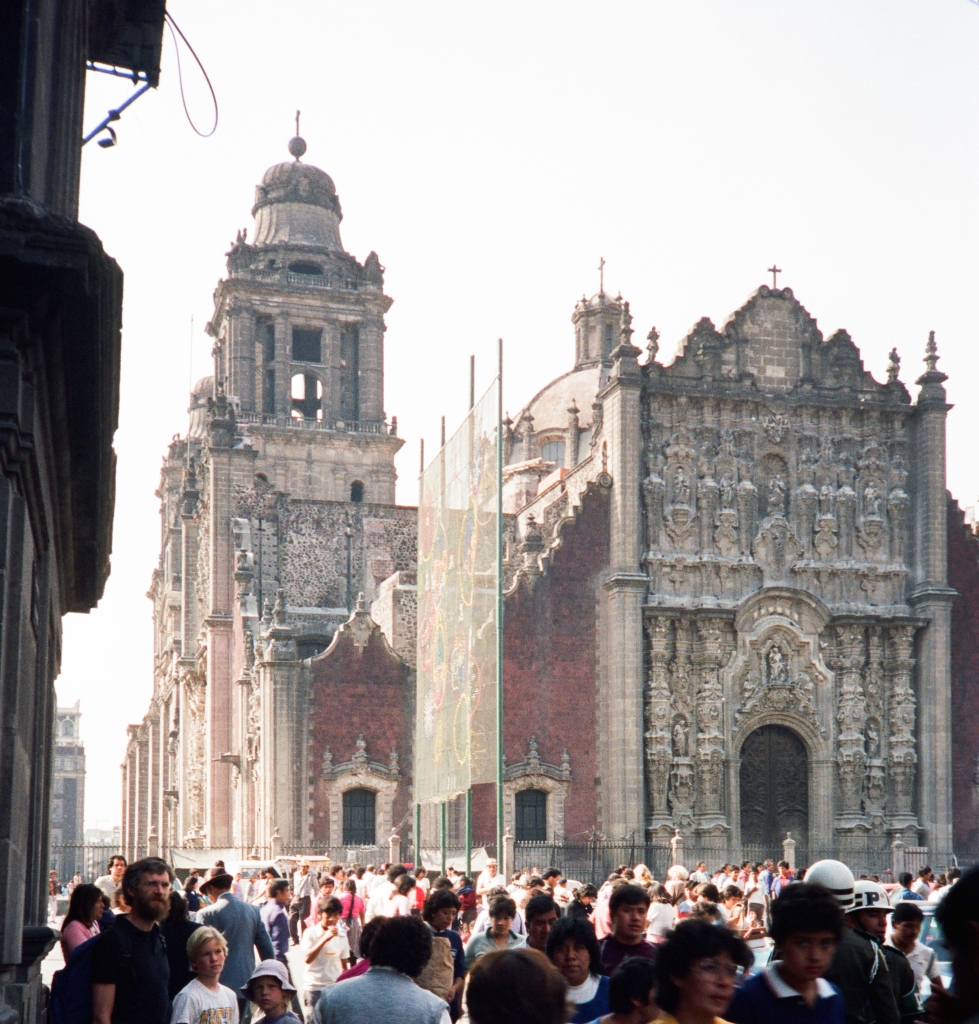
1986_12_15 (Montag) Flug von San Francisco via Puerto Vallarta nach Mexico City. Mit Taxi zum Zocalo, bunt-glitzernde Weihnachtsbeleuchtung. Nur wenige Schritte bis Hotel Moneda in Calle Moneda.

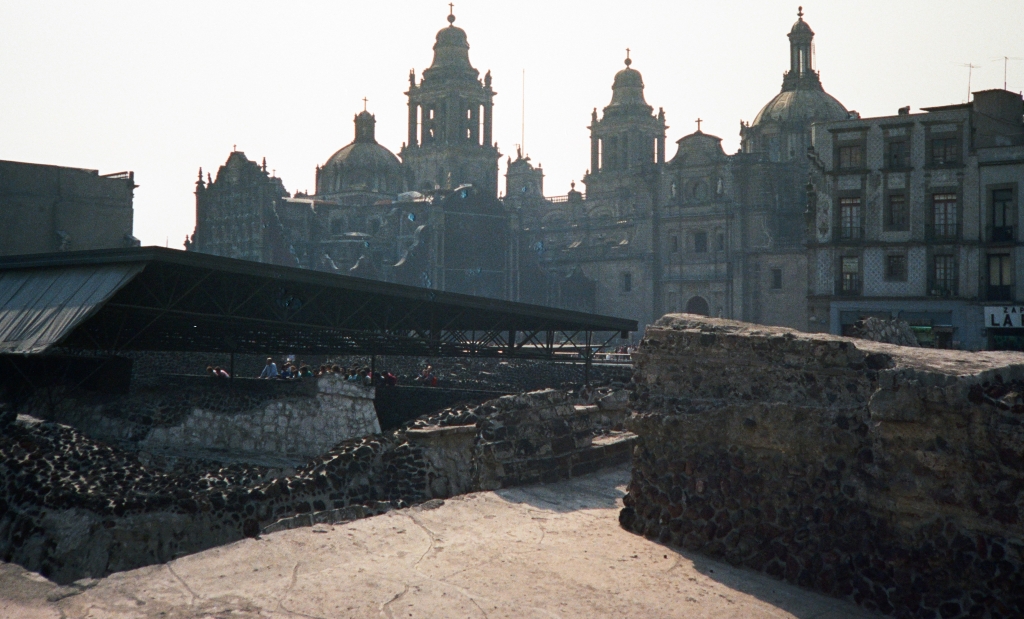
1986_12_16 (Dienstag) Mexico City: Frühstück in einer Cafeteria nahe dem Zocalo-Platz, tief im Innern eines Gebäudes. Rundgang durch das Ausgrabungsgebiet Templo Mayor. Zum Nationalpalast mit den berühmten Fresken von Diego Rivera. Calle Tacuba / Café Tacuba.

1986_12_17 (Mittwoch) Mexico City: Metrofahrt zum Park Chapultepec. Anthropologie-Museum, u.a. ein riesiger Federschmuck und eine rekonstruierte Tempelfassade. Zu Fuß, entlang Haupt- und Hinterstraßen, vorbei am Revolutionsdenkmal, Alameda-Park. Heute viel Dunst und Smog, lässt uns husten.

1986_12_18 (Donnerstag) Mexico City: Mit Trolleybus und Taxi zum Stadtteil Coyoacan, Frieda-Kahlo-Haus (ganz in blau; Pappmaché-Figuren). Alberga Olympica: Schwimmbad wegen Ferien geschlossen. An Bushaltestelle eine ältere Dame getroffen, die im Radio Deutsch lernt. Allerhand Erdbebenschäden gesehen.

1986_12_19 (Freitag) Mexico City: Nochmals Rundgang durch die Ruinen des Templo Major; diesmal auch das Relief der Mondgöttin gesehen. Erneut zu den Wandgemälden im Nationalpalast. Café Popular in Calle 5 de Mayo. Am Alameda-Platz Weihnachtstrubel. Mit Taxi zum stark frequentierten Busterminal Tapo; um 23:20 Abfahrt unseres Busses.


Mexico-Stadt, https://de.wikipedia.org/wiki/Mexiko-Stadt: … (spanisch Ciudad de México …; bis 2016 México D.F.) … Hauptstadt von Mexiko … Die UNESCO hat ihr historisches Zentrum mit den Überresten der Aztekenhauptstadt Tenochtitlan sowie die Wassergärten im Stadtteil Xochimilco … und den zentralen Universitätscampus der Universidad Nacional Autónoma de México … zum Weltkulturerbe erklärt … Haus von Frida Kahlo … in der Vorstadt Coyoacán. Das farbenfrohe Gebäude … wegen seiner in Blautönen gehaltenen Außenwände Casa Azul („Blaues Haus“) genannt … Im typischen kolonialen Stil erbaut, beherbergt das Museum außer einer besonderen Auswahl von Frida Kahlos Bildern, ihre Möbel, Kleider und Bücher. Sie lebte dort zusammen mit ihrem Mann Diego Rivera von 1929 bis 1954. Ein Haus ganz in der Nähe bewohnte während seines Exils Leo Trotzki (1879–1940) …

15 Dec 1986 – 9 Jan 1987, Mexico-Reise

15.12.1986-9.1.1987 Mexico-Reise

Gesamtreiseroute:

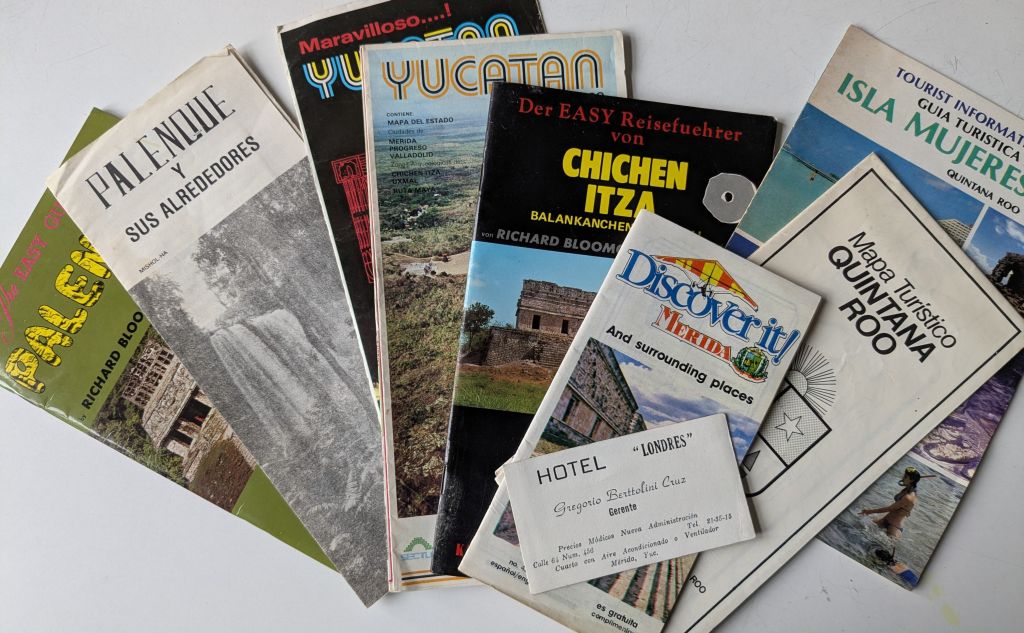
Flug von San Francisco über Puerto Vallarta nach Mexico City. Oaxaca – (Panamericana) – Mitla – (Abstecher zu den Yagul- und den Dainzu-Ruinen; dann Abstecher zu Monte Alban) – Sierra Madre – (wieder Panamericana) – Salina Cruz (nur Zwischenstopp) – San Cristobal de las Casas – Ocosingo (nur Zwischenstopp) – Agua Azul – Palenque, inkl. Zona Archeologica – Merida – Chichen Itza – Puerto Juarez – Isla Mujeres – Bootsfahrt zur Vogelinsel Isla Contoy – Unterwasserpark Garaffón. Flug von Cancún nach Mexico City. Abstecher nach Teotihuacan. Rückflug von Mexico City über Puerto Vallarta nach San Francisco.

Einträge:

Aus meinem Beitrag im Familien-Jahresbrief 1987: „Unsere vorhergehende große Reise, um die Jahreswende 1986/87, hatten wir ja ohne unseren Bus unternommen: per Flugzeug nach Mexico City, mit Überlandbus nach Oaxaca, über den engen Isthmus zwischen Atlantik und Pazifik nach San Cristobal de las Casas wieder hoch in die Berge, mit Leihauto hinunter zur Halbinsel Yukatan, und mit Bus über Merida und Chichen-Itza bis zur Insel Isla Mujeres in der Karibik, mit Korallen-Riff und vielfarbigen Fischen. Das war ein Kaleidoskop von exotischer Vegetation, Buntheit, Armut, Leben, Schönheit, wie wir es vorher so nicht gesehen hatten. Die Maya-Ruinen im Dschungelwald von Palenque waren besonders eindrucksvoll. – Viele Mexikaner schienen eine Menge Achtung und Sympathie für Deutsche zu haben. Unterwegs in Mexico haben wir allerhand deutsche Reisende getroffen, die alle die gleiche Route wie wir reisten, so dass man sich an jeder Station wiedersah und die vielen fremden Eindrücke auch ein bisschen gemeinsam verdauen konnte.“

  • Müller, Kal; García-Oropeza, Guillermo (1984): Mexico. Photographed by Kal Müller. Insight Guides series, Apa Productions / Prentice-Hall / Harrap / Landsdowne; Hong Kong. (p.14) „Que viva México! México Eterno. Timeless Mexico. (p.34) Before the conquest. (p.48) Los Conquistadores. (p.52) Colonialism … and independence. (p.58) New faces: Santa Anna, Juárez, Maximilian. (p.62) The Porfiriato. (p.67) The revolution and ist turbulent aftermath. (p.75) Mexico since World War II. (p.81) People … (p.109) Places … (p.270) Feature …
  • Domnick, Hans (1969/1987): Traumstraße der Welt. Auf der Panamericana durch Nord- und Südamerika. Text: Hans Gerhard Meyer. Süddeutscher Verlag, München. (p.37) In Nogales überquert die Panamericana die Grenze nach Mexiko … (p.48) … Teotihuacán … (p.50) … Monte Albán bei Oaxaca … (p.51) … Chichén-Itzá … (p.54) … Mexico-City …
  • Film: „Panamericana – Traumstraße der Welt“, https://de.wikipedia.org/wiki/Panamericana_%E2%80%93_Traumstra%C3%9Fe_der_Welt: … ein ursprünglich zweiteiliger, deutscher Dokumentarfilm … Regie … Hans Domnick … Der Verlauf der Straße durchquert … Mexiko in seiner gesamten Nord-Süd-Ausrichtung … – Kritiken: … „Die Menschen, die an dieser Straße wohnen, kommen in diesem Breitwand-Reisebericht nur als Fremdenverkehrsbetreuer für eilige Autofahrer vor. Der Text des Sprechers … glaubt, da es sich um Amerika handelt, mit Superlativen nicht sparen zu dürfen …“ (Die Zeit vom 10. Juli 1958).

16 Dec 1985 – 4 Jan 1986, Southern California; deserts

16 Dec 1985 – 4 Jan 1986, Southern California; deserts / Süd-Californien; Wüsten

16.12.1985 Berkeley – Highway 17 bis San José (vorbei an Ed Levin Park) – California 101 bis Gilroy. Abzweigung 152 nach Osten – plötzlich bergig und einsam. Vorbei am San Luis Reservoir. Viel Nebel im San Joaquin-Tal. Interstate 5 nach Süden, dann California 198 nach Osten über Lemoore, Hanford. Im ganzen San Joaquin-Tal riesige Monokulturen von Baumwolle (jetzt abgeerntet). Siedlungen wirken wie Militärbaracken. Colonel Allensworth Siedlung. Privater Campingplatz bei Shafter.

17.12.1985 Bakersfield: Kern County Museum and Pioneer Village (dicker Nebel). California 99, dann Interstate 5 Richtung LA. Durchquerung der Küstenbergkette, auf California 126 über Fillmore nach Ventura, dann 101 bis Carpenteria; einladender staatlicher Campingplatz am Meer.

18.12.1985 Santa Barbara. Halleyscher Komet (ohne Schweif).

19.12.1985 Großes Insekt am Zelt – den Rangern zufolge ein sogenannter „Potatao bug“ oder „Jerusalem cricket“; cf. https://en.wikipedia.org/wiki/Jerusalem_cricket (Genus Stenopelmatus, ist biologisch allerdings weder „Grille“ noch „Käfer“ und hat auch keinen Bezug zu Jerusalem). California Highway 1 nach Santa Monica, mit Holzpier. Santa Monica Freeway und Pasadena Freeway nach Downtown Los Angeles: Broadway und 3rd Str., Passagen/Markthallen, Bradbury-Geschäftshaus aus 19. Jh.). Hollywood Blv. mit „Walk of Fame“ und Vorhof von „Mann’s Chinese Theater“ aus den 1920er-Jahren. Nach Anaheim.

20.12.1985 Disneyland: Town Square, Main Street, Central Plaza, Adventureland, „Swiss family Treehouse“, New Orleans Square mit „Pirates of the Caribbean“, “Haunted Mansion”, “Frontierland”: “Rafts to Tom Sawyer Island”, “Big Thunder Mountain Railroad”, Fantasyland: “Sleeping Beauty Castle”, “It’s a Small World” (Sponsor: Bank of America), “Matterhorn Bobsleds”, “Mad tea party2, “Alice in Wonderland”, “Skyway to Tomorrowland”, Tomorrowland: “Space Mountain”, “Circle Vision” (Rundum-Kino). “Submarine Voyage”, und schließlich “Disneyland Voyage”: durch den Grand Canyon (jetzt und in Urzeiten) und im ganzen Kreis herum. – Viele Gebäude, Straßen, Winkel und Gärten wirkten sehr „europäisch“.

21.12.1985 Los Angeles: Whittier Blvd. (mexikanisch), Chinatown, Sunset Blvd. bis Beverly Hills, Bel Air. UCLA: Bibliothek mit Literatur für ein Term-Paper. Beim „Lumber“ ein Brett zusägen lassen für weiteren Kinder-Schlafplatz vorne im Van. Long Beach: stillgelegter Riesendampfer „Queen Mary“, mit vorgebauter „London Towne“.

22.12.1985 Anaheim – Corona – Lake Elsinore –Temecula –S16 nach Pala – durch mehrere Indianerreservate – Pauma Valley – Lake Henshaw, ausgetrocknet – Borrego Springs in Anza Borrego; Palm Spring Canyon campground.

23.12.1985 Wanderung zum Borrego Palm Canyon; kleine Herde von Bighorn-Schafen; unerwartet grüne Landschaft.

24.12.1985 Blick auf die Badlands.

25.12.1985 Wanderung zum Eingang des Hellhole Canyon; „Panoramic Overview“

26.12.1985 Mit Pkw duch Yaqui-Pass, Sentinec canyon, Scissors‘ Crossing, Box Canyon mit “Southern Emigrant trail”, Vallecito mit Adobe-Haus, “Well of 8 echoes” (kaum Echo gefunden), Butterfield Ranch. California 78 bis Ocotillo Wells, Split Mountain Rd. bis Fish Creek Primitive Camp.

27.12.1985 Wanderung (7 Std.) durch Fish Creek Wash, Split mountain mit riesig hohen Felswänden, Sand, Lehm, Gips, Wind caves (mit Echos). North Fork of Fish Creek Canyon, Oyster Shell Wash – Austernschicht vergeblich gesucht. Herde von ca. 10 Bighornschafen gesehen. Vollmond, Kälte, Alukisten, Gaslampe, Rufe von Coyoten (Canis latrans, auch Nordamerikanischer Steppenwolf).

28.12.1985 Ein aus Hannover stammender Kanadier nimmt uns mit seinem Pickup-Geländewagen mit, damit wir doch noch die Austernschicht finden. Aus der geplanten halben Stunde werden 5 ½ Stunden Ausflug, bis zum Sandstone Canyon, tief durch Badlands. – Weiter nach Salton City (Gelände ist hier sehr zerfahren) – Mecca – Cottonwood Campground im Joshua Tree Monument.

29.12.1985 Joshua Tree Monument Visitor Center, Cholla-Kakteengarten (Teddy- oder Springkaktus). Ein Fuß machte schmerzhafte Bekanntschaft mit Cholla-Kaktus. Weite Ausblicke in die Mojave-Wüste. Twentynine Palms – Amboy – Bristol Lake (ein Salzsee) – vorbei am Amboy Crater – Sanddünen: Devil’s Playground – Kelso, mit verlassener Bahnstation – Baker – Tecopa Hot Springs. Da wir keine Würfel dabei hatten, wurde ein Spiel mit Streifenziehen erfunden.

30.12.1985 Frühstück im Westerndorf Tecopa. California Highway 178; Death Valley, mit farbigen Bergen, Salzsee. Texas Springs Campingplatz, nahe Furnace Creek.

31.12.1985 Furnace Creek Ranch: Borax-Museum. Wanderung im “Golden Canyon” mit ”Red Cathedral”, Borax-Mineralien, „optischem“ Mineral („TV-Stein“). Silvester-Essen in Furnace Creek Ranch.

1.1.1986 Nochmals Borax-Museum, Visitor center, Zabriskie Point

2.1.1986 Dante’s View; Twenty-Mule-Team Canyon mit Badlands; Devil’s Golf Course (bizarre Lehm-Salz-Strukturen); Artists’ Drive

3.1.1986 Von Death Valley nach Owens Valley, Lone Pine, California 395, Mono Lake, Walker.

4.1.1986 Lake Tahoe – Sacramento – Berkeley.

12 Jan 1970, U Birmingham: Spring term

12 Jan 1970, “Spring Term” beginnt

18 Jan 1970, Modern Greek lesson, taught by a Cypriot fellow student

27 Jan 1970, Film: 7 Days to remember (CSSR Invasion)

28 Jan 1970, Film: One fourth of humanity (Red China)

4 Feb 1970, Lickey Hills

18 Feb 1970, Selly-Oak-Hospital: Geriatrics

18 Feb 1970, 7-15 p.m.: Union, Birmingham University: “Birmingham University Guild Opera Group in association with Festival presents Der Freischütz (The devil’s bullets) – A romantic opera by Weber, performed in English. Booklet: “A romantic, spectacular,and supernatural melodrama”

19 Feb 1970, 8 p.m.: University House, Samual Beckett: (i) Endgame [with Hamm, Clov, Nagg, and Nell]; (ii) Krapp’s Last Tape

1 Mar 1970, Birmingham Museum and Art Gallery (since 1885); Departments:

  • Art (incl. Claude L.)
  • Archaeology
  • Natural History
  • in a separate building, in Newhall St.: Museum of Science & Industry, incl. an orchestrion organ, built in 1879, >300 pipes, ~40 punched paper rolls containing programs

3 Mar 1970, Aston Hall, a Jacobean house (1618-1635), www.birminghammuseums.org.uk/aston; https://en.wikipedia.org/wiki/Aston_Hall; Buslinie “Inner circle”; Blakesley Hall, a Tudor house (1590), Blakesley Road, Birmingham, B25 8RN, www.birminghammuseums.org.uk/blakesley/highlights; https://en.wikipedia.org/wiki/Blakesley_Hall; Buslinie “Outer circle”

4 Mar 1970, Barber Institute of Fine Arts

11 Mar 1970; Metchley Roman Fort („nicht viel übrig“); Konzert in der “Great Hall”, Birmingham University: Mozart und Bruckner

17 Mar 1970, Cathedral; Art Gallery

21 Mar 1970, “Spring Term” endet

25 Mar 1970, Rückreise via London und Harwich

26 Mar 1970, Bremerhaven

Zweiter Bericht an die Studienstiftung, „5/7/70“: „[…] After finishing the Introductory Clinical Course, most time was spent on hospital wards in taking medical histories, examining patients, attending ward rounds and clinical meetings. Many [of my] hours of studies and much effort were devoted to Electronic Data Processing applications to medicine. The hospital computer provided a unique facility for practising. I wrote another series of FORTRAN programs, the last of which dealt with what is called “automatic” or “computer-aided” diagnosis: the “Bayesian theoreme” allows to make a probability statement of a particular patient’s diagnosis provided that the presence or absence of symptoms and signs and of the frequency of symptoms in special diseases and of the incidence of diseases in the population are known […] it would take a very long time to collect valid data […] I hope to deal with this fascinating topic “computers in medicine” in some way or other in the future. After complaining of Birmingham’s cultural poverty in my first report, I soon realized that I had not been right altogether, and I shall not easily forget the numerous pleasant hours I spent in the Municipal Art Gallery, the Barber Institute of Fine Arts, the Museum of Science and Industry, Aston Hall etc. […] nor the public and university theatre performances and concerts […] hard for me to turn my back to the country where I had spent the most interesting and stimulating terms of my studies so far.”

17 Oct & 13 Dec 1969: London

Oct & Dec 1969, London


17-19 Oct 1969

  • University of London; Waterloo Bridge; Themse-Bootsfahrt ab Charing Cross pier bis Tower of London, und zurück; Victoria Embankment; RRS Discovery (https://en.wikipedia.org/wiki/RRS_Discovery); Westminster Bridge / Hall / Abbey; Victoria Street; Buckingham Gate; Grosvenor Place; Hyde Park Corner; Hyde Park; Constitution Hill; The Mall; Trafalgar Square; Haymarket; Piccadilly; Shaftesbury Avenue; Kingsway; Aldwych; Victoria Embankment; New Bridge street; Ludgate Hill; Tower (closed); Cheapside; Holborn; Victoria station; Soho. Ausflug: Hampton Court
  • Unterkunft: 14, Veronica Rd., London S.W.17

13-21 Dez 1969

  • 13 Dez 1969, London: Y.W.C.A. Youth Hotel; Mme. Tussaud’s (incl. Grand Hall, The Tableaux, Heroes, Hall of Kings, Battle of Trafalgar, Chamber of horrors); Planetarium; Carnaby St.; Trafalgar Square; Film: “Oh, what a lovely war” (Director: Richard Attenborough, Actors incl. Michael and Vanessa Redgrave)
  • 14 Dez 1969, Straßenmarkt “Petticoat Lane” (Middlesex St.); Jüdisches Museum; Islington (mit Antiquitätenhändlern)
  • 14 Dec 1969, British Museum, e.g.  Egyptian Sculpture Gallery (incl. Rosetta Stone), Kings Library (incl. Alice’s adventures; Gutenberg bible)
  • 15 Dec 1969, Post-Office-Tower; Aldwych; Fleet Street; Mansion House; Guildhall; Bank of England; Tower; Tower Bridge; Piccadilly; Soho
  • 15 Dec 1969, St. Paul’s Cathedral (mit Krypten, Flüstergalerie)
  • 15 Dec 1969, St Paul’s Cathedral: “Bombs have showered down on it, leaving its precincts desolate waste-land – fires have raged all around it – and graceless modern buildings have sprung up on its very doorstep: yet the essential majesty of Sir Christopher Wren’s great building is unimpaired: the great dome still dominates the skyline of the City of London as an eternal symbol of Man’s faith in the Love of God. Sir Christopher Wren, when he excavated for the foundations of the present Cathedral, found evidence that led him to believe that this site, on the crest of Ludgate Hill, was once occupied by an important Romano-British Christian church…” Source: Ewin ETF (1968): St Paul’s Cathedral. Jarrold Colour Publications, Norwich

  • 16 Dec 1969, Roman Bath (schwierig zu finden); Cleopatra’s Needle; Whitehall; National Gallery; Buckingham Palace, mit Sonderausstellung: Kartonzeichnungen von Leonardo da Vinci; Tate Gallery: The Elizabethan image; Chelsea (mit Antiquitätenhändlern)
  • 17 Dec 1969, Imperial War Museum; Dulwich College Gallery; Museum of British Transport
  • 17 Dec 1969, Science Museum; Lit.: Riemsdijk JT van (1965): Science Museum – 50 things to see. Her Majesty’s Stationery Office, London. Selected items: 1 Newcomen Type Atmospheric Engine 1791; 2 Boulton and Watt Rotative Beam Engine 1788, 5 Elizabethan Standard Weights 1588, 8 The Coal Mine, 9 Model of an Engineering Workshop 19th Century, 23 “Puffing Billy” 1813 (“oldest railway locomotive in existence”), 14 The “Rocket” 1829 (“famous locomotive … the first in which all the cardinal features of the modern locomotive were united…”), 16 Benz Motor Car 1888, 17 Rolls-Royce Car 1904, 21 Herschel’s Seven-Foot Telescope, 22 Wells Cathedral Clock 1392, 26 bessemer Converter 1864, 27 The Periodic Table, 29 Brownian Motion Demonstration, 32 Aston’s Mass Spectrograph, 34 Babbage’s Calculating Machines, 40 Reproduction of Wright Flyer 1903, 42 Television Camera 1936, 45 Bell’s Early Telephone 1876, 47 Replica of von Guericke’s Vacuum Pump, ca. 1662, 49 Hooke Compund Microscope.
  • 18 Dec 1969, Monument (311 Stufen); Stock Exchange mit Visitors’ Gallery; Dickens House (48 Doughty St.); Courtauld Art Gallery; Wellcome Medical Museum
  • 18 Dec 1969, Royal Shakespeare Theatre / Royal Shakespeare Company, William Shakespeare: “Much Ado about Nothing”
  • 19 Dec 1969, Tate Gallery; Westminster Abbey; Geological Museum
  • 19 Dec 1969, Natural History Museum, Cromwell Road, South Kensington, SW7. “The Museum is the principal centre in the British commonwealth for the general study of natural history. It contains in its five departments of Zoology, Entomology, Palaeontology, Mineralogy, and Botany one of the most extensive collections in the world of recent and fossil animals and plants and of minerals and rocks and meteorites. The scope of the Museum’s collections and the contacts with other scientific research centres and museums are world-wide.” Source: Geographers’ Famous Guide to London and around London. Geographers’ Map Co. Ltd., London
  • 20 Dec 1969, Hampton Court; Rugby in Twickenham: Springboks vs. englische Nationalmannschaft; Portobello Road
  • 21 Dec 1969, Hyde Park; Kensington Gardens; Commonwealth Institute; Science Museum.
  • 21 Dec 1969, Victoria & Albert Museum, South Kensington, S.W.7. “he Victoria and Albert Museum is a Museum of Fine and Applied Art of all countries, styles and periods. It includes Architectural Details, Arms and Armour, the Art of the Book, Bronzes, Carpets, Clocks, Costume, Cutlery, Drawings, Embroideries, Enamels, Engravings, Fabrics, Furniture, Glass, Gold- and Silversmiths’ work, Ironwork, Ivories, Jewellery, Lace, Lacquer, Leatherwork, Lithographs, Manuscripts, Miniatures, Musical Instruments, Oil Paintings, Ornament, Pewter, Posters, Pottery and Porcelain, Prints, Sculpture, Stained Glass, Tapestries,Theatre Art, Vestments, Watches, Water-colours and Woodwork.The Museum includes the National Art Library, the National Collections of Post-Classical Sculpture (excluding modern), of
    British Miniatures, of Water-colours and of English Silversmith’s work.” Source: Guide to London museums and galleries (1968). Her Majesty’s Stationery office, London; p.36

Literature:

  • Ewin ETF (1968): St Paul’s Cathedral. Jarrold Colour Publications, Norwich
  • Geographers’ Famous Guide to London and around London. Geographers’ Map Co. Ltd., London
  • Guide to London museums and galleries (1968). Her Majesty’s Stationery office, London
  • Hedley O (1969): The City of London. ‘The one square mile.’ Pitkin Pictorials Ltd., London. p.5: “The Great Plague, 1665. London’s Dreadful Visitation: Or, A Collection of All the Bills of Mortality ‘Beginning the 27th of December 1664 and ending the 19th of December following’. This record presents a week-by-week summary of deaths. The number of plague victims in the week 15th to 22nd August is given as 3,880 but contemporary accounts indicate it was much higher” (London Museum)
  • Mawson JA (ed.) (1969): London. A picture-book to remember her by. The British Travel Association, London
  • Riemsdijk JT van (1965): Science Museum – 50 things to see. Her Majesty’s Stationery Office, London.