19 Jul 1974, Ostsee-Ausflug inkl. Brodtener Ufer

19.7.1974, Ostsee-Ausflug inkl. Brodtener Ufer

Von Hamburg nach Niendorf (Ostsee), Brodtener Ufer, Hermannshöhe

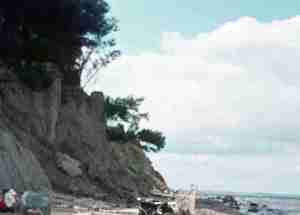
1974_07_19 Z_10a Brodtener Ufer

Recherche, 15.7.2020:

Brodtener (Steil-)Ufer, https://de.wikipedia.org/wiki/Brodtener_Ufer: … eine über 4 km lange Steilküste an der Lübecker Bucht … zwschen Lübeck-Travemünde und Niendorf (in der Nähe des Dorfes Brodten) … Bei dieser bis zu 20 m hohen Steilküste handelt sich in weiten Teilen um ein aktives Kliff, das durch die Einwirkung der Ostsee im Durchschnitt um ca. 50 bis 100 cm pro Jahr zurückweicht … Der Sand aus dem Abbruch der Küste wird durch Strömungen sowohl nach Westen in die Lübecker Bucht als auch nach Osten in die Travemündung versetzt … Größere Steine bleiben in der Uferzone des Kliffs liegen, so dass der Strandbereich … mit teils sehr großen Geschiebeblöcken übersät ist … Das historische Ausflugslokal Hermannshöhe, ursprünglich vor dem Ersten Weltkrieg errichtet, wurde … 2012 durch einen Neubau ersetzt … Am Strand … kann gebadet und nach Fossilien gesucht werden … mit ca. 2600 Brutröhren eine der größten Uferschwalbenkolonien Europas …

17-22 Aug 1972, Marxdorf (Schashagen), Bungsberg, Fehmarn

17.-22.8.1972, Marxdorf (Schashagen), Bungsberg, Fehmarn

17.8.1972: Mit Zug nach Neustadt, weiter per Vélosolex-Mofa nach Marxdorf (Schashagen)

Vélosolex, https://de.wikipedia.org/wiki/V%C3%A9losolex: … ein Mofa, das vom französischen Vergaserhersteller Solex … entwickelt und von 1946 bis 1988 produziert wurde. Noch heute … weltweit in verschiedenen Ländern in Lizenz hergestellt…

18.8.1972: Von Marxdorf aus eine Vélo-Tour nach Malente-Eutin sowie Bungsberg und Ukleisee

Bungsberg, https://de.wikipedia.org/wiki/Bungsberg: mit 167,4 m … die höchste Erhebung in Schleswig-Holstein … Aussichtsturm Elisabethturm … Sender Bungsberg … Fernmeldeturm Bungsberg mit Aussichtsplattform …

Ukleisee, https://de.wikipedia.org/wiki/Ukleisee: … in der Nähe der Stadt Eutin … Seine Entstehung geht auf die letzte Kaltzeit (Weichsel-Kaltzeit) zurück. Es handelt sich um einen sogenannten Toteissee … Zur Zeit der kulturellen Blüte Eutins im 18. Jahrhundert (Weimar des Nordens) wurde der See häufig in der Literatur erwähnt. Außerdem … mehrere Sagen und Legenden, die den Ukleisee zum Thema haben …

20.8.1972: Vélosolex-Tour nach Grömitz, „Brandungsbad“

21.8.1972: Per Pkw über die Dörfer nach Fehmarn (inkl. Burg/Fehmarn und Niobedenkmal); Lütjenburg

Segelschulschiff Niobe, https://de.wikipedia.org/wiki/Niobe_(Schiff,_1913): … ein Schulschiff der Reichsmarine …sank 1932 in der Ostsee vor der Insel Fehmarn in einer … Gewitterbö, wobei 69 Mann der Besatzung ertranken.

22.8.1972: Per Vélosolex Rückfahrt nach Hamburg via Eutin und Bad-Segeberg.

12 Jan 1970, U Birmingham: Spring term

12 Jan 1970, “Spring Term” beginnt

18 Jan 1970, Modern Greek lesson, taught by a Cypriot fellow student

27 Jan 1970, Film: 7 Days to remember (CSSR Invasion)

28 Jan 1970, Film: One fourth of humanity (Red China)

4 Feb 1970, Lickey Hills

18 Feb 1970, Selly-Oak-Hospital: Geriatrics

18 Feb 1970, 7-15 p.m.: Union, Birmingham University: “Birmingham University Guild Opera Group in association with Festival presents Der Freischütz (The devil’s bullets) – A romantic opera by Weber, performed in English. Booklet: “A romantic, spectacular,and supernatural melodrama”

19 Feb 1970, 8 p.m.: University House, Samual Beckett: (i) Endgame [with Hamm, Clov, Nagg, and Nell]; (ii) Krapp’s Last Tape

1 Mar 1970, Birmingham Museum and Art Gallery (since 1885); Departments:

  • Art (incl. Claude L.)
  • Archaeology
  • Natural History
  • in a separate building, in Newhall St.: Museum of Science & Industry, incl. an orchestrion organ, built in 1879, >300 pipes, ~40 punched paper rolls containing programs

3 Mar 1970, Aston Hall, a Jacobean house (1618-1635), www.birminghammuseums.org.uk/aston; https://en.wikipedia.org/wiki/Aston_Hall; Buslinie “Inner circle”; Blakesley Hall, a Tudor house (1590), Blakesley Road, Birmingham, B25 8RN, www.birminghammuseums.org.uk/blakesley/highlights; https://en.wikipedia.org/wiki/Blakesley_Hall; Buslinie “Outer circle”

4 Mar 1970, Barber Institute of Fine Arts

11 Mar 1970; Metchley Roman Fort („nicht viel übrig“); Konzert in der “Great Hall”, Birmingham University: Mozart und Bruckner

17 Mar 1970, Cathedral; Art Gallery

21 Mar 1970, “Spring Term” endet

25 Mar 1970, Rückreise via London und Harwich

26 Mar 1970, Bremerhaven

Zweiter Bericht an die Studienstiftung, „5/7/70“: „[…] After finishing the Introductory Clinical Course, most time was spent on hospital wards in taking medical histories, examining patients, attending ward rounds and clinical meetings. Many [of my] hours of studies and much effort were devoted to Electronic Data Processing applications to medicine. The hospital computer provided a unique facility for practising. I wrote another series of FORTRAN programs, the last of which dealt with what is called “automatic” or “computer-aided” diagnosis: the “Bayesian theoreme” allows to make a probability statement of a particular patient’s diagnosis provided that the presence or absence of symptoms and signs and of the frequency of symptoms in special diseases and of the incidence of diseases in the population are known […] it would take a very long time to collect valid data […] I hope to deal with this fascinating topic “computers in medicine” in some way or other in the future. After complaining of Birmingham’s cultural poverty in my first report, I soon realized that I had not been right altogether, and I shall not easily forget the numerous pleasant hours I spent in the Municipal Art Gallery, the Barber Institute of Fine Arts, the Museum of Science and Industry, Aston Hall etc. […] nor the public and university theatre performances and concerts […] hard for me to turn my back to the country where I had spent the most interesting and stimulating terms of my studies so far.”

22-29 Dez 1969, Lake District; Leeds; York

22-29 Dez 1969, Lake District; Leeds; York

  • 22 Dez 1969, Busfahrt nach Windermere (12.5 Stunden).
  • Windermere Parish Church: “The parish church of Windermere, dedicated to St. Martin, is an ancient foundation, and there was a church on the same site as far back as 1203, but the present building dates substantially from 1483. It was rather drastically restored and enlarged in 1870-1873, and again repaired and re-decorated in 1959-1961.” Source: Thompsen BL (1966 / 1969): The parish church of St. Martin, Windermere. A history and guide. Parochial Church Council.
  • 23 Dez 1969, Busfahrt nach Keswick
  • 24 Dec 1969, Fähre über Lake Windermere; Kirche in Kendal
  • 25 Dec 1969, Besteigung des „Brant Fell“, https://en.wikipedia.org/wiki/Brant_Fell
  • 1969_12_28 York Film_Q 26a
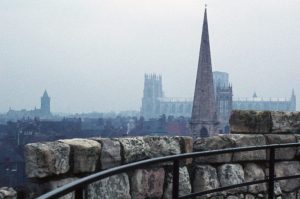
    1969_12_28 York

    27 Dec 1969, Busfahrt nach Leeds

  • 28 Dez 1969, Busfahrt nach York.
  • York: The City Walls. “York is one of the few places where the medieval walls can be seen almost intact, and almost in their original state, except for alterations caused by repairs and traffic problems. Since the time of the Romans, who chose it as their Northern fortress because of its strategic position, York has been a walled city. The Multangular Tower […], which was probably built at the end of the 3rd or the beginning of the 4th century, and is situated in the Museum Gardens, shows us the durability of the Roman work. The present walls were built of stone brought from Tadcasterin the l3th century. Previously a wooden palisading had topped the earthen ramparts. Any enemy wishing to enter York in the Middle Ages found a formidable barrier before him. The walls were surrounded by a moat, which could be crossed only at the gateways by a drawbridge. Archers could be massed on the walls ready to shoot their arrows down on anyone daring to cross the moat or scale the steep earthen mound.” Source: Evans HJ (1970): City and county of the city of York. Official guide. Published by the Lord Mayor, Aldermen and Citizens of the City of York.
  • York: St. Cuthbert’s church
  • 29 Dez 1969, Rückfahrt nach Birmingham

17-19 Oct & 13-21 Dec 1969: London

17.-19.10. & 13.-21.12.1969, London


17-19 Oct 1969

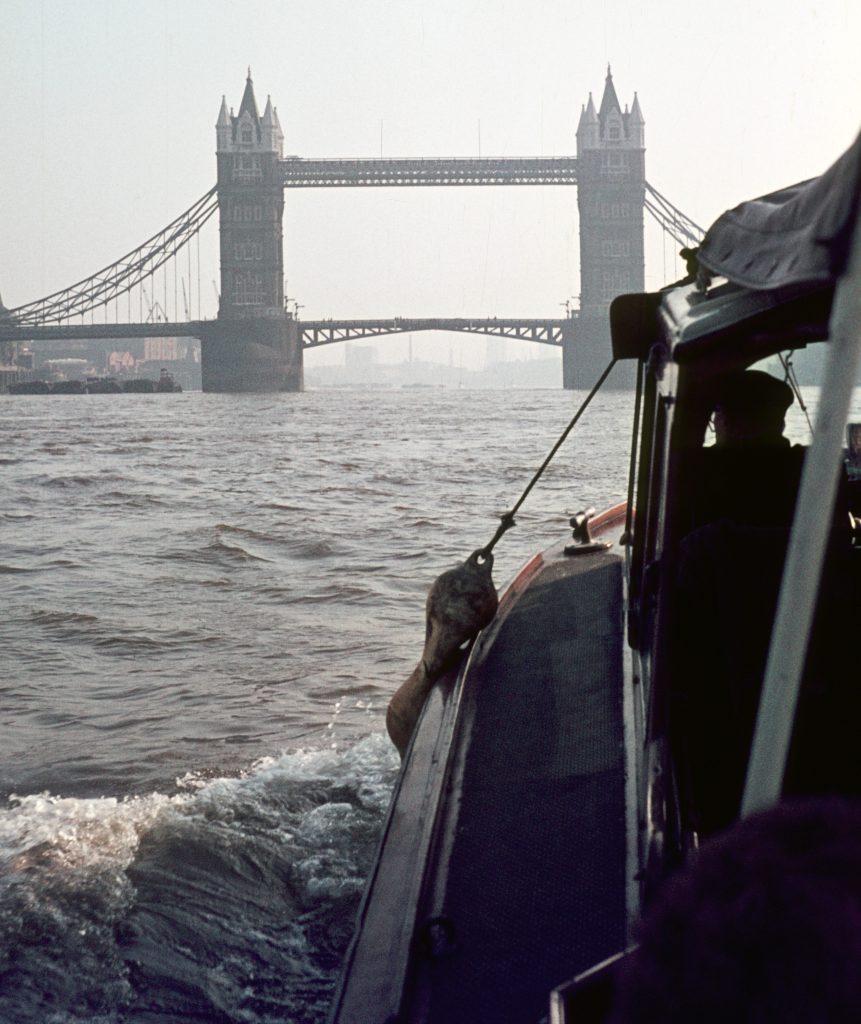
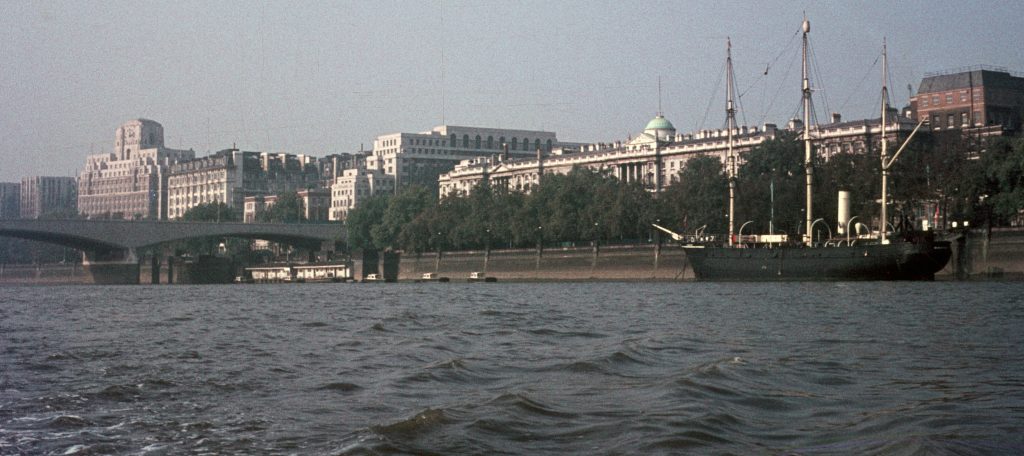
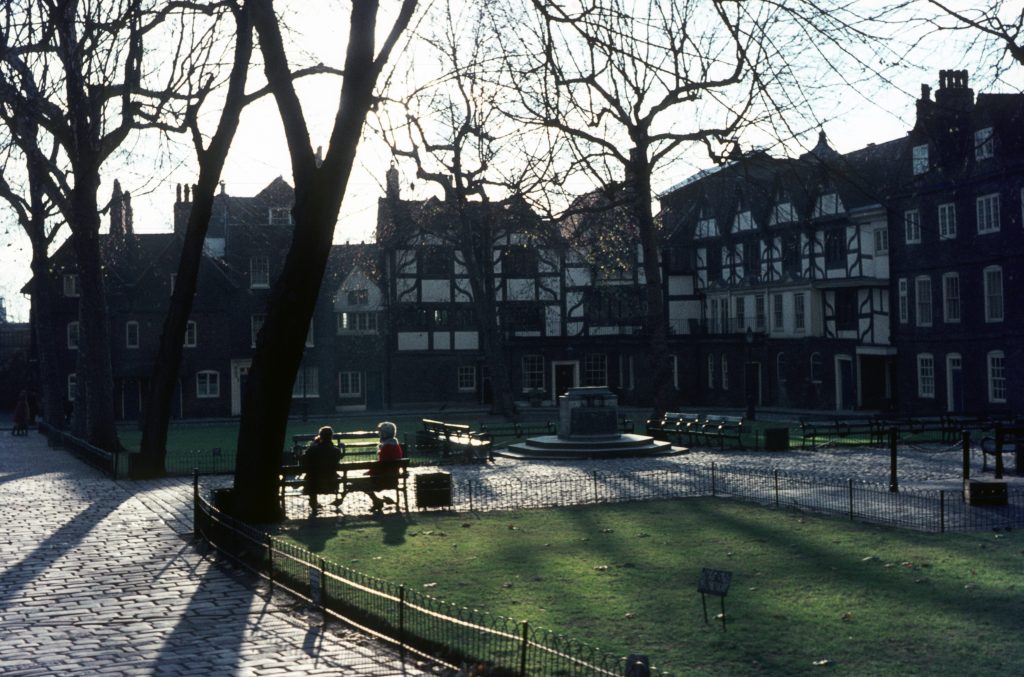
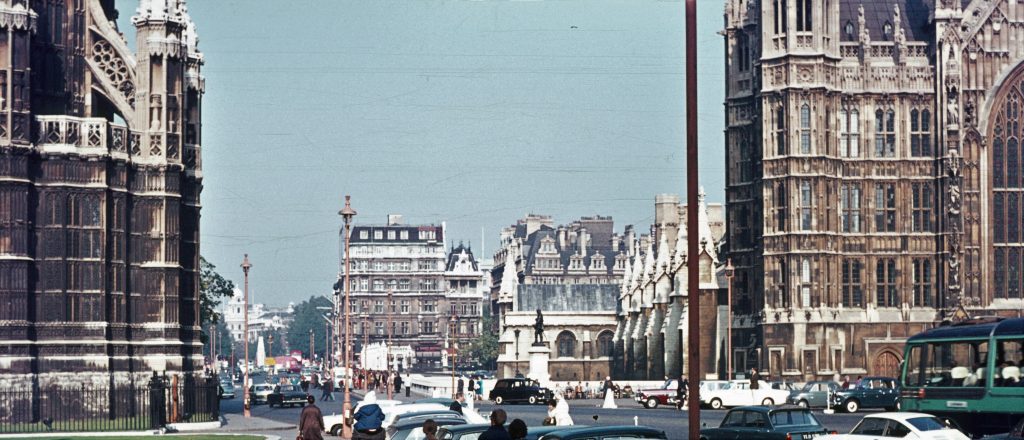
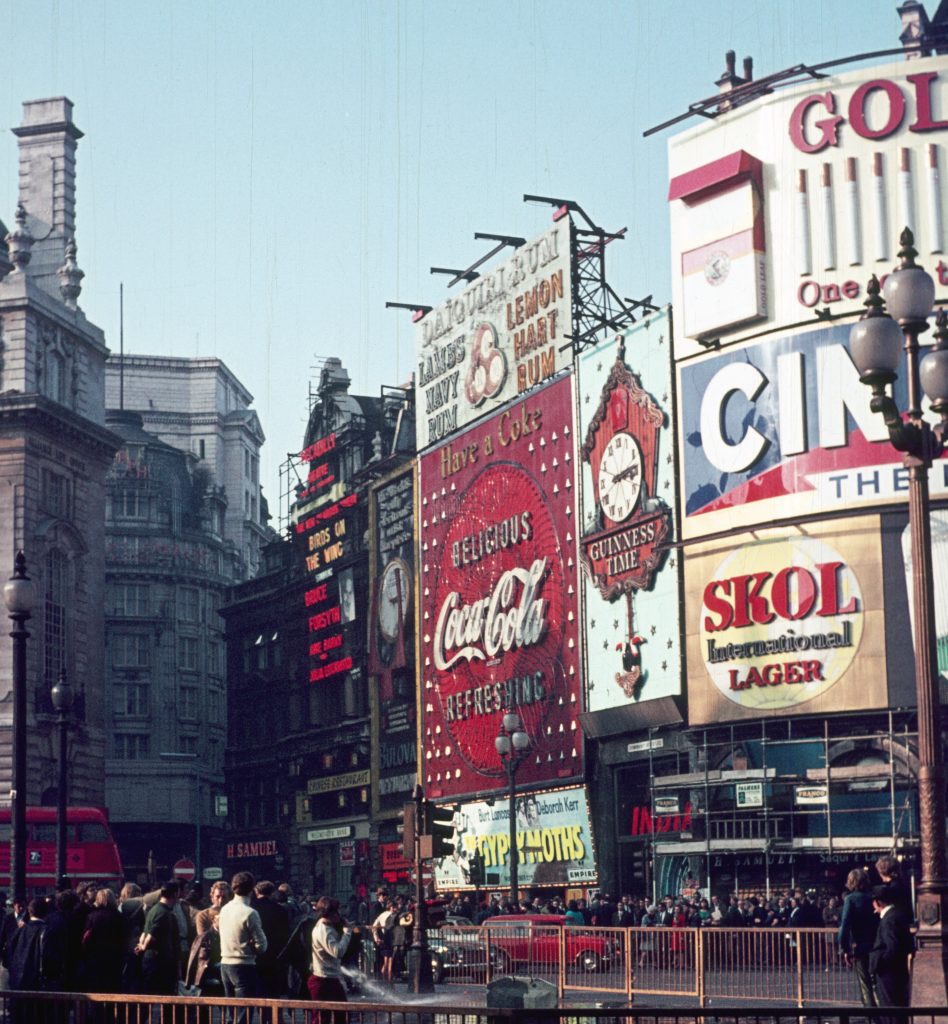
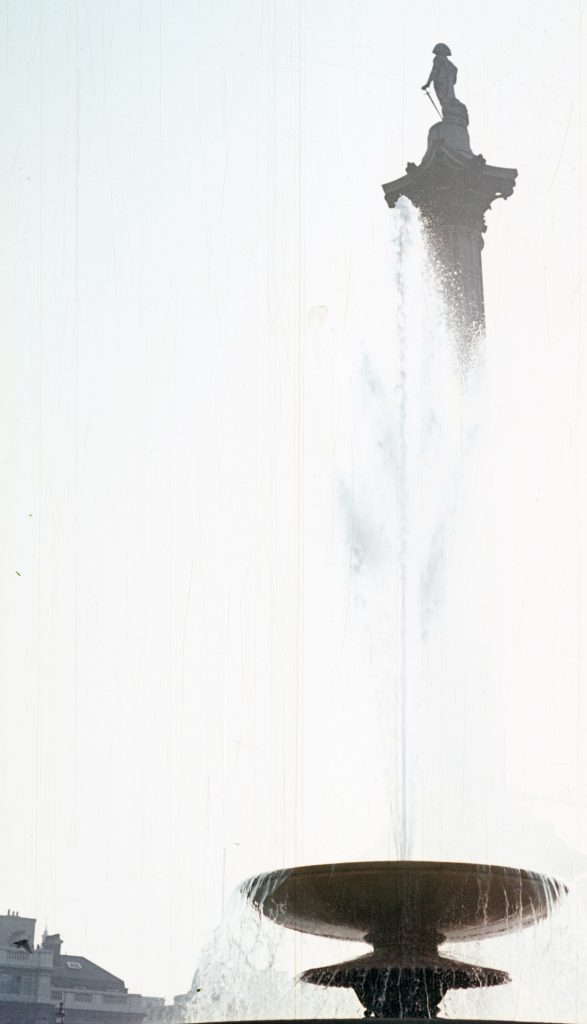
  • University of London; Waterloo Bridge; Themse-Bootsfahrt ab Charing Cross pier bis Tower of London, und zurück; Victoria Embankment; RRS Discovery (https://en.wikipedia.org/wiki/RRS_Discovery); Westminster Bridge / Hall / Abbey; Victoria Street; Buckingham Gate; Grosvenor Place; Hyde Park Corner; Hyde Park; Constitution Hill; The Mall; Trafalgar Square; Haymarket; Piccadilly; Shaftesbury Avenue; Kingsway; Aldwych; Victoria Embankment; New Bridge street; Ludgate Hill; Tower (closed); Cheapside; Holborn; Victoria station; Soho. Ausflug: Hampton Court
  • Unterkunft: 14, Veronica Rd., London S.W.17

13-21 Dez 1969

  • 13 Dez 1969, London: Y.W.C.A. Youth Hotel; Mme. Tussaud’s (incl. Grand Hall, The Tableaux, Heroes, Hall of Kings, Battle of Trafalgar, Chamber of horrors); Planetarium; Carnaby St.; Trafalgar Square; Film: “Oh, what a lovely war” (Director: Richard Attenborough, Actors incl. Michael and Vanessa Redgrave)
  • 14 Dez 1969, Straßenmarkt “Petticoat Lane” (Middlesex St.); Jüdisches Museum; Islington (mit Antiquitätenhändlern)
  • 14 Dec 1969, British Museum, e.g.  Egyptian Sculpture Gallery (incl. Rosetta Stone), Kings Library (incl. Alice’s adventures; Gutenberg bible)
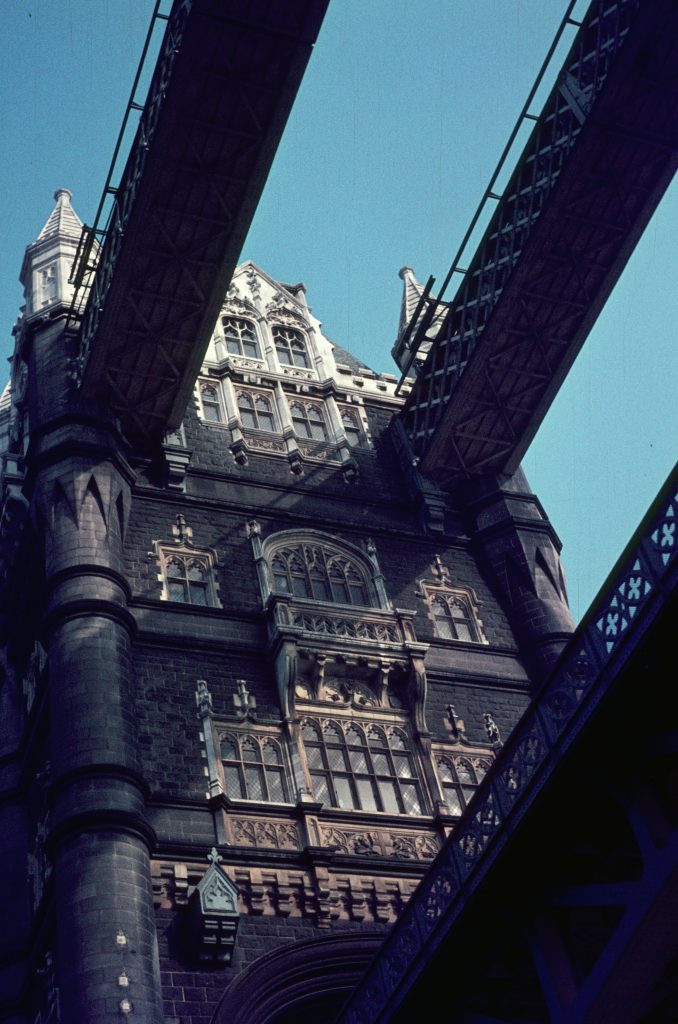
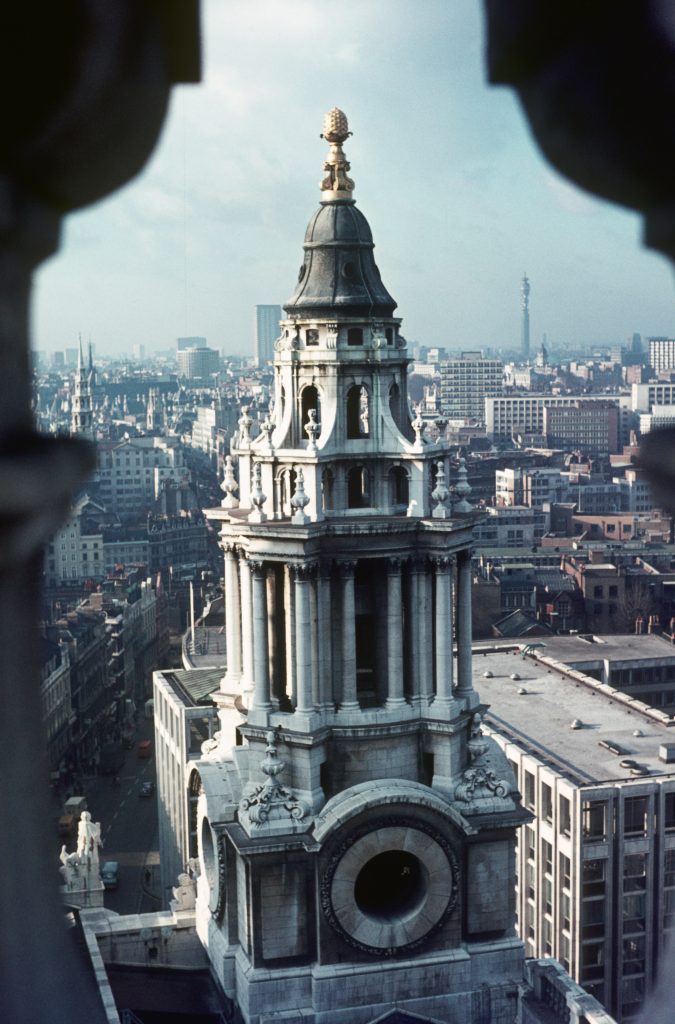
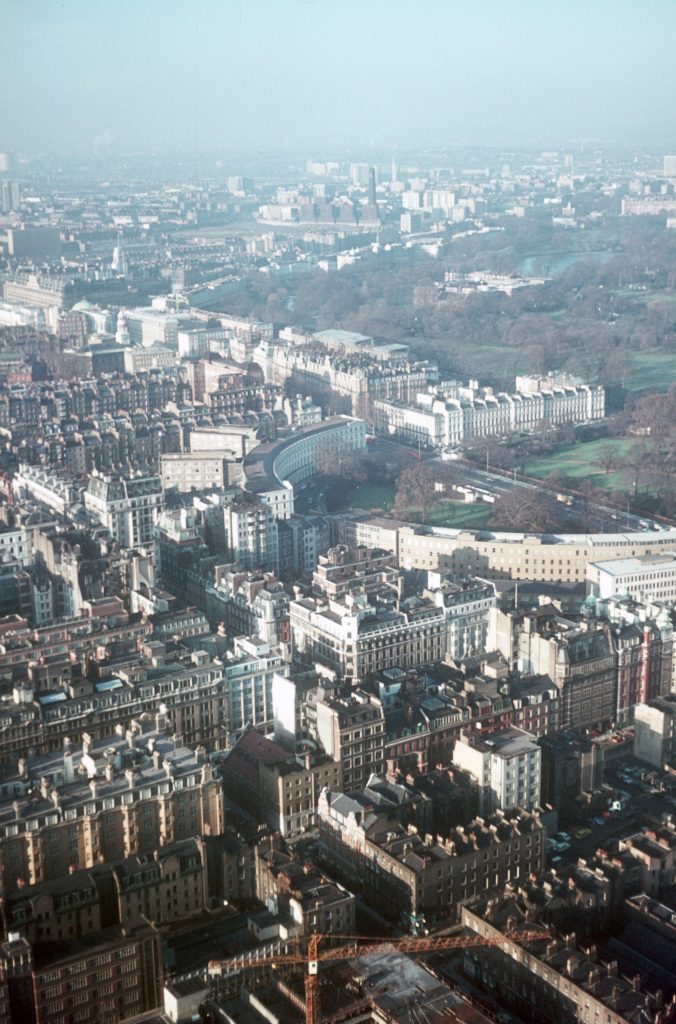
  • 15 Dec 1969, Post-Office-Tower; Aldwych; Fleet Street; Mansion House; Guildhall; Bank of England; Tower; Tower Bridge; Piccadilly; Soho
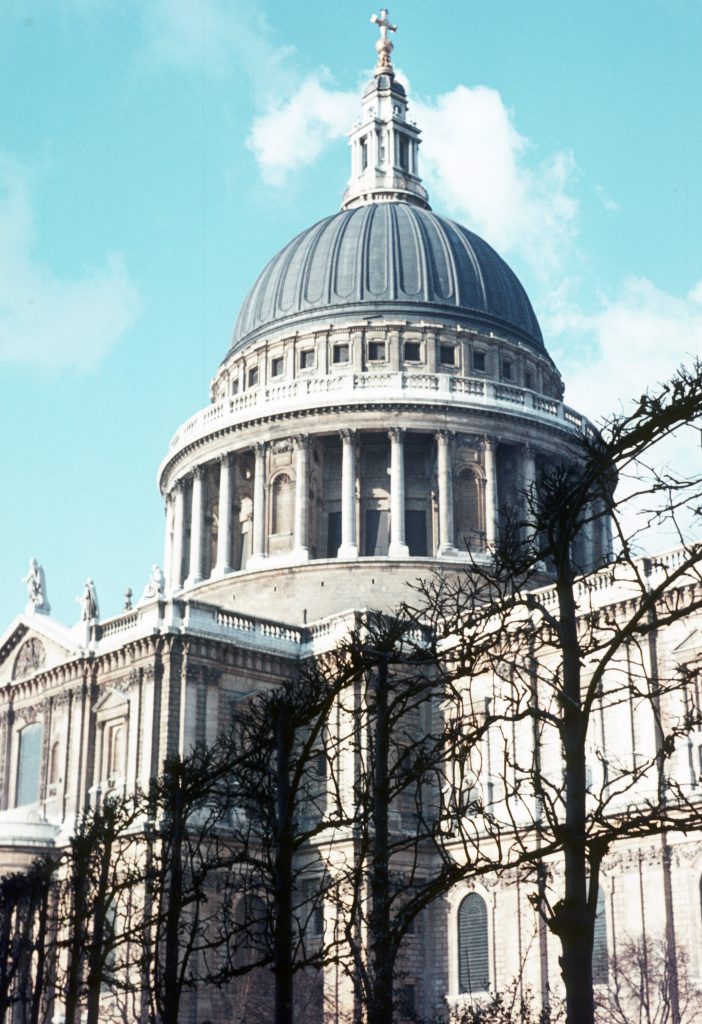
  • 15 Dec 1969, St. Paul’s Cathedral (mit Krypten, Flüstergalerie)
  • 15 Dec 1969, St Paul’s Cathedral: “Bombs have showered down on it, leaving its precincts desolate waste-land – fires have raged all around it – and graceless modern buildings have sprung up on its very doorstep: yet the essential majesty of Sir Christopher Wren’s great building is unimpaired: the great dome still dominates the skyline of the City of London as an eternal symbol of Man’s faith in the Love of God. Sir Christopher Wren, when he excavated for the foundations of the present Cathedral, found evidence that led him to believe that this site, on the crest of Ludgate Hill, was once occupied by an important Romano-British Christian church…” Source: Ewin ETF (1968): St Paul’s Cathedral. Jarrold Colour Publications, Norwich

  • 16 Dec 1969, Roman Bath (schwierig zu finden); Cleopatra’s Needle; Whitehall; National Gallery; Buckingham Palace, mit Sonderausstellung: Kartonzeichnungen von Leonardo da Vinci; Tate Gallery: The Elizabethan image; Chelsea (mit Antiquitätenhändlern)
  • 17 Dec 1969, Imperial War Museum; Dulwich College Gallery; Museum of British Transport
  • 17 Dec 1969, Science Museum; Lit.: Riemsdijk JT van (1965): Science Museum – 50 things to see. Her Majesty’s Stationery Office, London. Selected items: 1 Newcomen Type Atmospheric Engine 1791; 2 Boulton and Watt Rotative Beam Engine 1788, 5 Elizabethan Standard Weights 1588, 8 The Coal Mine, 9 Model of an Engineering Workshop 19th Century, 23 “Puffing Billy” 1813 (“oldest railway locomotive in existence”), 14 The “Rocket” 1829 (“famous locomotive … the first in which all the cardinal features of the modern locomotive were united…”), 16 Benz Motor Car 1888, 17 Rolls-Royce Car 1904, 21 Herschel’s Seven-Foot Telescope, 22 Wells Cathedral Clock 1392, 26 bessemer Converter 1864, 27 The Periodic Table, 29 Brownian Motion Demonstration, 32 Aston’s Mass Spectrograph, 34 Babbage’s Calculating Machines, 40 Reproduction of Wright Flyer 1903, 42 Television Camera 1936, 45 Bell’s Early Telephone 1876, 47 Replica of von Guericke’s Vacuum Pump, ca. 1662, 49 Hooke Compund Microscope.
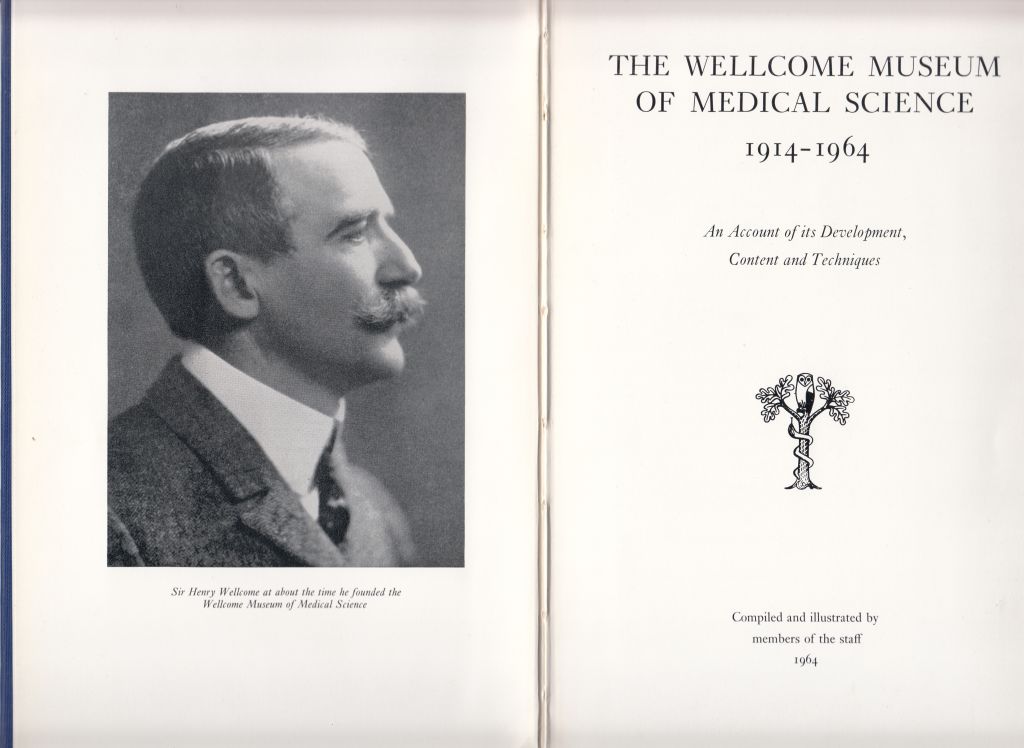
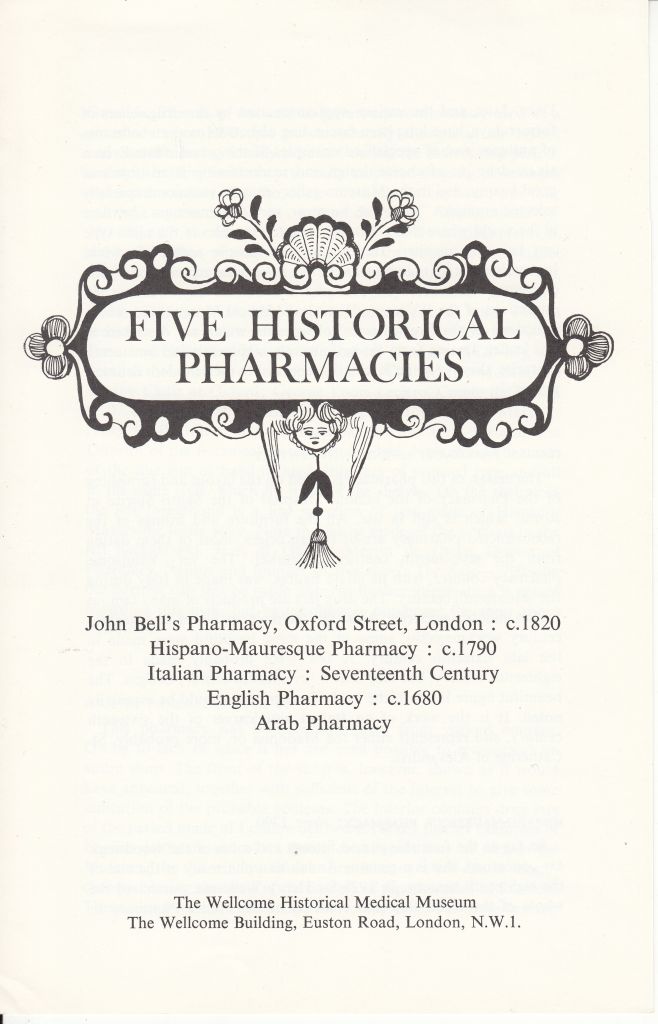
  • 18 Dec 1969, Monument (311 Stufen); Stock Exchange mit Visitors’ Gallery; Dickens House (48 Doughty St.); Courtauld Art Gallery; Wellcome Medical Museum

  • 18 Dec 1969, Royal Shakespeare Theatre / Royal Shakespeare Company, William Shakespeare: “Much Ado about Nothing”
  • 19 Dec 1969, Tate Gallery; Westminster Abbey; Geological Museum
  • 19 Dec 1969, Natural History Museum, Cromwell Road, South Kensington, SW7. “The Museum is the principal centre in the British commonwealth for the general study of natural history. It contains in its five departments of Zoology, Entomology, Palaeontology, Mineralogy, and Botany one of the most extensive collections in the world of recent and fossil animals and plants and of minerals and rocks and meteorites. The scope of the Museum’s collections and the contacts with other scientific research centres and museums are world-wide.” Source: Geographers’ Famous Guide to London and around London. Geographers’ Map Co. Ltd., London
  • 20 Dec 1969, Hampton Court; Rugby in Twickenham: Springboks vs. englische Nationalmannschaft; Portobello Road
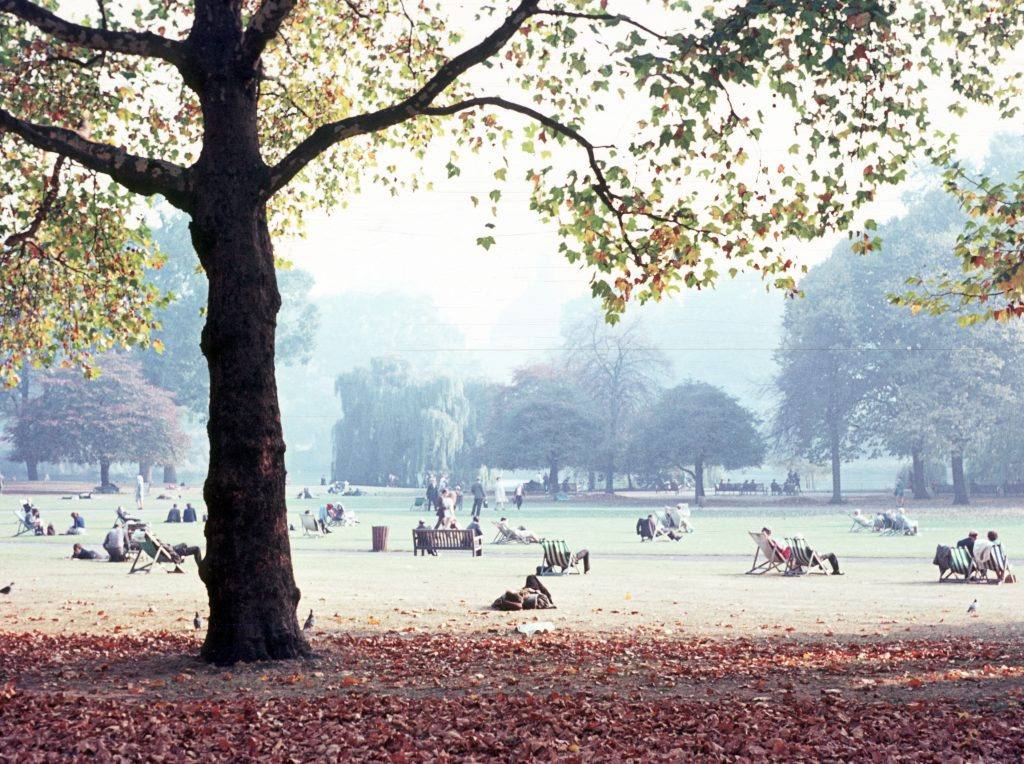
  • 21 Dec 1969, Hyde Park; Kensington Gardens; Commonwealth Institute; Science Museum.
  • 21 Dec 1969, Victoria & Albert Museum, South Kensington, S.W.7. “he Victoria and Albert Museum is a Museum of Fine and Applied Art of all countries, styles and periods. It includes Architectural Details, Arms and Armour, the Art of the Book, Bronzes, Carpets, Clocks, Costume, Cutlery, Drawings, Embroideries, Enamels, Engravings, Fabrics, Furniture, Glass, Gold- and Silversmiths’ work, Ironwork, Ivories, Jewellery, Lace, Lacquer, Leatherwork, Lithographs, Manuscripts, Miniatures, Musical Instruments, Oil Paintings, Ornament, Pewter, Posters, Pottery and Porcelain, Prints, Sculpture, Stained Glass, Tapestries,Theatre Art, Vestments, Watches, Water-colours and Woodwork.The Museum includes the National Art Library, the National Collections of Post-Classical Sculpture (excluding modern), of

    British Miniatures, of Water-colours and of English Silversmith’s work.” Source: Guide to London museums and galleries (1968). Her Majesty’s Stationery office, London; p.36

Literature:

  • Ewin ETF (1968): St Paul’s Cathedral. Jarrold Colour Publications, Norwich
  • Geographers’ Famous Guide to London and around London. Geographers’ Map Co. Ltd., London
  • Guide to London museums and galleries (1968). Her Majesty’s Stationery office, London
  • Hedley O (1969): The City of London. ‘The one square mile.’ Pitkin Pictorials Ltd., London. p.5: “The Great Plague, 1665. London’s Dreadful Visitation: Or, A Collection of All the Bills of Mortality ‘Beginning the 27th of December 1664 and ending the 19th of December following’. This record presents a week-by-week summary of deaths. The number of plague victims in the week 15th to 22nd August is given as 3,880 but contemporary accounts indicate it was much higher” (London Museum)
  • Mawson JA (ed.) (1969): London. A picture-book to remember her by. The British Travel Association, London
  • Riemsdijk JT van (1965): Science Museum – 50 things to see. Her Majesty’s Stationery Office, London.